When he was at table with them, he took the bread. He blessed the bread, and broke it, and gave it to them. And their eyes were opened and they recognized him!(Luke 24:13-35)

Friday, June 18, 2021

Carpe diem


Jesus tells us that we can’t love God and “mammon” (money), that we can’t “serve two masters”.   “Mammon” must be understood as a love that becomes an unhealthy attachment and desire.  Money is such that we can “love” it by allowing our desires for it to become disordered and, thus, exclude the will of God from that “love.”  Money isn’t evil when it’s used solely in accord with the will of God.  In that case, the money we use will give God great glory.  But when money, or any other object of our desire, begins to take on a life of its own, so to speak, then that desire will be at odds with our love of God.  To love God and God alone means we love God and all that He wills us to love in life.

When we consider the command we’ve been given from God to love, it’s true that we must love not only God, but also many other things in life.  We must love family, friends, neighbors, and even our enemies.  Hopefully, we also love other aspects of our lives, such as our vocation, our job, our home, a certain pastime, etc.  So how do we love God with singular devotion when we also have many other things we must love?

The love of God is such that when we make God the singular object of our love and devotion, the love we have for God will supernaturally overflow.  This is the nature of the love of God.  As we love God, we’ll find that God calls us to love Him by loving other people, and even various aspects of our lives.  As we love what God wills us to love and as we express our love for all that’s contained in the will of God, we’re still loving God with all our heart, mind, soul and strength.

In today's world, it’s increasingly more and more difficult to have time to do the things we want to do.  Managing work and household responsibilities can become tremendously tedious and time consuming.  Yet the Scriptures I reflected on today (2 Corinthians 12:1-10, Matthew 6:24-34) aren’t about responsibility, at least not in the worldly sense.  St. Paul and Jesus beckon us to live a little, to “Seize the Day” (Carpe diem).  That sounds great but making it practical with all the other responsibilities we carry can be quite difficult.  Here are three suggestions:

1. Pat yourself on the back.  You deserve it.  Live simply in today.  Give your concerns to God and let Him take over.  Then, don’t worry.

2. Offer it Up.  The next burden you have, be it large or small, try offering it up again as a cross you must bear.  For instance, I remember an incident that happened at work many years ago.  I was responsible for several different areas of my company’s operations.  To cope, I had to schedule certain tasks for certain days, and any variation would put me and my company in a bind.  One day, I was directed by my boss to “take a few minutes” out of my day to complete an unscheduled task that was ordinarily just that; “a few minutes.”   A “few minutes” turned into several hours because of a minor screwup by the last person to attempt the task.  You would have thought that the greatest injustice known to humanity had occurred if you were in earshot of the scene (in this case a few blocks).  I then realized that other frustrations--family, work stress--were affecting my ability to cope with the situation.  I then settled down and let go of my frustrations by offering them to God.  That was all it took, for the rest of the task went smoothly and I was in peace.  As this story demonstrates, offering our burdens to God helps us bear them.  Paul reminds us that when we take on burdens, or when we are weak, we are strong.


3. Visit Nature.  Don't make special plans to get out of town or go to the park for a picnic.  If you have the time, great--do those things.  But if you're like most people and have little realistic free time, all you have to do is look out the nearest window to be reminded of God's grandeur.  You could be riding a bus to work and all you see is a barren parking lot.  Look closer and you might see a shoot of grass or a dandelion in full bloom shooting up bravely through a crack in the asphalt.  God is there as God is everywhere around us.  Take a brief moment--just 15 seconds--and you might be surprised at what you discover.  It's easy to see the greatness of God in the simple things found in Nature.

Perhaps all it takes sometimes is a reminder of how to be in relation with God.  Peace be with you on your journeys.

Thursday, June 17, 2021

Getting to the heart of the matter


St. Paul reminds us in his letter to the church in Corinth that we’re called to focus on the one reality that most matters: our relationship with God.  (2 Corinthians 11:18-30).

Paul’s “boast” was made up of the many ways that he had suffered for Christ in his ministry to the churches he founded.  He’d been imprisoned, beaten, endured all kinds of hardships, traveled extensively around the world of his time.  He endured all these negative experiences for the sake of Christ and the churches he led to the Gospel of Christ.

Paul’s letter is a wonderful, if stark, account of the hardships surrounding the preaching of the gospel.  He calls on the Corinthians (and us) to stay firm in his preaching to them.  They (we) are to avoid the contradictions brought about by those who seek to turn the people away from the faith received by Paul.

Where Paul encourages the church to stick to the essentials and hold them strongly, the gospel asks us to determine what is our “treasure.”  To discover our treasure is to find out where our heart is: with God or (selfishly) only with ourselves.  Sometimes we consider the treasure only from a negative perspective – what do we treasure?  Things that draw us away from God’s love and Jesus’ life of joy and peace.  Definitely needed, but there is another side also to consider.

“…do not store up for yourselves…where your treasure is, there also will be your heart…the lamp of the body is the eye” (Matthew 6:19-23)

We’ve all experienced great treasures in this past year and several months.  There have been so many examples recently of those whose treasure has been exhibited in profound service to those who contracted the dreaded Covid19.

Think of all those who, despite the pandemic, heroically gave themselves over to deep healing of those hobbled even to death by Covid.  We’ve all seen video of doctors, nurses and medical staffs beaten down by impossible shifts and extraordinary demands on their skills and energy.  Facing crushing odds and seemingly defeated, they stayed on task despite the patients who died by the thousands.   Think, too, of the wives, husbands and other loved ones completely separated from the ill; not able to visit and wipe the burning brows and hold the hands of their dear ones.

My reflection today also brought me to consider how ‘things’ can control our life!  Things we ‘need’, things we ‘want’, things to ‘make life easier’, things to prove ‘status’, ‘wealth’, ‘happiness’, ‘achievement’.  Things to fill our time, our homes, our workplaces.  Things to obsess over, worry about, and sometimes hoard!  I sometimes think ‘things’ are the American way!

In the gospel, Jesus shows us another way, the way of God, the way to open us to the ‘treasure’ of living in God’s kingdom.  Be careful, he says, pay attention – pay attention to your behaviors, to your longings and to true awareness.

He warns against pleasures that will ‘wear out’ or can be ‘eroded away’…don’t collect, gather or hoard that which can be ‘stolen away’.  These kinds of treasures will only lead to disappointment – things like that can’t last forever!

Jesus reminds us that while ‘things’ are not unimportant, they do need to be kept in perspective!  Some questions may be ‘do I need this…or do I want this’?  How can I share this?  How does this change me – does it feed my ego or open my heart? 

If the eye is the window that lets in the light – what smudges do I need to wipe away to see more clearly what is being taken in?  The smudges of prejudice, bias, jealousy, self-centeredness can prevent us from seeing clearly, just as ‘things’ can isolate us from the truth and reality that envelops us. We’re called to live in harmony with ourselves, others and God.  What ‘things’ or ‘smudges’ might be preventing this harmony within you?  Today’s a good day to spend some time with the Lord – what might he be saying to you or trying to point out to you?  “Where your treasure is, there also will be your heart…”

Wednesday, June 16, 2021

A declaration of hope


Take a moment to think about something you’re passionate about.  It may be your life's work or calling.  It may be your desire to raise your kids with solid values, "make a difference" in the culture of your workplace, or to recognize and speak out against social injustice.  When our efforts are misunderstood, when we’re unappreciated, when we’re the target of complaints and accusations or face other roadblocks in attempts to be true to our values, principles and commitments, we get defensive.  We try harder to prove that our mission should be everyone's mission.

I’m reminded of St. Paul, who was clearly feeling quite misunderstood in his mission of preaching the good news, frustrated in his attempts to invite women and men into a personal relationship with Christ, and through Christ, to God, the source of all life and love (2 Corinthians 11:1-11). 

Like Paul, we too can start getting defensive—even sarcastic in our dealings with others.  Jesus taught us a better way.  Rather than a lot of anxious words, Jesus told us to keep it simple.  He said to His disciples: "In praying, do not babble like the pagans." (Matthew 6:7)

It’s good to reflect upon the prayer Jesus taught us, so that we'll be less likely to "babble on" this Sunday when we recite His prayer together, in common.  Even powerful words can become so automatic, that they can lose quite a bit of their power.  For example, we should say, "I love you" to everyone we love, every day.  But we have to say those three simple words knowing what they mean and letting that meaning come from our heart to the people we love.

During the Sermon on the Mount, Jesus taught His disciples, the crowd that assembled that day, and now us what has aptly become known as “the Lord’s prayer.” (Matthew 6:9-15).  Why did Jesus teach us to pray in precisely this way?  Maybe because this prayer offers the most truthful account of who we are and how we should live.

“Our Father in heaven, hallowed be your name.”  There is a God who absolutely surpasses us, a God to whom we are bound and accountable; but a God who as Father also draws near, watches over us, endlessly cares for us and seeks our good.  This God who is holy is perfectly good, perfectly just, and perfectly loving, and thus deserves our adoration and praise.

“Your kingdom come, your will be done on earth as it is in heaven.”  God’s kingdom is the community where love, goodness, justice, and peace abound.  It’s the exultant joy that comes when every person’s dignity is affirmed and where every creature flourishes.  Heaven is the everlasting bliss that results when God’s will is flawlessly followed; and points the way for what we should strive for in our world now.

“Give us this day our daily bread.”  God wants to fill the deepest hungers of our lives.  For some it will be a prayer for food, shelter, clothing, and safety.  Others will pray for healing and hope.  Many today pray that loneliness will be vanquished by the assurance that somebody knows and cares.  And, sadly, for countless others their “daily bread” will be the courage needed to endure suffering, tragedy, and seemingly inconsolable loss.

“And forgive us the wrong we have done as we forgive those who wrong us.”  We live only by the forgiveness and mercy of God and, in gratitude, are to share that same mercy and forgiveness with others.  Forgiveness is always a path to life because it’s what makes us most like God.

“And do not subject us to the final test, but deliver us from the evil one.”  This is traditionally said, “And lead us not into temptation but deliver us from evil”.  It’s a bit of a bad translation.  God can’t lead us into temptation; He wants to protect us from all the traps that are out there for us every day –the ones that surprise us, but also the familiar ones we fall into because they've become a part of our patterns.  We need only to ask Him for deliverance and freedom.

And so it is that to say “Amen” to the Lord’s prayer is always an unassailable declaration of hope and confidence.

Tuesday, June 15, 2021

Striving to become a cheerful giver


“God loves a cheerful giver” (2 Corinthians 9:6-11).  I love this phrase from Corinthians, not just in its meaning for alms and good works.  God doesn’t just mean that we smile when we write out a check or grin when we drop off clothes at Goodwill (thought I think that’s a good idea too.)  When I reflect on what “God loves a cheerful giver” means, it reminds me of finding God in all things, in our day-to-day lives—not only when we’re in church or praying or performing service.  I want to be a cheerful giver among my co-workers, my neighbors, the woman at the checkout line at the grocery store.

I can give of my time and my smile.  I can be patient and kind, even when I don’t feel overly patient or kind.  I can take a deep breath before becoming annoyed.  It’s those seemingly small times in life, when we give of ourselves that I believe we’re truly becoming a cheerful giver.  It’s when we truly pay attention to our family members, instead of just nodding because we’ve heard that story before.  We can be cheerful givers when we put away or turn off the TV or the cell phone and pay attention to those around us.

In Matthew’s gospel (Matthew 6:1-18), Jesus speaks about some ways to pray that aren’t really prayer, in the traditional sense.  For myself, I believe that the traditional description is the best: prayer is raising your mind and your heart to God.

I think that as far as most of our prayer is concerned, we act as babies do; we signal our dependence with a wail for milk or, as we grow older, with a succession of "gimme" demands that don't always have a "please" or a "thank you" attached to them.  We spend much of our time asking God for things we think that we need, even good things that He wishes to give us, and pitifully little time in thanking Him, in asking what we can do for Him, in asking that He enlighten us about Himself and His desires, or even simply surrendering ourselves to Him in complete gratitude and trust.  We’re very much aware of what we want and where we get it from, but we think only of the getting and not of the Giver.

I think that the best prayer is more about our lifting our whole minds and hearts to God, directing our entire attention and all our faculties to Him, and simply being present to an Almighty Father who already knows what we need.  More than only asking, such prayer is opening ourselves to let Him reveal His Self to us and to receive whatever it is that He wants us to know and to have.  Such prayer leaves God free to be God.

God also reveals us to ourselves, letting us see who we are and understand our relationship to him, showing us how we are loved and where we need to grow.  There’s an incredible number of ways in which He can do this, as each of us is individual and each day we respond to Him differently and grow towards Him in a new way.  But a great deal of such prayer is the Holy Spirit addressing us on our deepest levels, speaking in ways far beyond our words or understanding and in ways that will bear visible fruit in us only later, at the proper moment.

We can and should respond to Christ's call by simply going to a place of silence and gently opening our hearts to the One who loves us more than we do ourselves.

The words of Matthew’s gospel also serve as a reminder that what we do in service, in prayer, or in fasting should come so naturally to us that it’s a seamless part of our lives. The giving and the praying aren’t exceptions but the rule.  I pray that God helps me become a cheerful giver.

Monday, June 14, 2021

Test the genuineness of your love for others


Almost everyone is familiar with the command that Jesus gave His disciples, “. . . love your enemies . . .” (Matthew 5:42-78).

And almost everybody thinks that, while it’s what we should aim for, it’s hopelessly unrealistic.  Maybe.  But maybe some context might help us understand how central this really is to being Christian.

What does it mean to be Christian?  It’s not to save ourselves, as perhaps we might think.  God has done that for us.  No, our job is to continue the work of Jesus – the Jesus who called people to change their priorities and submit to God’s gentle reign.  Christians are a community of disciples, having disciple roles, and doing disciple work.

We need to ask ourselves: If someone is mean and hateful and spiteful, self-centered and angry – in short, our enemy – do we want that person to go into eternal damnation?  We can’t want that.  Jesus gave Himself for that person, just as much as He did for me.  Jesus counts on us to help that person accept the love God offers.  How can that person know of God’s forgiveness if he doesn’t experience it in me?

But love our enemies?  Once again, we bump up against the inadequacies of translations.  “Love” as it is meant in this gospel isn’t a matter of warm fuzzy feelings or the affection of friendship.  The verb used by Matthew might be better translated as “to care about”, or “to be concerned about”, “to care enough to want to help”.  It’s with that kind of care and concern that Jesus and Stephen prayed for those who were killing them (Luke 23:34, Acts 7:54-60).  Saving such individuals is precisely why Jesus came and why we’re Christians.

From my vantage point, there’s a huge difference between me and my persecutor, between me and the terrorist bomber, between me and the child rapist.  But the simple fact is that both of us are equally in need of God’s saving love, which God freely gives, as this passage from Matthew clearly attests.  “Our heavenly Father causes His sun and rain to fall upon the good and the bad, the just and the unjust” (Matthew 5:45).

Love our enemies?  Unrealistic?  It can’t be – must not be!  As St. Paul says, “. . . test the genuineness of your love by your concern for others.” (2 Corinthians 8:1-9).  All others.  Even enemies.

Sunday, June 13, 2021

The time is now


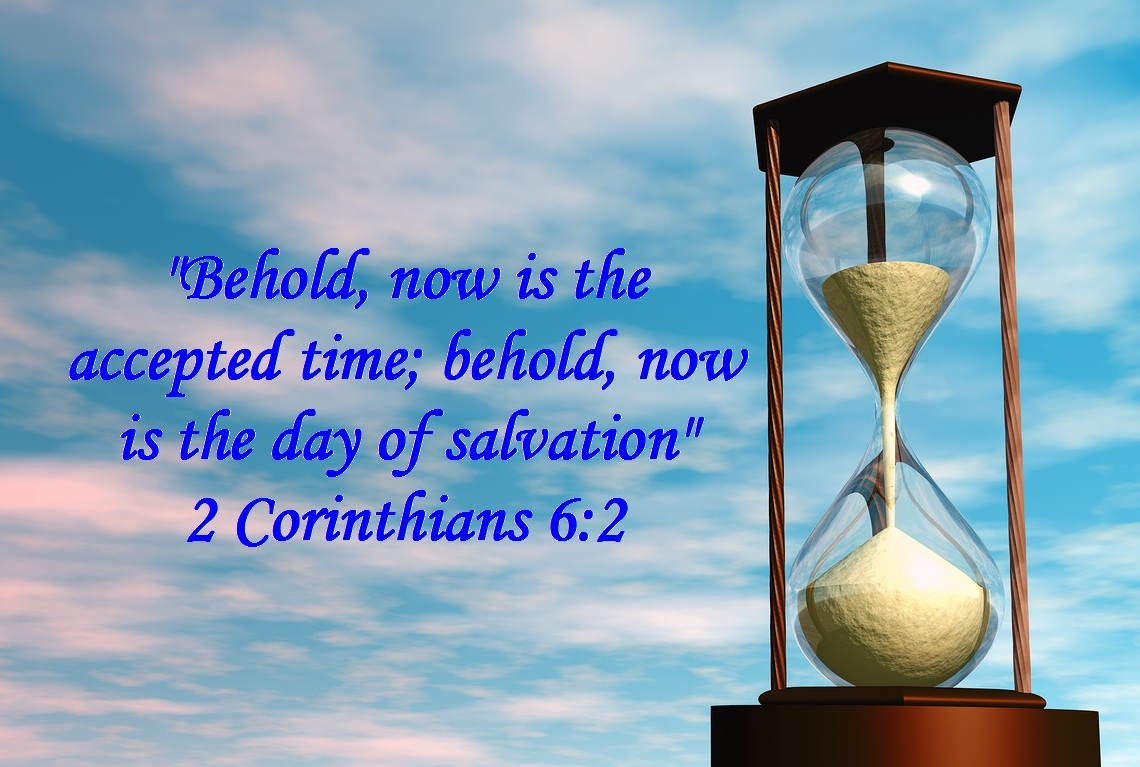
I have to admit that I’m a daydreamer!  I tend, at times, not to live in the present, and do a lot of imagining about how things could be or even should be.  But then, when I read the words of St. Paul, I feel as if he’s telling me to live in the present: “As your fellow workers, we appeal to you not to receive the grace of God in vain.  For he says:  In an acceptable time, I heard you, and on the day of salvation I helped you.  Behold, now is a very acceptable time; behold, now is the day of salvation.” (2 Corinthians 6:1-10)

The plan of salvation is unfolding now, not some distant time in the future.  God’s grace is sufficient now; God’s plan for me is taking place now; God’s calling is being announced now.  Live now, pay attention now; the Lord is speaking to me now!  So, I have to let go of my daydreaming sometimes, not all the time, but sometimes, and live in the present.  Martin Luther King Jr. once said, “God’s plan for me is bigger than all my dreams!” 

So, St. Paul is inviting all of us to hear the word of the Lord now.  This will be enough for us.  This very moment the Lord is revealing to us his plan of salvation and how we’re to be a part of it.  Now is the time of grace and blessing.  And all we have to do is to say, Yes, Lord, thank you Lord, and carry on from there!

In the Gospel (Matthew 5:38-42), Jesus says that we need to be above violence and pettiness.  In forsaking our sinful lives, we need to forsake selfishness and vengeance.  Rather than ‘an eye for an eye,’ we need to take the high road and forgive.  Instead of wanting to pay back those who hurt us, we should forgive and move forward.  In fact, far from wanting vengeance, Jesus says we should give more than is demanded.  “If someone tries to take your shirt, give your coat as well.”  These things don’t matter, what are possessions?  Don’t fight back.  Don’t stoop to the level of the violent by repaying their violence.  Let them continue with their sinful lives. They’ll get what they deserve, if not in this world in the next.  We should forsake sin and violence and turn to the Lord.   Today is the day and now the proper hour.

Saturday, June 12, 2021

In the shade of a mustard tree


God wills that His Kingdom come.  We pray this in the Lord’s Prayer, taught to us by Jesus Himself (Matthew 6:9-13).  What does it mean when we pray for His Kingdom to come?  First, it means that God wants to come and dwell within us, establishing His Kingdom within our hearts and souls.  We must become living members of His Kingdom, and He must be our Ruler and Guide.

Second, we understand this to be the establishment of His laws and will in our world.  This means that the social, political and cultural order must be transformed by God’s grace so as to participate in and bear the fruit of His Kingdom.  We have work to do!

Third, it means that we anticipate the final and glorious coming of His Kingdom when Jesus returns in splendor and glory.  In the end, all things will be transformed, and God will bring forth His final judgment upon the world, making all things new (Revelation 21:1-8). 

Jesus told several parables that reveal to us how this will happen (Mark 4:26-34).  He revealed that God’s Kingdom will slowly, gently and miraculously take hold.  This will happen in our lives, it will happen in our world as we Christians commit ourselves to this work, and it will miraculously happen at the end of time when Jesus returns.

Parables are used to remind us about the “upside-down” kingdom.  We’re often tempted to fix Jesus’ words and give them a fine bow as if wrapping a gift.  A parable is supposed to teach us new never-ending insights.  Biblical scholars are largely in agreement that a mustard seed was not exactly the smallest seed, and eight feet was the most it could grow.  Yet, most commentaries will offer the idea that the smallest seed was the growth in the Christian community.  Its growth exceeded far beyond a pesty weed—as it was known in Palestine in Jesus’ time—into a large tree with room and shade for all peoples.  So, before we find ourselves tempted to install a hammock to sleep away our warm afternoons under this tree, we might reflect on the details of the parable.

I read somewhere that a mature tree can offer a day’s supply of oxygen for four adults.  It not only offers shade but oxygen—life-giving breath.  Imagine resting in a hammock under this large tree with shade for every bird.  What might we experience?  Loud noise, bird droppings, interruptions, surprises? Perhaps, it is not quite what we expected?  Maybe we’re being invited to take a deeper look!  We each find the kingdom at work in our own lives. 

My reflection today was upon the mysterious ways that God establishes His Kingdom.  He’s in charge of it first and foremost.  But we must do our part.  We must make our hearts and the world around us fertile ground.  We must plant the seed, water it as needed but then let God do His part.  God wants to bring forth His Kingdom in our life and in the world far more than any of us.  But if we do our part, we’ll be amazed as we watch God grow His glorious handiwork of grace.

Friday, June 11, 2021

A pondering heart


In celebrating Mary’s immaculate heart, we celebrate her singleheartedness.  Sin divides our heart between self and God, making us no longer single-hearted, no longer immaculate of heart.  But, as with any other time when we honor Mary, we run the risk of making her distant and inimitable, precisely as we mean to exalt her: congratulations, Mary, but we’re not in the same league.

So today I reflected on another dimension of Mary’s heart, a dimension that helps us realize that she’s very much in our league, a dimension that’s hinted at in Luke’s Gospel, namely, her pondering heart: his mother kept all these things in her heart (Luke 2:41-51).

Mary faced a number of situations she didn’t understand.  We’re told explicitly this much at the account of the Annunciation (Luke 1:26-38), the visit of the shepherds to the stable at the Nativity (Luke 2:15-20), and when Mary and Joseph find the Child Jesus in the temple speaking with the elders (Luke 2:41-51).  Implicitly we’re told the same when she hears Simeon’s prediction (Luke 2:33-38), when her Son appears to be telling her at the Cana wedding this is none of our business (John 2:1-12), when she hears Jesus say who is my mother? (Matthew 12:46-50), and most of all at the foot of the cross (John 19:25-27).  But Mary kept moving on without understanding, pondering in her heart.

Her steadfastness, her singleheartedness was not based on external evidence, but on trust. Her pondering in her heart without understanding had led her to not needing to understand –how could a mother understand that her innocent Son is being cruelly executed?  Being sure and being assured are not the same thing.  Being sure speaks of understanding, which rests on evidence.  Being assured speaks of an inner stance, which rests on trust.  Mary was assured, even when she could not be sure.

Mary was steeped in a trust born of her pondering heart, her immaculate undivided heart.

Thursday, June 10, 2021

Love isn't complicated


Merriam-Webster defines love as “a feeling of strong or constant affection for a person.”    St. Thomas Aquinas, and the Catechism of the Catholic Church (CCC #1766) define love as more than a “feeling”: “To love is to will the good of the other”.  In other words, love is more than having powerful feelings for another person.  Love is an act of the will, regardless of one’s “feelings.”  This is a simple definition of love.  It isn’t complicated.  This is how God loves us and how we are to love one another.

Even if we’re unfamiliar with Aquinas’ definition, we still can know love by what it looks like.  We recognize it when we see it.  We see it when a parent cares for a child with patience, tenderness, and unconditional acceptance.  We see it in relationships involving compassion, and self-sacrifice.

In the Book of the Prophet Hosea, God called the Israelites out of Egypt.  The Lord compared the Israelites to a child whom He took in His arms, taught to walk, fed, and protected on their journey. “The Lord says, my heart is overwhelmed, my pity is stirred.”  Despite their failings, God loved them (Hosea 11:1-9).

In the Letter to the Ephesians (Ephesians 3:8-19), Saint Paul prays for the love of the Father, strength of the Holy Spirit, and the indwelling of Jesus, “so that you, rooted and grounded in love, may have strength to comprehend with all the holy ones what is the breadth and length and height and depth, and to know the love of Christ which surpasses knowledge, so that you may be filled with all the fullness of God.”  God’s love is fundamental to all other gifts.

And John’s Gospel (John 19:31-37) reminds us of God’s ultimate act of love.  During His passion, Christ held each of us in His heart of love.  The Lamb of God was led to the slaughter and sacrificed for our sins.  True love has little to do with one’s feelings.  It has to do with the commitment of the will to seek the good of the other person, even when those feelings aren’t there.  The Solemnity of the Most Sacred Heart is all about love.  Christ suffered and died for us.  This is how God loves us.  This is how we’re to love one another – with all our imperfections, with all our failings, and brokenness.

Wednesday, June 9, 2021

The burden of anger


Jesus taught us that the commandment “Thou shall not kill” goes a lot deeper than just the act of taking someone’s life.  “Whoever is angry with his brother will be liable to judgement.”  “Go first and be reconciled with your brother, and then come and offer your gift.” (Matthew 5:20-26).  It’s in the heart that murder is first committed.  Intention is what shapes the quality, the character and the morality of what one does in freedom.  To hate someone is to be a murderer (1 John 3:15).  When we no longer see a human being, or a group, or a class of people as images of God we’re guilty of murder.

“Whoever is angry with his brother” (Matthew 5:22) allows a spontaneous aversion, irritation, or resentment to influence and to color his attitude towards the other.  As anger continues its destructive work in our hearts it will soon find expression in our outward behavior.  It will poison our thinking, our speech, even our surroundings.  Abuse will follow, well rationalized, so that the abuse will appear as the due response to the alleged evil in the brother.  As the voice of conscience is stifled so is the voice of truth, and it’s easy to believe and perpetuate lies.  The final step is when the brother is declared evil and treated as evil himself.  Murder in all its forms then appears fully justified and the only right course of action.

This doesn’t mean that we’re to abdicate our moral judgement; this would be cowardly.  We’re fully justified in judging through truth and love what is visible, but we must leave for God the label of evil and condemnation itself.   Otherwise we deny the possibility of our brother’s conversion and the victory of Christ’s all-inclusive love.  He died for all of mankind, for all times.

To nurse our anger is to refuse to be reconciled.  Sacrifice is meant to effect reconciliation (Matthew 5:23).  If our heart is blocked, and we’re unwilling to be reconciled, what use is sacrifice?

This reminds me of the Old Testament verse, “I desire mercy not sacrifice” (Hosea 6:6).  This verse was always interesting to me because it’s God speaking and why would God require mercy from man?  Jesus makes it clear.  “Be merciful to your fellowman, then you can give Me praise.”

This is hard most of the time because we have to admit wrong, even if we don’t think we were wrong.  We have to set aside our pride.  We have to put ourselves in the lower place.  We can’t be in control.  What if the other person doesn’t accept our apology?  What if they don’t want to reconcile?  What if they sneer at us and further abuse us?

Yet, Jesus died for the victims and the executioners.  He loved all men and commanded that we do the same.  How is this humanly possible?  In truth, it’s not.  We can only act contrary to our feelings and destructive inclinations or contradictory to all the pressures of society by the grace of God.  Only the God-given power of hope for the other, for the enemy, rooted in the faith we have of God’s love for ALL and the fidelity of His love for us can we begin to truly desire, pray and work for reconciliation with our enemies and persecutors.

Blessed are the merciful;

Blessed are the peacemakers;

Blessed are they who are persecuted for righteousness sake.

Lord, forgive us our trespasses as we forgive those who trespass against us.  Keep us free from temptation and deliver us from all evil.  Amen.

Tuesday, June 8, 2021

Reflecting the Glory of God through obedience


Christ said that He didn’t come “to abolish the law or the prophets.”  (Matthew 5:17-19)

The law and the prophets, as found in the Old Testament, consists of three types.  First, there are the moral laws, such as the Ten Commandments, that are primarily based on the natural law of God.  By “natural law,” we mean that our human reason can understand their truthfulness, such as with “Thou shall not kill, steal,” etc.  Second, there were many liturgical precepts that were laid down and practiced as a preparation for and prefiguration of their ultimate liturgical fulfillment.  The fulfillment is now found in the sacramental life of the Church.  Third, there were various legal precepts that gave specific directions on daily living.  These laws include instructions on food, relations with others, how to treat foreigners, cleansings, purifications of utensils, tithing, and much more.

In these three verses I reflected on today, Jesus essentially says two things.  First, regarding the legal and liturgical precepts, He says that He came to “fulfill” them.  Thus, Christians are no longer bound by these Old Testament legal and liturgical laws, in that we’re now called to a much higher fulfillment of them all.  But as for the moral laws, especially those found in the Ten Commandments, not a single precept taught is abolished.  Instead, these Commandments are deepened, and the call to moral perfection is now much clearer.  It’s for this reason that Jesus goes on to say, “Therefore, whoever breaks one of the least of these commandments and teaches others to do so will be called least in the Kingdom of heaven. But whoever obeys and teaches these commandments will be called greatest in the Kingdom of heaven.”

I’ve realized that over time my goal in life has become to serve God and others.  This can only be accomplished through responding to the truth of God and Christian love towards others.  The commandments for me, are not a set of negative rules, but a set of truths that I attempt to live by.  A few decades ago, I made a commitment to my faith and began to walk deliberately with the Lord.  Through that time I’ve found that when living by the commandments, my relationship with God and others just seems to go better.  Luckily for me Christ came to fulfill the law and I’m only here to do the best I can.  Only with His grace and my response to that grace is it possible to “abound in righteousness and glory.”  (2 Corinthians 3:4-11).  The journey so far has been fun and filled with unexpected turns.  I can only hope that more is yet to come.

Monday, June 7, 2021

Let your little light shine, shine, shine...


Darkness leads to sin, death, lies and separation from Jesus.  Light leads to truth, holiness, generosity, sacrifice and virtue. “A city set on a hill cannot be hidden.” (Matthew 5:13-16).  Once we commit our lives to Jesus and let our light shine publicly, there’s no turning back.  Our lives can no longer be hidden once we step out in faith as witnesses for Jesus on the job, in the neighborhood, in the public arena, or anywhere else.  When we come into the light, to let the world know that we live in Jesus, the Truth (John 3:21; 14:6), people are watching us to see whether we’ll falter or stay faithful to Jesus.

By our deeds we’re to influence the world for good.  We can no more escape notice than a city set on a mountain.  We should always try to be good and generous and to walk with giant steps along the way of holiness and love, to which we’ve been called.  Love consists in sacrifice, virtue, and integrity.  We should also strive to be patient with others who may be troubled, bearing in silence all the sufferings that may afflict our heart, spirit, and body.  By possessing Jesus, we become rulers of the entire world.

When we become disciples of Jesus, we need to have a taste that’s pleasing to all.  When salt loses its taste, it becomes useless.  We as Christians, should always carry a taste, so that we can glorify God through our good works.  Jesus wants everyone to say yes to His presence so that we can keep our taste and shine before all and attract everyone to the goodness of the Lord.  If we fail in good works, we’re as useless as flavorless salt or as a lamp whose light is concealed.

We should never conceal our light.  If we let our light shine before men, and then turn away from following Jesus and turn back to a worldly lifestyle, we’re “unfit” to give glory to the kingdom of God (Luke 9:62).  The public credibility of the kingdom of God is at stake, and we are on display.  We’ve put ourselves in a position where we desperately need the Holy Spirit, day by day and moment by moment, to keep us “set aflame and burning bright” (John 5:35).  Satan will temp us to take a “breather” by stepping out of the hot lights into the darkness (John 3:19); however, stepping away from Jesus is the devil’s trap.  We must continually come to Jesus (Matthew 11:28) and never move away from Him.  “Fix your eyes on Jesus” (Hebrews 3:1) and, as the old children’s song goes, “let your little light shine, shine, shine.”

Sunday, June 6, 2021

What it means to be blessed


What does it mean to be blessed?  Jesus says it means being poor in spirit, meek, merciful, persecuted, insulted or hungry—probably not the definition of blessed that I would have written up myself.  When I think of blessed, I think of good circumstances, a happy heart and being void of worry.  But that’s not always reality.  God never promises a life without hardship.  He does, however, see us.  He sees our life in the good times and the bad times, and He knows us.  God wants to bless our lives.  So He sees us when we’re tired, lonely, and hurt and He offers Himself to make us whole.

One thing Jesus does tell us is to “Ask and it will be given to you; seek and you will find; knock and the door will be opened to you.  For everyone who asks receives; the one who seeks finds; and to the one who knocks, the door will be opened” (Matthew 7:7-8).  As a Christian sometimes I feel guilty asking for God to bless me.  I feel like I should be spending my prayers asking God to bless others, who are probably much more deserving and needing of blessings.  Reading the Beatitudes, I realize in the same way God wants to bless others, He genuinely wants to bless me too.  It’s a matter of me having the faith to ask and then confidently believe that I will receive.

I have always loved the Beatitudes (Matthew 5:1-12).  The litany of blessings due to those who often seem defeated and left behind in today’s world is comforting and inspiring.  In 2021, I’m most struck by blessed are those who mourn.  The last 16 months have been filled with sorrow for many people all over the world due to the pandemic.  So many are mourning a father, a mother, a partner, a baby, a co-worker.  The list seems to go on and on.  I pray that they’re comforted, that they feel wrapped in encouragement and support.  As Saint Paul writes, “… the Father of compassion and the God of all encouragement, who encourages us in our every affliction, so that we may be able to encourage those who are in any affliction.” (2 Corinthians 1:1-7).  We have to do what we can when we confront sorrow even if it seems as if it’s not enough.  What do you say to someone who has lost a friend, a parent, a child?  Words seem not enough, but I pray to that Father of compassion to encourage me to overcome my hesitation over the right thing to say.

The Beatitudes that start with the merciful and meek end with a sobering tone:

“Blessed are you when they insult you and persecute you and utter every kind of evil against you falsely because of me.

Rejoice and be glad, for your reward will be great in heaven.

Thus they persecuted the prophets who were before you.”

It isn’t easy to follow Jesus, to live a life as a peacemaker, to live as someone who hungers and thirsts for righteousness.  Life is hard, but we have to remember God’s encouragement when we’re afflicted.  And we have to remember to pass on that encouragement to others when they’re afflicted.  My prayer today is to remember to be merciful, to comfort those who mourn, to respect those who are meek and those who are clean of heart.  And let me be a peacemaker yet stand up for what is right. 

Saturday, June 5, 2021

The mystery of faith


Today we celebrate the Solemnity of the Most Holy Body and Blood of Christ, traditionally called the feast of Corpus Christi.  In so celebrating, we acknowledge the wonderful gift of Holy Communion and its implication for our daily nourishment by God’s love in giving His Son, Jesus Christ, to and for us.    This feast underscores the grand desire on the part of Jesus to remain with us even after His death to be the life-giving presence that we count on.

During every Mass, as soon as the priest pronounces the words of the consecration, transforming the bread and wine into the Body and Blood, Soul and Divinity of Jesus Christ our Lord, he genuflects, rises, and then says, “The mystery of faith.”   Oftentimes, when we say that something’s a mystery, we mean that the conclusion is hidden but that there are certain clues to help solve the mystery.  And once the mystery is solved, everything is clear, and it’s no longer a mystery.

“The mystery of faith” is much different.  Those words are spoken at Mass immediately after the consecration as a way of drawing those of us who believe into a holy awe and amazement of what just took place.  But this mystery can only produce wonder and awe if the reality of what just took place is understood through the gift of faith.  Faith is knowing and believing without perceiving the reality before us with our five senses or through logical deduction (Hebrews 11:1).  In other words, faith produces true knowledge of a spiritual reality that can only be known, understood and believed through spiritual insight.  Therefore, if we attend the Mass and have been gifted with the knowledge of faith, then as soon as the consecration of the bread and wine take place, we’ll cry out interiorly, “My Lord and my God!”  We’ll know that God the Son is present before us in a veiled way.  Our eyes don’t perceive, nor do any of our senses reveal to us the great reality before us.  We can’t rationally deduce what just took place.  Instead, we come to know and believe that the Son of God, the Savior of the World, is now present before us in His fullness, under the veil of mere bread and wine.

In addition to the divine presence of our Lord and our God, the entire Mystery of our Redemption is made present.  Saint Pope John Paul II tells us that in this moment there’s a “oneness in time” that links the Paschal Mystery, that is, the Life, Death and Resurrection of Jesus, to every moment that the Eucharist is celebrated and made present through the words of consecration.  And that unity between each Mass and the Paschal Mystery “leads us to profound amazement and gratitude”.  As we attend the Mass and as the words of consecration are spoken, the entire Mystery of our redemption is made present before us, hidden from our eyes but visible to our soul by faith.  It’s God, the Second Person of the Most Holy Trinity, Who descends to us to dwell with us in that moment of time in this glorious Sacrament.

As we reflect today upon the hidden but real Mystery of Faith, we can allow ourselves to be drawn into a wonder and awe at what we’re privileged to attend.  We can let our faith in the Most Holy Eucharist grow by being open to a deepening of this gift of faith through spiritual insight and belief.  Behold this great Gift of the Eucharist with the eyes of faith, and we’ll be drawn into the wonder and awe that God wants to bestow upon us.

Friday, June 4, 2021

Prayer and fasting are good, but......


Raphael, a central character in the Book of Tobit, finally revealed himself as a messenger of God, one of the seven angels who serve God.  He was the one who presented to God the prayers of Tobit for sight, Tobiah for a wife, and Sarah for healing from her curse.  The family was eternally grateful to Raphael. Tobit told Tobiah to pay Raphael his wages, plus a big bonus.  Raphael, who had no use for money, instructed them to give thanks to God.  The way to give thanks to God was to share their possessions with others.  "Prayer and fasting are good, but better than either is almsgiving…" (Tobit 12:1-20)

As I reflected on these Scriptures, I wondered if my giving is accompanied by righteousness.  I’m pretty sure I don’t fall into that category all the time.  And I certainly don’t give every penny I have.

I think that Jesus might have been once again using hyperbole to make a point.  And He raises up as our model for giving from the heart the lowly, the outcast, the despised, the overlooked in the form of a poor widow.

It reminded me of the words of Jesus when He spoke of the final judgement of mankind (Matthew 25:40): "As often as you do it to the least of my brothers and sisters you do it to me."  Generosity is the spirit of thanksgiving.  If we’re profoundly grateful, we won’t hoard our possessions.  Jesus criticized the scribes for their selfish spirit, their desire to be served rather than serve others, thinking about what they could get rather than what they could share, especially with those in need.  Jesus pointed to a poor woman at the treasury of the Temple.  She offered two coins.  She could have given one coin and kept the other one for her own needs.  That sounds very reasonable and prudent.  But she gave all the coins she had (Mark 12:38-44). 

The two coins were an insignificant amount, yet her giving received special notice from God.  We give because we can’t help ourselves; we’re grateful for all God has done, and we want to give, cheerfully. God will notice.

Proverbs 11:24 reminds us, "The world of the generous gets larger and larger; the world of the stingy gets smaller and smaller."

Surely Jesus doesn’t expect us to donate every penny, thus impoverishing ourselves.  He’s set a high standard to make a point, to reveal a truth.  And that point seems to me to be not to give ostentatiously, for show, but give all of oneself.  Give with love.  Give even the little things with great love, as St. Therese said.  We’re to love God with our whole heart, our whole soul, our whole mind.  All that we are (Mark 12:30).

God wants to give us all of Himself; and yearns for us to give all of ourselves in grateful response.

Let’s challenge ourselves to meet God’s generosity with our own.

Thursday, June 3, 2021

All for the glory of God


Tobit is an unusual book, not widely read.  It’s also one of the so-called apocryphal books that are not universally recognized by all Christians.  The book is probably best known for the hymn of praise that Tobit sings in chapter 13, but my reflection today is on chapter 11, which chronicles the restoration of Tobit’s eyesight from the damage caused by cataracts.

This little story gives voice to the dramatic possibilities for healing that Jesus offers.  Early in the story of Tobit, we learn of significant despair—Tobit himself feels crushed by the misfortune that he must endure.  In chapter 3, he actually prays for death.  People who have faced great suffering probably understand what it means to hope for death; the very thought of continued living in the face of a future full of suffering can be too much to bear.  Tobit’s reversal of fortune and his healing reminds us to have confidence in God’s providential care; in the end, God won’t abandon us to unendurable suffering.  We are, I think, much like Tobit, and we need the encouragement that such a story offers.

Psalm 146 underscores the centrality of this healing theme. “The LORD gives sight to the blind…The LORD raises up those who are bowed down.”  (Psalm 146:8).  The Psalm also encourages us to remember Tobit’s reversal and to offer appropriate praise to the God who cares for us and loves us in the same way (v2).

Most of the miracles that Christ performed were the one-on-one variety.  Christ usually talked to the person, and He often physically touched the person.  So why didn't Christ just wave His hand and say, "no more leprosy in Samaria" or "no more blind beggars in Jerusalem?"   There's no question in my mind that Jesus could’ve done this, so why didn't he?  Maybe it was to give us an example to follow.  I know that I often get discouraged when I look at the problems in the world around me.  These problems are often huge and numerous.  I’m small and I'm only one person.  What can I do?  If I were to approach the problems instinctively, they would appear hopeless.  That’s not the way that Christ approached it.  Following Christ's example, I can speak a word of encouragement.  I can share my faith with someone whose faith is wavering.  I can be compassionate and hold the hand of someone who is grieving.  I can pray for someone who is ill.  I can smile at the next person I meet.  My prayer is that we can all be open to being God's tools for performing miracles, giving all of the glory to Him. 

One person at a time.

Wednesday, June 2, 2021

No greater commandments


What God wants from us – far more than ritual or material offerings, is the gift of love; after all, we’re made in God’s own image and likeness and God is love (1 John 4:8).  While it’s not possible for us to fully describe God, we learn of God’s nature and deepest desires from Jesus words, lived example and witness to us.

Looking at our lives through this lens, we can understand that the essence of God’s life is relationship. This deep reality is embedded in creation itself (witnessed even at a subatomic level where matter becomes particles in relationship to each other) and seen in all life that we know (patterns of relationship in nature and the environment and most clearly in the human person).

We are relational beings, made for communion with one another.  In the vision of Jesus this relational circle is widened to incorporate our relationship with God.

To live a life committed to others and to their care, to exercise a nurturing stewardship of the earth, to seek to go beyond ourselves not just in exploration but in sacrificial loving of another – all this is but expression of the innate desire to form union that God has placed within us.

For Jesus to speak of loving with all one’s heart, soul, mind, and strength (Mark 12:28-34) is for Him to name the spectrum of human capacity and to suggest we orient our entire being towards love of God and others.

Jesus knows too that God extends love to us in the same way.  God’s love for us is likewise a total gift of self to us.  God’s love is endless, forgiving, nurturing, sacrificial and conveys joy and grace in abundance.

We’re attracted to this love at our deepest levels.  While some don’t see the source and creator of such love and don’t acknowledge God, they nevertheless experience the warmth of God’s love (and thus God’s presence) in the world.  Our task then is to be the conduit of God’s love as it seeps into human environment.  When we love our neighbor, we share in the mission of God in our world – a mission revealed by Jesus and continued under the guidance of the Holy Spirit.

This is the reign of God.  Let’s not live far from it.

Tuesday, June 1, 2021

Avoiding the real answers


Comedian George Carlin had an old routine in which he described his life in Catholic grade school.  Each week the parish priest would come to visit their classroom and he and his classmates would pose questions to the priest.  With vivid imaginations and twisted logic, George and his friends would exaggerate the smallest facts of religion, trying to find a question that might stump the priest.

“Father, what if someone was killed on the way to confession?” might be followed up by questions about a hypothetical person killed after confession on his way out of church, but who had committed a sin as he exited, who then repented and turned to go back into church, but before he could return was hit by a car.  The questions became convoluted, unrealistic, and very funny.

Those grade school questions weren’t real searches for answers, but an intellectual game, which kept them from having to deal with the real lessons of faith.  I think of George Carlin and his classmates as I read about the Sadducees try to trap Jesus into answers to impossible questions.  Maybe Carlin was inspired in his routine by the Sadducees’ challenge to Jesus of a woman who married seven brothers, each of whom died without children.  When she finally died, whose wife was she (Mark 12:18-27)?

The Sadducees' questions weren’t a search for truth but a way to avoid a real discussion with Jesus about the afterlife; the real life that awaits us after death.  Jesus didn’t try to answer their silly questions but told them they understood neither Scriptures nor the power of God.  Instead Jesus pointed out the truth they had been missing or avoiding all along: that “God is not God of the dead but of the living,” and that we’ll all be raised again from the dead.

Aren’t we like the Sadducees at times?  We allow ourselves to be distracted from a deeper relationship with God because we carry a lot of baggage with us.  Perhaps we dwell on religious rules we don’t comprehend or hang onto a hurt inflicted by some cleric.  We’re certain in our hearts the rule is unfair, or we can’t forgive the religious professional who was profoundly wrong—and maybe just as profoundly human.  Certainly struggling with faith questions and relationship is a part of our lives, but could our “baggage”, our challenges and our questions, be a way to justify our move away from a deeper relationship with God?  Maybe we’re allowing our own unwillingness to forgive to come between us and a deeper relationship with the one who wants to love us endlessly, the one who forgive us always.

The Sadducees remind me of individuals I come across in my own life and maybe in yours.  Think of the person at work who raises a topic not to move a project forward but only to embarrass a colleague, or the politician whose “innocent” questions are intended to torpedo a bill instead of improving it.

Many of us struggle with humility, in part because we may not be exactly sure what humility entails.   “He guides the humble to justice, he teaches the humble his way.”  (Psalms 25:9)

Jesus invites us to lay down our baggage, our complications and those questions that aren’t really designed to draw us closer to God.  He invites us to look at our lives and place our trust in the gift of life promised by God.