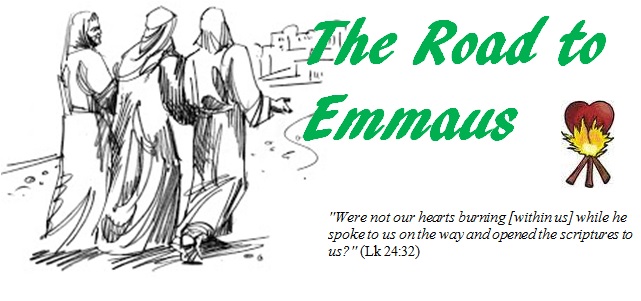
When he was at table with them, he took the bread. He blessed the bread, and broke it, and gave it to them. And their eyes were opened and they recognized him!(Luke 24:13-35)

Thursday, August 12, 2021

Remembering God's Blessings


Remember Joshua?  He was the leader of Moses’ army, the famed trumpet player at Jericho, and Moses’ successor as leader of Israel.  It was he who led his people into the promised land.  As Joshua was nearing the end of his life and preparing to pass on the torch of leadership to the judges, he called them all together, to offer last words of wisdom.  He offered a litany of the ways in which God had provided for them and their ancestors in the past.  In essence, Joshua charged his successors to remember, one by one, God’s blessings over the many years and generations (Joshua 24:1-13).

In reflection on this chapter of Joshua, I wondered how often do I take time to identify and acknowledge the ways in which God has blessed—and continues to bless—my life?  My answer is not often enough!  Oh, sure, I know I’m blessed.  But how often do I, like Joshua, do an accounting of those blessings?  How often do I take the time to list them out, feel the goodness of those blessings, and acknowledge God’s closeness in all that I do and experience? 

Despite being in retirement, I’m too busy.  My life is fraught with overwhelming busy-ness; mounds of work to be done (not really), challenges to be met (nope), deadlines hovering on the horizon (not anymore), and the list goes on and on and on (in my own mind).  I’m grateful to God; but taking time to think about those blessings? Not very often.  And, frankly, all too often, I attend to the not-so-great happenings in my life.  Like all of us, I have ample instances of those disagreements with others, disappointments, and anger at injustice that it’s all too easy to let those obscure my sight and occupy my few remaining moments.

Yet, in those all-too-few moments when I do stop to think about God’s presence and blessing in my day (most often just before going to sleep), I find a richness of love and relationship that give me a moment’s respite.  I see God in the gentle smile of my wife, the laughter of friends, the growing maturity of my grandchildren, and even the tears of strangers.  God is present and I know that to be true in the depths of my soul. 

Maybe you’re better than I am at taking stock of God’s blessing in the little moments of your day.  If so, you’re blessed in another way too.  If not, then join me in listening to the Spirit’s call to remember and make it a part of our lives, every day, all days. 

Wednesday, August 11, 2021

Because Jesus says so


Peter approached Jesus and asked him “Lord, if my brother sins against me, how often must I forgive him? As many as seven times?”

Jesus answered, “I say to you, not seven times but seventy-seven times.” (Matthew 18:21–19:1)

In other words, without limit.  Why?  Well, because Jesus says so – a pretty good reason even if we just stop there.  But Jesus goes on to spell out the reason in the parable of the man who was forgiven a great debt, but then turned around and refused to forgive his fellow servant.

We must forgive, first, because we’ve been forgiven.  Christian ethics has been well characterized as a “therefore” ethics.  God has done this; therefore we must do likewise (out of sheer gratitude if for no other reason).  Christian ethics is not based in philosophy or abstract concepts; it’s based in an action – God’s saving action.  We can never afford to lose sight of God’s action – God’s prior reaching out to us.

But there’s a second reason for His limitless forgiving.  God’s purpose is to save everyone.  As Christians we explicitly take that mission as our own, and we’re empowered to do so by our baptism.  As St. Paul says, in Baptism we have died with Christ. The new life we live is precisely His life, His spirit, living in us (Romans 6).  The person who has offended us is already forgiven by God.  How, then, can we withhold our own forgiveness?  In other words, how can we do so and call ourselves Christian?  When we forgive, we simply make God’s prior forgiveness concrete here and now.  Probably the offender didn’t expect us to be forgiving.  Perhaps we help the offender experience God’s forgiveness in our own.  Perhaps we call both of us to a change of heart.

When we find it impossible to forgive, the one thing we know will help is God’s grace.  A grace is a specific act of God’s love for us personally.  It’s specified to affect us where we need help, light, guidance, strength, courage, and even the desire to speak or act in real situations where it would be best in God’s eyes and in our own to do so.  Asking for the grace to forgive a particularly deep hurt, where doing so seems impossible, is a perfect case in point.  Nothing is impossible for God (Matthew 19:26), and God wants to be there, in our hearts, helping us when we cannot alone bring ourselves to forgive those who hurt us.

No one can expect to go through life without being hurt by others.  We wish we could.  We wish our children could.  But we’re all vulnerable to being used or abused, neglected or abandoned by others when they become greedy, ambitious or arrogant.  When that happens, we’re all called to be forgivers.  When it’s hard to forgive, we ask for the grace to do so.  As we mature in our Faith, the grace abides.   This in turn enables us to become men and women with the gift, rooted in experience, to help others who have been hurt:  to become apostles of reconciliation.   This is an enormously important mission, given the great need for reconciliation throughout our world, in any and every place the Lord may place us.

Tuesday, August 10, 2021

Face-to-face


"Since then no prophet has arisen in Israel like Moses, whom the Lord knew face to face." (Deuteronomy 34:10)

This line in the Old Testament got me thinking today about our modern age of social media—which is anything but social at times.  It seems to me that the ability to say things under the protection of anonymity has helped to spread hate and division faster than any other form of communication ever known to man.

The most powerful communications tool is a face-to-face talk, with eye contact.  It seems that we avoid face-to-face communications when absolute honesty is required or when the topic makes us squirm.

Imagine knowing God face-to-face.

Face-to-face with the Lord God almighty, maker of heaven and earth.  Face-to-face with the supreme being.

How might I conduct myself if I knew that every now and then I would have to stand face-to-face with someone who knows everything there is to know about me?

Face-to-face with someone who knows my every thought and deed.  Nothing concealed.  Never even a chance to pretend to be something I’m not or to hide anything that I am.

How much of that could I stand?  Why does the thought of it make me uneasy?  Because I don’t have the courage to be face-to-face with myself?

But why be afraid?

I felt a little less afraid after I read a passage in Matthew from the perspective of the brother who sins.  I put myself in his shoes (Matthew 18:15-20).

I’m not comfortable in his shoes because my experience tells me that people discern my faults, blame me, when they want to exclude me in some way or when they’re ashamed of their own behavior.

But in this passage, the person who confronts me about my sin is acting out of compassion.  How do I respond?

I get three chances—first when I’m confronted by one, second when two or three people sit me down for an honest chat and third when the church becomes involved.  What’s their motive?  It’s not punishment, they want to keep me in the family.  That’s important to repeat: They want to keep me in the family.  Excluding me is the last resort.

Again, how do I respond?  How could the life that God planted in me resist such love?


Monday, August 9, 2021

Cheerful giving


As children, we’re all taught to share.  It’s one of the hardest lessons for young kids to learn, especially when they really want to keep the requested item.  For instance, when my granddaughter is asked to share a certain set of toys, she will sometimes offer a totally different (and usually unacceptable) toy that she doesn’t want, so she can keep the desired ones all to herself.  “Mine!” is the cry of the child.

I have to wonder though; have we, as adults, really outgrown that impulse?  So much of the message of Jesus, and indeed of all Scripture, is about generous, big-hearted, selfless giving.  But it’s a challenge! Even as an adult, it’s easy to give or to share when I have more than enough for myself or when I don’t much care about the requested item.  What about when I have to sacrifice something I want in order to give it to someone else?  Too often, my inner toddler comes out and I suggest other alternatives or try to finagle my way into getting to keep what I want.  If I simply must give something up, I’m not the “cheerful giver” that God loves (2 Corinthians 9:6-10); I give with resignation or downright resentment. Then I’m tempted to keep track of who gave what and when, so in the future, I can call in the favor and balance the scales.

On the other hand, despite that difficulty with physical giving, on the emotional side I’ve been known to “over-give”, especially my time and talents.    I wanted to make others happy, or I wanted to be liked or I wanted to uphold my treasured image as a good person, so I sacrificed myself to such a degree that I had nothing left – no energy, no strength, no reserves.  When I got so depleted, I was not a cheerful giver nor an effective one.  It was just as unhealthy and un-Christian as the refusal to give in the first place, although it’s often harder to discern because it seems so virtuous.  It took several good friends to point this out to me, and I will be forever grateful to them.

But I think we can achieve balance on both ends of the spectrum.  We need to adopt the heart of Christ. We need to pray and allow God to transform our hearts into God’s own, to join our will to the will of God.  Jesus didn’t cling to possessions, people, or even life itself (John 12:24-26).  Yet He didn’t over-give either; He took care of Himself as the valued son of God. I’m slowly and sometimes painfully learning to give generously and cheerfully both physically and emotionally, and yet to respect the dignity and value I have as God’s beloved child by also generously and cheerfully tending to my own needs. I still find the latter more difficult, but I’m learning.

Sunday, August 8, 2021

"That we may not offend..."


Mask mandates and vaccinations.  It seems like common sense to me.  And yet it seems that these two issues continue to dominate peoples’ lives a year and a half into the pandemic.  Why wouldn’t anyone want to err on the side of caution when it comes to respecting the health and welfare of our fellow brothers and sisters in Christ?  Even if one considered it an infringement on personal liberties (it’s not!), or (God forbid!) an inconvenience?  The worst thing about the conflict is the hate, fear, and suspicion between the two camps. 

Sometimes Jesus’ teaching revolves around practical common sense.  In my favorite “fish story” of all time, as the plots against Jesus begin to build, the temple tax collectors ask Peter whether or not Jesus paid the temple tax.  Jesus knew they weren’t as interested in whether or not He paid as in “catching” Him at something.

It’s the kind of situation we all hate to be in, filled with fear and conflict.  But if we watch Jesus, we can see that His response teaches a good lesson.  He’s calm and thoughtful and brings up the thorny issue Himself in front of the accusers who haven’t had the courage to face Him directly.

The accusation of the tax collectors isn’t fair, but Jesus doesn’t fight every injustice He sees.  Rather than rail against the people who question Him, Jesus points out that He shouldn’t have to pay – but then pays it anyway.  He says we’ll pay the tax, “that we may not offend…”  (Matthew 17:22-27)

I suspect Jesus doesn’t care if He offends these tax collectors, but He doesn’t want to get sidetracked by tax squabbles.  So He performs a small and delightful miracle—one that makes me smile every time I hear it.  Jesus tells Peter to catch the first fish that comes out of the sea and in its mouth would be a coin to cover temple tax for both Jesus and Peter.  He’s saying, “Trust in God for the things you can’t control in your life.”

I often get un-centered and self-absorbed by conflict.  Jesus wants us to stay on focus and to trust in God rather than get caught up in unimportant conflicts of life.  He wants to get back to His message of justice for the poor, loving our enemies and trusting in God.  This gospel is an invitation for us to accept the powerlessness we have in so many areas of our lives and embrace it as a way to draw closer to God. He doesn’t want us to surrender our peace to people who will draw us away from God by fretting, worrying and forgetting to surrender our lives to God, not humans who pick away at us.

Saturday, August 7, 2021

How are we in relationship with God?


As I prayed and reflected on today’s Scripture readings, I felt resistance, but I couldn’t put my finger on it.  It took me a while to realize that my resistance was that I didn’t want to reflect on and share about the bread of life referring to Eucharist, because that would be too easy, and prevent me from entering fully into prayer.  I assumed I knew where my prayer was going to lead.  When I was finally able to let go of this presumption a lot of questions surfaced, including:

How is Jesus offering Himself to us for nourishment?

How is Jesus inviting us to be nourished?

How does God sustain us?

How does the Father draw us to Him?

How do we listen to the Father?

How are we taught by God?

In some sense, all these questions ask the same thing: How are we in relationship with God?  The other thing I noticed was that all the questions speak of God/Jesus initiating the action.  The Divine reaching out to us.

In the Old Testament reading, Elijah, in anguish, is praying for death.  Instead, God reaches out to Elijah through an angel, offers him cake and water and encourages him to eat and live and continue his journey (1 Kings 19:4-8).  I’ve experienced this several times throughout my life.  Sometimes when I’ve felt down, feeling lonely or afraid, I’ve had to stop and take a moment to look outside or take a walk and hear the wind in the trees or notice the beauty of nature, feeling the presence of the Divine “feeding” my spirit, encouraging me, reminding me I’m not alone.   God is reaching out.  We just need to take time to notice.

In the Gospel of John (John 6:41-51), Jesus is telling us “I am the bread of life.”  I will sustain you.  We do experience this with the Eucharist but today, in this reflection, I hear the invitation to notice all the other ways God sustains us.  Angels, companions, trees and water, Scripture, art and music, beauty.  God is always and everywhere reaching out to us, sustaining, nourishing, teaching and drawing us nearer.

The Divine is reaching out to us, nourishing us, companioning us, filling us with Love.  Today, I hear the invitation to pause and notice the many ways this happens.  And then, a last question occurred to me, How will we respond?  This is how our relationship with God grows.

Friday, August 6, 2021

Faith can move mountains--if it's God's Will


There are a lot of people who think that the Old Testament is a little scary; lots of fire and brimstone, people being wiped out, people dying horrible deaths, etc.  Then there are also a lot of people who like the “You’re OK, I'm OK, it's all OK”, that they perceive to be the New Testament.  I hope my reflection today can point out how far off base both of these views are, and why God chose to give us both the Old and the New to complement one another.

In Deuteronomy, Moses reminds us that everything is a gift from God.  That our goal in life should be to love and serve God.  We should keep God's commandments on our hearts, and we should teach them to our children every opportunity we get (Deuteronomy 6:4-13).  What wonderful truths and lessons.  And this Scripture was incredibly reaffirming to me.  I’ll bet all of us have at least one rote prayer that we say daily.  It's so automatic that sometimes we don't even remember if we've said it or not?  I have several and sometimes I'm quite critical of myself for them. “Blah, blah, blah, yadda, yadda, yadda, Amen”.  It seems sometimes that family and work can be all consuming and there isn't time for God.  Maybe that's when God will use a little, rote prayer to get His foot in the door and ask you for some quality time.  Always time well spent.

Psalm 18:2-51 echoes the lesson of Deuteronomy.  "The Lord is my rock, my fortress and my deliverer".  Everything comes from God, and He is where we can take our refuge.

Then comes Matthew.  What happened to I'm OK, you're OK?  A father brings a boy to Jesus saying that His disciples couldn’t heal the child.  Jesus explodes, showing anger, frustration and exasperation.  Jesus heals the boy.  Later the disciples approach Christ, I would guess with some timidity, and ask why they couldn't heal the boy.  "Because you have so little faith."  (Matthew 17:14-20)

I can’t help but think back to over 40 years ago and a scene from “Star Wars: The Empire Strikes Back” where Luke is studying under the Jedi master Yoda.  Yoda strives to help Luke master the force so he can use it to combat evil.  After a period of time practicing the use of the force – moving objects, anticipating what another will do, analyzing thoughts and motives of others – Yoda challenges Luke to move a spaceship.  Luke is unable to do so, and then Yoda demonstrates he can do it easily.  In awe Luke exclaims “I don’t believe it.”  And Yoda replies “That is why you fail.”  The disciples failed in their quest due to their lack of faith – they didn’t believe they could do what was asked of them.  Jesus reminds them of the power of faith with a visual they could understand – faith the size of a mustard seed can move a mountain.

Are we called to move mountains?  Probably not.  But are we called to believe in the face of difficulties?  Yes, precisely in those times and those difficulties that might seem like mountains.  It is easy to believe when things are going well.  It is easy to be faith-filled when we aren’t challenged.  But when things happen that shake our faith, we have to dig deeper and find a core from which we can draw strength.  For each of us these situations are different – one person’s molehill is another’s mountain.  But for all of us we can take strength from knowing (believing, having faith) that a loving God is there to be with us when times are difficult. 

Thursday, August 5, 2021

Peaks and valleys


No matter how ordinary and even dull our faith life may feel on a day-to-day basis, I think that for everyone there have been some peak moments that stand out as summits in our faith experience. One such experience for me was the time when I attended a holy hour and Benediction service with my mom.  A holy hour and Benediction service begins with the exposition of the Blessed Sacrament while a hymn is sung (usually ‘Tantum Ergo’).  Then a couple of readings from the Bible are presented.  On the day I remember so well, Father Joe began reading the Gospel:

"On the evening of that first day of the week, when the doors were locked, where the disciples were, for fear of the Jews, Jesus came and stood in their midst and said to them, “Peace be with you.”

When he had said this, he showed them his hands and his side.  The disciples rejoiced when they saw the Lord.

Jesus said to them again, “Peace be with you.  As the Father has sent me, so I send you.”

And when he had said this, he breathed on them and said to them, “Receive the Holy Spirit.”  (John 20: 19-31)

As if on cue, I became very aware of a breeze coming through the door and sweeping over me.  I cried as I took a deep breath to “catch” all the graces I could.  It was exhilarating!  I wanted the feeling to last forever!  Because I’m a rational man, I realize it probably wasn’t the Holy Spirit (I won’t rule it out, though!).  It was a semi-breezy day and the doors at either end of the church were opened to keep the church cool, but the breeze put me “in the moment” with the Apostles that “evening of the first day of the week”.  So although I could explain my experience through rational thought, I still believe that the Holy Spirit was present at that moment.  I’ve had many, many other similar experiences of God’s presence in my life, and I often thank God for these “eternal glimpses” of His Love.

The gospel narrative of a similar experience in the discipleship journey of three of the apostles contains some lessons for us.  It’s Mark’s account of the Transfiguration of Jesus (Mark 9:2-10).

One lesson is the recognition of a very human inclination to seize an encouraging experience and attempt to make it permanent, to “build three tents” there.  When we feel spiritually consoled or are given a keen awareness of God's presence with us, we may very much desire that the moment would never end now that we “have arrived”.  That seems to be how Peter felt then.  It’s interesting that the “voice from the cloud” actually interrupts Peter “while he was still speaking”, as if telling him to keep quiet and stop making no sense.  Peaks and valleys are both part of the beauty of life's landscape.  A peak stretched out without boundaries would be as flat and potentially as monotonous as a low lying plain, no matter how high its elevation. It’s the existence of valleys that renders peaks so majestic and awe-inspiring.

Another lesson flows precisely from the very transient and indeed exceptional nature of that experience of transfiguration.  The apostles and disciples encountered and followed a Jesus that didn’t appear to them as ‘transfigured’ at all, and even for the three privileged ones of the gospel reading the experience was a clear exception.  In our own faith experience of Jesus' presence in our lives we often encounter Jesus rather as ‘disfigured’ in the flawed human beings we interact with on a daily basis and even in our own selves.  ‘Disfigured’ in a Church riddled with scandals, in the poor who don’t meet our standards of appearance or manners, in the real limitations of the very people we love and want to love, in the flawed implementation of who we ourselves desire to be.  It’s here that our tents are pitched, not on some exceptional experience of transfiguration.  However recognizing the ‘disfigured’ Lord is not quite spontaneous for us, it’s a gift — a gift God desires to give, but also a gift we need to desire to receive. 

Wednesday, August 4, 2021

The answer, as always, is Jesus


In this journey we call life, it’s good to often ask ourselves “How well do we follow instructions?”  If we’re trying to assemble a bicycle, a toy, some Ikea furniture, or even bake a cake, do we use the instructions or do we go by our own intuition?  I suspect the truth is we're just like the children of Israel who didn’t always follow instructions, which usually produced bad results.

The children of Israel were allowed to wander in the wilderness for 40 years because of their disobedience and unwillingness to follow God’s instructions.  After God had selected Moses and Aaron to lead the children of Israel out of Egypt, they found themselves in the wilderness, with no water, and no vegetation.  The Israelites were complaining against Moses and Aaron for their present condition, so much like people do today.  We attempt to blame everyone else but ourselves.  We never seem to be satisfied. 

God gave clear instructions to Moses: “Take your staff and assemble the community, you and your brother Aaron, and in their presence order the rock to yield its waters.  From the rock you shall bring forth water for the congregation and their livestock to drink.”  But Moses instead hit the rock twice which caused God to not allow Moses or Aaron to lead the Israelites into the Promise land (Numbers 20:1-13).

This is why it’s so important for each one of us to know Jesus for ourselves.  Each one of us is accountable to God for our own deeds.  Jesus asked his disciples, “Who do people say that the Son of Man is?”  After much deliberation on the part of the Apostles, Jesus re-phrased the question by asking, “But who do you say that I am?”  (Matthew 16:13-23).  The whole idea of knowing Jesus becomes personal.  No matter how tough life becomes, Jesus is the answer.

Tuesday, August 3, 2021

Great faith


Although Scripture is the Word of God, we must still approach it with intelligence and that sort of suspicion which will help us to seek out the hidden treasure which it contains. 

Take for example the tale of a Canaanite woman—an outsider—who continually shouted at Jesus to take pity on her, because her daughter was “tormented by a devil.”  (Matthew 15:21-28).  Jesus ignored her, but those who were with Him were annoyed at her shouting and asked Jesus to give her what she wanted.  He answered them with a sort of “mission statement”; “I was sent only to the lost sheep of the House of Israel.”  The woman had approached and overheard.  She knelt at His feet and called Him “Lord” and asked again for help.

Jesus remained focused on who He had come to save and to serve: the Jews.  “It is not fair to take the children’s food and throw it to the house dogs,” he said.

The woman was unfazed by this act of what today we call political incorrectness.  She was steadfast, and met him point for point: “Yes, but even the house dogs eat the scraps that fall from their master’s table.”  In one fell swoop she had acknowledged the Jews’ disdain for outsiders such as herself (the “dogs”), and honored Jesus by her alluding to Him as the master of the house.  And she made it clear that she wanted Him to include her—or more particularly, her daughter—as a beneficiary of His giftedness.

I wonder if He was motivated by her acknowledgement of His special giftedness as “master of the table”.  Or maybe He was touched by her quick wit, her almost lawyerly extemporaneous speaking skills.  Was he moved by her persistence, her fierce motherly love for her daughter?

As I ponder this gospel, I imagine Jesus’ inner monologue to be something like: “If I’m not here for this woman, I’m here for nobody.  Look at her faith!  Look at her trust!  Look at her concern for her daughter!  Look at her dogged determination to try every last avenue of healing—even to risk humiliation—for her own.   This is the kind of love I experience from Abba Father.  I will give her what she asks.”

Matthew’s gospel has Jesus telling her, “O woman, great is your faith.  Be it done for you as you desire.” 

The encounter seems to be clear and have several levels of meaning:  the priority of Jewish claims on God's beneficence, the value of persistence in prayer, etc.  And we can see that this latter point is supported by what Jesus has to say about the man seeking bread in the middle of the night (Luke 11:5-13) or about the widow and the unjust judge (Luke 18:1-18).

One tool of critical importance in our understanding of a passage like this is our personal experience, because when we confront our own experience of asking God for something and the seeming silence our request is met with we might and often do wonder whether God is listening or even whether the value of persistence in prayer is a hoax.  Which leads us, or at least should lead us, to a personal conversation with God about the problem.

Some possible points to consider in this situation: maybe we’re asking for something that’s not good for us or for others and maybe instead God is taking seriously our petition in the "Our Father" that asks that God's will, not ours, be done.  Or maybe God is willing but the people we’re asking Him to influence are actively turning a deaf ear to His voice.  Or the changes we’re asking for can’t happen in a moment: ocean liners are not as maneuverable as bicycles, and we human beings have a lot of history and momentum to overcome.

Or maybe I'm saying that Scripture is not simply God's word to us but a place where, in the Spirit, we have a privileged place to exchange words with God, a place where we cooperate in His teaching our hearts and His helping us to grow in understanding, wisdom, patience, gratitude, and love.

Monday, August 2, 2021

A lesson "by the Numbers"


Years ago I had the great and well-intentioned idea to read the Bible from “cover to cover”.   I quickly learned, by the end of Leviticus, that the Word of God is best read and understood when guided by the Holy Spirit and the “schedule” of daily readings prescribed by the Church.  I’ve heard many very pious and intelligent people say that they also came to the same conclusion.  Reading the “books” in consecutive order can grow quite tedious and—God forgive me for saying this—boring.  Especially the Book of Numbers.  But even Numbers has a few episodes that contain practical lessons that the Lord wanted to teach Moses’ followers and probably us, too.  For instance the lesson I'm learning today, as I reflect on Chapter 12, verses 1-13.

God had put Moses in charge of the operations of the Hebrew people when they were held captive in Egypt.  Face to face God spoke to him.  “Now, Moses himself was by far the meekest man on the earth.”  So in spite of his one-to-one conversations with God, Moses depended upon Aaron and Miriam to do much of the speaking and PR work for him.  As often happens when people are the subordinates in an enterprise, but still have lots of the responsibility and perform much of the behind-the-scenes labor, petty jealousy of the leader often grows because he seems to get all of the credit.

Then the jealousy gives rise to detraction, tearing down the reputation of the leader.  That’s what Miriam and Aaron were doing.  They found fault with Moses on the pretext of the marriage he had contracted with a Cushite woman.

When God saw what was going on, He demanded to meet with the three people involved and to straighten out the situation.  The Lord became angry with the detraction on the part of Miriam and struck her with the disease of leprosy.  The lesson the Lord taught was how repugnant He found people who belittled others out of jealousy.

Moses didn’t retaliate against Miriam for her detraction, but instead pleaded with God to return her to physical wellness instead.  I think that through this episode in Numbers, God is asking us to react like Moses by accepting others in spite of their jealousy and belittling comments.  He wants us to genuinely forgive and even pray for our detractors.  While praying our nightly “Examine of Conscience”, if we become aware of others who might have ignored or ridiculed us during the day, it might be profitable to question ourselves.  How willing are we to respond as Moses did?

Sunday, August 1, 2021

"Be thankful for what you have"


Whenever my brothers and I would begin grousing that we didn’t like what was being served for dinner, or that there wasn’t enough of a particularly good dinner, we would be met with the response, “Be thankful for what you have!"  I was reminded of this saying while reading my Scriptures today.

The Israelites were roaming around the desert working their way to the Promised Land.  They were learning to be dependent on God.  First they grumbled about water, then they grumbled about food.  They weren't hungry, but they weren't satisfied.  They had full stomachs, but they craved greater variety and "better" food than what the manna provided (Numbers 11:4-15).

I don’t believe the Israelites were intentionally ungrateful, unsatisfied, or unwilling to accept the gift they received for what it was and not what they wanted it to be.  They were just human, reacting on a sensory level instead of on a spiritual level.  They were overly concerned with the immediate and didn’t have enough concern for the bigger picture.  They were so blinded by the desire to have better food that they forgot the price they paid for the food was the loss of their freedom!

I know I have an attitude like the Israelites many times.  I suspect many of us have had this attitude of not being thankful for what we have.  I suppose most of us forget at times that all we have - our homes, and jobs, and families, and wealth, and health, and our very existence - are gifts from God.   And so we complain, or desire, or crave, other "better" things.  And yet, we’ve received from God all we need.  That’s one lesson from the wandering in the desert - God will provide all we need.  We need to accept that truth - we need to be thankful for what we have.  This is a priceless gift, and we should rejoice in its simple power and be conscious of our gratitude. 

Yet so many times we’re ungrateful.  So today, my prayer is that I can be genuinely grateful for what I have, and not grumble about what I don't have, that I can give all back to God and take only what I need - the Creator's love and grace.

Saturday, July 31, 2021

Putting away my old self takes action and intention


The Scriptures I meditated on today helped me center myself and focus on what’s truly important (at least until I’m finished writing—then I’ll probably revert back to my usual sinful self).  Jesus shares the simple but profound message that He is the bread of life and whoever comes to Him will never hunger and whoever believes in Him will never thirst (John 6:35).  But it seems that we don’t always readily embrace this powerful message.

My life is filled with blessings.  After many years of employment, I’m really enjoying retirement!  I share love with many family members and friends.  Yet there are still times when I find myself overextended and under-appreciated.  When I get overly tired I can find myself being drawn into envy and the loneliness supported by consumerism and individualism.  The sixteenth chapter of Exodus opens with the Israelite community complaining about being led into the dessert and fearing they will die of famine.  God sends them bread, so they’ll know that He the Lord is their God (Exodus 16:2-15).

Social media can be a place where we compare our lives to others in an unhealthy way.  But it can also be a place where we can celebrate joys experienced by others and be in solidarity with those who are hurt.  And in a surprising way we can get inspiration from social media.  A friend just posted this:  Stop worrying about how it is going to happen and start believing it will.  This is something God might have said to the Israelites.

In one of his letters, Paul is guiding the Ephesians to their true lives.  He tells them they must no longer live in the futility of their minds (Ephesians 4:17-24).  This advice rings so true today as it’s easy to fall into the trap of thinking we can reason our way through any situations.  We start to think we can rely only on our own resourcefulness rather than rely on God’s grace.

Paul goes on to say that we should put away the old self of our former way of life, corrupted through deceitful desires, and be renewed in the spirit of our minds and put on the new self, created in God’s way of righteousness and holiness of truth.  I find setting aside my comfortable habits to be very challenging.  Even the habits and patterns that don’t always help me be my best self are like a well-worn pair of shoes.  I’m barely aware of their presence in my life.  Putting away my old self requires active intentions.

Pope Francis, in one of his writings, helps us explore ways we can put on our new self: “Do you work for a living?” the Pope asks. “Be holy by laboring with integrity and skill in the service of your brothers and sisters.”

He goes on to say, “Don’t be afraid of holiness.  It will take away none of your energy, vitality or joy.  On the contrary, you will become what the Father had in mind when He created you, and you will be faithful to your deepest self.  To depend on God sets us free from every form of enslavement and leads us to recognize our great dignity.

In John’s Gospel especially, we see Jesus in His truly human form.  He’s tired after feeding the large crowds of people with loaves and fishes.  And yet there are cries from people in the crowd who still want proof of who Jesus is by demanding He perform miracles.  Although frustrated with the demands of the crowd and their disbelief, Jesus continues to guide and teach.  He shares that it’s important to not work for food that perishes but for the food that gives eternal life (John 6:24-35).   I think of the times when I’m searching for an answer to a challenging situation, so I can imagine the confusion people in the crowd must have experienced when they heard Jesus say that the way to accomplish the work of God is to believe in the one He sent.  That teaching is simultaneously so simple and so complex.

As I prayed today with these Scriptures, I explored these questions:  How can I trust the word of the Lord?  Where do I see examples of someone who lives on the true bread of life?  What steps can I take to put away my old self?  Who can I invite into my life to help me stop working so hard for food that will perish but rather seek the food that gives eternal life?

“One does not live on bread alone, but by every word that comes forth from the mouth of God.” (Matthew 4:4)

Friday, July 30, 2021

Blessed are the persecuted


“Blessed are they who are persecuted for the sake of righteousness for theirs is the Kingdom of heaven.”  (Matthew 5:10)

When Jesus delivered the Sermon on the Mount (Matthew 5:1-12) including the beatitude about the reward for enduring persecution, Herod’s recent murder of John the Baptist may have been painfully in His mind and that of the crowd.  I wonder if Jesus fought back tears as He spoke these words.  I wonder if His audience did.

The juxtaposition of this beatitude with the gospel account of the beheading of John the Baptist haunts me a little; I can feel the personal impact that John’s murder must have had on Jesus.  This beatitude suggests to me that Jesus had come to terms with the murder of His cousin by offering the Kingdom of heaven as a reward both to His listeners who might face persecution for following Him and to future generations of persecuted people.

John the Baptist seems terribly relevant to our time – not just a figure who was popular in grade school saint quizzes because of the gory pictures of his head being delivered to Herod.  John was rough but fearless in fighting for righteousness.  He was one of the first saints who inspired others to do the same.

In our era, I think, for example, of people like Saint Archbishop Oscar Romero, the Jesuits and the nuns who were murdered in El Salvador for fighting for justice for the poor.  I think of Saint Mother Teresa, who fought ceaselessly for the dignity of the poorest of the poor and was quite often rebuked and ridiculed for her beliefs.  I think of Martin Luther King, Jr., who was killed for his belief in racial equality.  They were as tough and zealous in their own ways as John the Baptist. They suffered the same fate and received (I assume) the same reward. 

I hope and pray that all of us who think about John the Baptist and this Beatitude will gain both a new insight into the humanity of Jesus and have the courage to take just a few more risks in our own communities “for the sake of righteousness.”  We may pay a modest price, but Jesus has promised us the Kingdom of heaven if we live this beatitude.

God bless all who are already doing so, like my daughter and thousands of other immigration lawyers like her around the world who tirelessly work for justice for immigrants and are frequently maligned by others.  Like many thousands of doctors, teachers, and priests around the world who are in danger constantly because they ignore unjust political pressures and still minister to their fellow human beings.  The Kingdom of heaven will surely be theirs.

Thursday, July 29, 2021

Look beyond the surface


My reflection today is on the account in Matthew’s gospel when the people in Jesus’ hometown of Nazareth took offense at Him, which led Jesus to say, “A prophet is not without honor except in his native place and in his own house.”  It’s somewhat surprising that they took offense at Jesus after witnessing His wisdom and mighty deeds.  Jesus was very familiar to the townspeople, and it seems that that familiarity led them to doubt that Jesus was someone special (Matthew 13:54-58).

In many ways, the people who knew Jesus for many years should have been the first people to see His greatness.  And most likely there were some from His hometown who did.  They would have known Jesus’ mother, the Blessed Virgin Mary, and she would have given daily witness to incredible virtues. They would have known Joseph as a truly righteous and just man.  And Jesus would have exuded every human virtue to perfection as He grew, and, again, that should have been easily noticeable.  But many failed to see the holiness of Jesus and the Holy Family.

This experience of our Lord should remind us that it’s easy to miss the presence of God all around us.  If those who were closest to Jesus didn’t recognize Him as a man of exceptional virtue and holiness, then how much more might we fail to see the presence of God in the lives of those we encounter every day?  For some reason, perhaps because of our struggles with pride and anger, it’s easier to look at the faults of another than at their virtues.  It’s easy to be critical of them and to dwell upon their perceived weaknesses and sins.  I’m reminded of the recent events surrounding Richard Branson and Jeff Bezos.  In many of the stories and comments about their space travels, there seemed to be more anger and resentment about how they choose to spend their money than is warranted, in my opinion.  The biggest complaints are that the money they spent (not to mention the money others spent) on a “frivolous” endeavor could have been more wisely spent to improve the lives of many who are not as well-off.  Still others judge the billionaires’ pursuits as greedy and uncaring. 

But this Gospel story should encourage us to do all we can to look beyond the surface and to see God present in every life we encounter.  I think of all of the people that the billionaires employed in their space programs that might otherwise not have had jobs.  I think of the technology that may arise from these programs that could very well end a lot of the suffering in the world.  On a more transcendental level, I think of the hope that is spurred on with the successes of these programs and others like them.

On the most fundamental level, God dwells within each and every person He has created.  Even those who remain in a state of persistent mortal sin are still made in the image of God and reflect God by their very nature.  And we must see this.  And those who are in a state of grace carry the presence of God, not only within themselves by nature but also through God’s action in their lives.  Every virtue that every person has is there because God is at work in them.  And we must work to see this divine activity in their lives.

We can begin by thinking about the people with whom we are closest.  When thinking about them, what comes to mind?  Over the years, we can build habits of dwelling upon others’ faults.  And those habits are hard to break.  But they can only be broken by intentionally seeking out the presence of God in their lives.  As I wrote earlier, if Jesus’ own townspeople had a difficult time doing this with Him Who was perfect, then this should tell us that it will be even harder for us to do with those who lack perfection. But it must be done and is a very holy endeavor.

Today is a good day to start.

Wednesday, July 28, 2021

Family love is central to our human lives


Family love is central to our human lives.  And though not every family enjoys unity and mutual love, we must never forget that God wants to enter every family just as He did with Martha, Mary and Lazarus.

Martha, Mary and Lazarus were close friends of Jesus.  They lived in Bethany, which was only a short distance from Jerusalem.  Martha is remembered especially for the story in which she had been preparing a meal for Jesus, while her sister, Mary, sat at Jesus’ feet listening to Him, leaving all the work to Martha.  Martha complained to Jesus, urging Him to “Tell her to help me.”  Jesus’ gentle rebuke of her request was, “Martha, Martha, you are anxious and worried about many things. There is need of only one thing. Mary has chosen the better part and it will not be taken from her.” (Luke 10:38–42)

Mary is also known for the above story in which she sat at Jesus’ feet.  This has traditionally been seen as a symbol of contemplative prayer.  

Lazarus is, of course, well known for the fact that Jesus brought him back to life after being dead and in the tomb for four days.  Little else is mentioned about Lazarus in the Gospels except for the fact that the Pharisees wanted to arrest Lazarus at the time they were also seeking to arrest Jesus and that he was the sibling of Martha and Mary (John 11:1-54).

Up until this year, the Catholic Church chose this day as a memorial only in honor of Saint Martha.  But in February Pope Francis expanded this memorial to include Martha’s sister and brother.  When this memorial was established, the Congregation for Divine Worship said, “In the household of Bethany the Lord Jesus experienced the family spirit and friendship of Martha, Mary and Lazarus, and for this reason the Gospel of John states that He loved them.”  By honoring these siblings together, we’re especially reminded of the importance of remaining close to family and inviting Jesus into our family.  Martha, Mary and Lazarus lived together and shared a common life of love.  They invited Jesus into their family life, and He accepted their offer.  Jesus’ choice to befriend this family is an indication of His desire to unite each family and to befriend each member of every family so as to be the central source of their shared love and unity.  

Even if your family struggles in various ways, know that God wants to love you and your family in the same way He did the family of Martha, Mary and Lazarus.  Though they weren’t perfect, He loved them, nonetheless.  And He desires to do the same to you and your family.

Tuesday, July 27, 2021

Special moments


The journey through the desert to the promised land for Moses and the Israelites wasn’t easy!  There were long days filled with uncertainty.  They had suffered enough in captivity and just wanted life to be easier.  Moses was a good and faithful servant and God rewarded his dedication by never abandoning him or his people.  During this time, Moses was blessed to have many encounters with the Lord.  These special times gave him and the Israelite community the hope and promise they needed to stay on the journey (Exodus 34:29-35).


I think that we all can experience similar life-changing experiences in our relationship with the Lord if we’re open to allowing God to work in our lives.  There are so many ‘God moments’ in our daily life that we often don’t even recognize.  There are the many little kindnesses of strangers whether in the parking lot, grocery store, busy traffic or so many other places we go in a day.  


I feel a sense of gratitude for all the many blessings, the many ‘God encounters’ in my life and realize what a gift it is to be in relationship with the God of Moses who by his faith and radiant God-like presence was able to convey God’s message to others.


May our lives and the lives of those we encounter continue to radiate the presence and love of God in our lives!  

Monday, July 26, 2021

Don’t be the weed


In Matthew’s gospel, the disciples approached Jesus and asked Him to explain the parable of the “weeds in the field” (Matthew 13:36-43).  


I remember gardening with my dad when I was about 5 or 6 years old.  We were pulling weeds from the vegetable garden.  My dad started pulling out some plants that I recognized as one of my mom’s favorite bushes that were abundant in the front yard.  When I asked why he was pulling a “good” plant and calling it a “weed”, he explained, “If it isn’t what we planted, no matter how beautiful it is, it’s a weed, because it can take over the whole garden and the vegetables won’t grow or get as big as we want them to, so it doesn’t belong here.” 


If only life was this easy to understand and correct!  How many of us have worked in that heavenly garden of a place? You’re blessed beyond measure, you receive so many gifts of the Spirit, and you’re hoping and praying that what God wants you to share with others is what you’re contributing.  You understand the sacrifice of what you do – time away from your family, hours that you dedicate to service that usually pile up all too quickly.  You look forward to going to work every day, and you can’t believe the day’s hours have passed because you’ve found so much joy in your daily efforts.


But, then there are the weeds. Those folks who see nothing wrong with taking advantage of the system, taking a few free hours here, a few free trinkets there.  And we’re not usually given the opportunity of seeing those wrongdoers removed from the garden.  Not always are our warnings heeded of what we know or see, and so the joy of the garden is snuffed out, slowly giving way to the evil that begins to linger in it.  It’s so incredibly easy to become downhearted, depressed, or sad when you’ve lived through an experience like this.  You believe that you’re doing things the right way, going through the proper channels, but there will always be the weeds of the garden that want to snuff you out.  But we have to stand firm in our belief in a loving and merciful God.  The parable of the weeds in the field is the reality of good and bad.  I’ve been guilty of allowing others to “steal my joy” in their badness, and it’s thrown me into the throngs of depression and sadness rather than the goodness I should be searching and working toward. It’s affected my evangelism in the past and numbed me to my faith. 


Our own hearts must be open to God’s protection for us from evil.  He loves us so very much, and we know that there will always be someone who wants to control what others can contribute or experience in life.  Open your hearts to the Gospel and be the flower that God intended– don’t be the weed!

The fulfillment of dreams


As any parent knows, the birth of a child is the realization of one dream and the beginning of many others.  Each one of us represents the fulfillment of such dreams.  The feast of Sts. Anne and Joachim allow us to pause and ponder how Mary, the Mother of Jesus, was a daughter and a dream.  Her birth and her life were the fruits of her parents’ dreams.  But could Anne or Joachim ever have dreamed about the fruits of their daughter‘s womb?

There is very little that we know about Mary‘s parents.  Butler’s Lives of the Saints suggests that for centuries there‘a been considerable devotion to St. Anne.  What makes this feast day of significance, however, is that their lives point to that great mystery-the Incarnation of Christ.  In praising the parents of Mary, who were consequently the maternal Grandparents of Jesus of Nazareth, we’re once again reminded that God entered into not just a holy family, but an extended family, many of whom would have “longed to see what you see” (Matthew 13:16-17).

As we contemplate the lives of Anne and Joachim, we’re  invited to consider our own relatedness to not only our parents and extended family, but to our ancestors.  Perhaps our ancestors resembled Joachim and Anne in fostering dreams for the generations after them.

We don’t know if Jesus ever knew His grandparents, but we can be sure that His mother told him about them and taught Him to “give praise to famous men and women.”(Sirach 44:1-15).  

Might not we do the same?