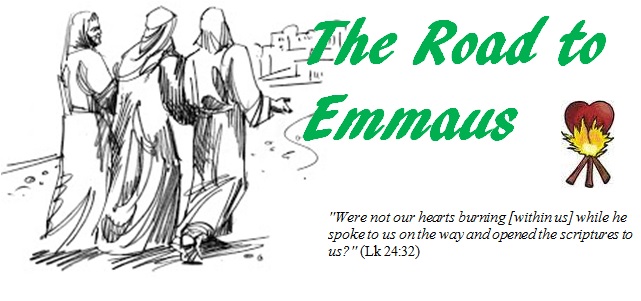
When he was at table with them, he took the bread. He blessed the bread, and broke it, and gave it to them. And their eyes were opened and they recognized him!(Luke 24:13-35)

Sunday, November 21, 2021

From my livelihood


In a few more days we’ll be celebrating Thanksgiving.  In a blend of traditions pre- and post-Covid, family and friends will be gathering for meals and fellowship either in person, virtually, or a combination of both.  In our secular culture, the Thanksgiving holiday is linked with the gift giving focus of the Christmas season.  Advertisements, coupons and catalogs have been arriving in legions.  The focus on gift giving can shift from joyous generosity to anxiety about what to give, which persons should receive gifts, confusion about what gifts would be appropriate and what resources should be spent.

In Luke’s gospel, Jesus commends the offering made by the poor widow.  He says: “I tell you truly, this poor widow put in more than all the rest; for those others have all made offerings from their surplus wealth, but she, from her poverty, has offered her whole livelihood.”  (Luke 21:1-4)

This profound and challenging teaching from Jesus can help us explore how we want to express both our gratitude during this Thanksgiving week and our love during the Christmas season.  I pray for the grace to understand how can I give not from “my surplus but from my livelihood”?

Jesus honoring the widow from offering her whole livelihood can feel overwhelming.  As I pray today with His words, I hear Jesus asking me to center my life to Him.  He’s not asking me to give away all of my worldly possession, but He does ask me to question how I use my privilege responsibly.  Jesus is extending a call to action, not a reprimand.  Feeling guilt or shame for what we have can be sinful, as the focus on self prevents us from being in service to others.

This Thanksgiving as I enjoy the usual Thanksgiving feast with my family, I pray to hear what else my loved ones need.  “From my livelihood” can I give my family members my time and attention in the form that meets their desire?  Can I let go of my expectations of how they engage in family time?  How can I be available to someone who is very challenging to me?  As I develop my Christmas gift-giving list, can my eyes be opened to who needs to be on the list in a special way?  Can I aspire to be like the widow and share the resources that are my livelihood: my time, autonomy, power, knowledge, health, compassion, creativity, and spirituality?  Digging deep to truly give can feel scary but I rely on my faith in God.  What a wonderful focus for giving thanks to Him!

Saturday, November 20, 2021

To tell the truth


In John’s Gospel, Jesus responds to Pilate who was questioning Him about whether or not He was the King of the Jews (John 18:33-37).  Jesus is clear that He is a King, but that His Kingdom does not belong to this world.  So where is His Kingdom?

We can look at Jesus’ statement from two points of view.  First of all, if Jesus would have claimed that He were an earthly king, one with civil authority, then Pilate would have judged Him to be guilty of trying to overthrow the Roman authority.  This would be unlawful and would be punishable by death.  In that case, Jesus could have been found legally guilty of violating civil law.

But Jesus was purely innocent.  He was morally perfect in every way, and that included His obedience to all legitimate civil law.  But Jesus is a King.  He is The King of all Kings!  Therefore, so as to exercise His Kingship, He declared that His Kingdom is not of this world.  In other words, it isn’t a Kingdom that was in competition with the Roman authorities or any other civil authority.  To that truth, Pilate didn’t know how to respond.

I read somewhere that, according to studies, the average American lies 11 times a week.  Of course, this assumes the people they polled were telling the truth during the survey.

I think many of us lie because telling the truth can put us in awkward, uncomfortable situations, the type we as humans are wired to try and avoid.  And then there’s the group of us who lie to look good.  What’s wrong with telling a few white lies?  In the study I read, researchers claimed “social lying” is often about appearances, looking good not only to our friends, but also to ourselves. By being untruthful, we’re all too often willing to hide our failures and shortcomings or nod in agreement with opinions to which we don’t subscribe.

So, why did Jesus respond to Pilate’s inquiry the way He did and emphasize the importance of honesty?  If we think about it, being truthful goes hand in hand with Jesus’ message of love; first, to love your God above all others, and then, to love your neighbor (Luke 10:27-28).  Truth is the very cornerstone upon which love is built, and without truth, no relationship, here on earth or in heaven, can survive.

God knows all and sees all, so our untruthfulness is only for our own presumed benefit. 

So today, in our conversations with God, let’s focus on being truthful in assessing how we’re trying to live our faith-filled lives.  Let’s not exaggerate our good deeds, omit our failings, or worry about being liked by others, but rather, learn to “testify to the truth” and in so doing, be more open and accepting of God’s unconditional love.

Over time, the added benefit of being truthful with God in all our daily conversations and prayers may be our increased comfort to “testify to the truth” with those we love and with whom we share our lives; to openly share with them our candid thoughts and feelings; and to welcome theirs as well.  By practicing truthfulness and honesty in our prayer life and then with our loved ones, we may gain the confidence to rewrite our own personal mission statement and vow to “testify to the truth” to all we meet.

Friday, November 19, 2021

It's why they were sad, you see?


We can miss the power of the familiar gospel when Jesus was confronted by the Sadducees, if we’re not completely honest with ourselves.  As usual, the religious leaders were trying to discredit Jesus and His mission.  This time, it wasn’t the usual suspects, the Pharisees.  These were the Sadducees “who deny there is a resurrection.”  Their ploy was to show that the very notion of a resurrection would lead to some very odd results.  The wife whom 7 brothers married, trying to produce offspring for their deceased brother, would find herself in the afterlife with 8 husbands (Luke 20:27-40).

The challenge for me, if I’m honest enough, is that I too often live my daily life not thinking about the afterlife much.  The temptation is to live for today.  The battles, struggles, dreams and rewards can keep me pretty occupied.

I’ve been to lots of funerals.  In the American culture, there is often a wake service the night before a funeral during which family members give testimonials about the one who died.  The language of many of those talks sometimes reveals little evidence in a belief in an afterlife.  At times, a poem is read or lyrics from a song are used on the program, speaking about the consolation we have that our loved one “remains with us in our memories,” or “they survive in the good deeds they have done.”  Only rarely, is there mention of the person being “in a better place.”

Jesus tells us the afterlife will be like a wedding banquet – a great celebration (Matthew 22:1-14).  He said He goes ahead of us to prepare a place for us (John 14:1-6).  Saint Paul encourages us to live in this world with our hearts set on the world to come (Philippians 3:20-21).

I’m not suggesting we don’t live in this life or enjoy it.  I’m just reminded by this gospel not to forget that we await new life, everlasting life.  The victory over sin and death has been won.  This world and its anxieties, struggles, and deaths isn’t all there is.  There’s a merciful God who is also just.  That’s such good news for those who will never have justice in this world.  It can be bad news for those who live this life in total disregard for the poor and marginalized (Jesus’ parable about the rich man and the poor man, Lazarus [Luke 16:19-31]).  For us who might be dealing with the limits of this life – in real poverty, with diminishment, with sickness, with the critical or chronic illness of a loved one, even grieving death itself – we have real good news to look forward to.  We can imagine it however we like.  It’s going to be so much better than we can imagine.  That thought is quite a grace to lift my spirits today.

Thursday, November 18, 2021

Cleaning house


As we look forward to celebrating Thanksgiving and Christmas, many of us will have to do lots of cleaning to prepare our houses as places of celebration.  It’s not that our guests wouldn’t come or wouldn’t enjoy themselves if the house was dirty, but we clean as a mark of respect and welcome.

There were two house-cleaning stories in the Scriptures I read today.  In the time of the Maccabees, after the temple had been defiled by pagan idol worship, it needed rebuilding, cleaning, and re-consecration to make it a fit place for worship of the one God (1 Maccabees 4:36-59).  It’s not that God can’t be worshipped anywhere, even in the foulest setting, but they expressed their praise and gratitude to God by making beautiful the place of prayer, of intimate union with God.

In the time of Jesus, after the temple had become a place of commerce, it needed the cleansing of Jesus' presence to make it a fit place for him to teach the good news (Luke 19:45-48).  It’s not that the good news can’t be proclaimed in the midst of commerce, but that the competition and calculation we need to conduct commerce are not the attitudes of a good hearer of the Word.  In commerce we calculate what is the least we can give up and still get the most of what we want.  In hearing the Word we’re invited to surrender our whole selves to receive more than we could possibly ask or imagine.

We’re invited to be vigilant in keeping our temples—i.e., our whole selves—prepared for the presence of our God (Romans 12).  God indeed can and does find us in our messiness, but that doesn’t mean we should keep things as messy as possible.  Just as blood flows better when the arteries aren’t clogged and oxygen when the lungs aren’t full of smoke, so our relationship with God flows better when we remove as many obstacles as we can.  Keeping our temples ‘clean,’ like cleaning our houses, is a way of saying to God “you are always here.”

Wednesday, November 17, 2021

Peace is elusive


A couple of years back, I read a story on the internet that dealt with the police finding a young boy who had been kidnapped by some drug dealers who were in the country illegally.  As with all “news” articles these days, there were plenty of comments by readers to the story.  One of the comments—certainly not the only one to worry me, and certainly not the vilest, brought home to me just how insidious the Evil One is.  The pure evil and ignorance that it embodied created a dread in me that I felt to the bottom of my soul, primarily because the author’s stated objective was to achieve “peace” through violence.  It read:

“I don't care how much I'll end up paying for tomatoes or turnips, every illegal alien needs to be rounded up, branded (for ID purposes) and booted back across the Rio Grande.  Those that return should be shot on sight.  Their bodies can be fed to livestock in the area.  Anyone that hires an illegal alien should be hung from the nearest strong tree.  Yes, these measures may seem a little harsh to some, but they are necessary lest we lose our country and our peaceful way of life.” 

As Jesus drew near Jerusalem, he saw the city and wept over it, saying, “If this day you only knew what makes for peace– but now it is hidden from your eyes.” (Luke 19:41-44)

Peace is elusive. It’s especially elusive when peoples and movements believe deep in their hearts that peace can only be attained by the taking of human life.

Hatred begets war and war begets hatred.  Some, like the author of the comment above, believe the illusion that peace is attained by the taking of human life and destroying homes, communities, cities and countries. This illusion is easily believed.  For many, it’s based upon the law of common sense: if you eliminate the person who is trying to kill you, then you believe that you can live in peace.  When we begin to act upon these beliefs, then the temptation becomes to strike before “they” strike, whoever “they” are.  The enemy is no longer considered human beings, no longer our brothers and sisters, no longer God’s children.  They can be disposed of with any destructive measures at our disposal.

Rather than peace, this way of life is lived in fear.

There are plenty of stories in Scripture that are filled with images of violence, death and destruction.  The Book of Maccabees tells the story of the occupation of Israel by the rulers of the Hellenistic Empire established by Alexander the Great.  After he had conquered Israel by the sword, he then began to conquer them by abolishing their identity: destroying the Temple and what it stood for, forcing public acceptance to a pagan power and pagan gods and stripping them of their cultural heritage.  When push came to shove, some of the Hebrews became “zealous for the law and for those who stand by the covenant.”  No matter how powerful the opposition was, how big their armies and how numerous their political leaders, the Hebrew people’s desire to live the covenant faithfully, was not dealt a deathblow (1 Maccabees 2:15-29).

The reaction of Mattathias to seeing the covenant violated is very similar to the reaction of Moses to seeing his Hebrew kinsmen being beaten—striking out in anger with the sword.  Afterwards, both fled to the mountains, to escape the wrath of the oppressors (Exodus 2:11-22).

Fidelity to God and God’s love will always conquer the destructive ways of human beings. That’s the contradiction, the contradiction of the Cross.  At the middle of the Prayer of Consecration at Mass we proclaim the “Mystery of Faith”: “Dying you destroyed our death, rising, you restored our life, Come Lord Jesus!”

Love is stronger than hate.  Love will always bring new life.  Faith is the lens by which we understand our relationship with our God, and the values of peace and forgiveness, preached by God’s Son, Jesus.  Hope is the virtue that allows us to walk into a deadly situation, confident that God is there before us.

Jesus wept when He saw the people of His day believing that they had discovered the formula for staying alive, built upon the abandonment of their relationship with God.  Little do we realize that this formula of an eye for two eyes, a death for five deaths is not a winning formula.  Every nation that has made this formula their foundation stone has witnessed the destruction of their temples, not leaving one stone upon another.

The New Testament invites us to cast our lot with Jesus, the Prince of Peace!  May the Peace of Our Lord Jesus Christ be always in our hearts!

Tuesday, November 16, 2021

Who's in charge here?


Jesus tells a parable about “a nobleman who went off to a distant country to obtain the kingship for himself and then to return.”  Yet a number of the people who would be his subjects resisted his authority and power and contested his right to be their leader; at the end of Jesus’ parable, the man who had indeed become king simply and highhandedly had those people killed (Luke 19:11-28). 

In 2nd Maccabees, the story is told of a mother and her seven sons who chose to remain faithful to the eternal king, God Himself, at great cost to themselves, not only the loss of their lives but also the great pain which they suffered (2 Maccabees 7:20-31).

Both of these stories lead me to reflect on the question of where we place our allegiance and loyalty.  Who or what is ultimately in charge of our lives?  Who or what do we depend on for our life and direction?

We have two possible choices: we can completely turn our backs on God and reject who He is and what He asks of us.  We can deny that Jesus has any power over us, that He has a word to say about who we are, and we can even deny that He exists.  We can live in total independence of Him and live more or less comfortably on the level of things and the satisfaction that they give us.  This self-centered isolation is what we call "sin," and Jesus will let us live that way, eternally, if that’s what we want.

Or we can be enthusiastic, can truly embrace our King and devote ourselves to Him, letting Him change our lives.

Now we might also try to get by in a passive manner, just going with the crowd and getting along, but Jesus says of people such as this that "I shall spit you out because you are neither hot nor cold" (Revelation 3:16).

Am I really satisfied with a life limited to consumer goods, the media, and corporal satisfactions?  Is "passive" and "getting by" enough for me?  Or do I want to consciously choose my life and my loves and be responsible for who I am?  Will I take my life into my own hands—and put it firmly into the hands of our King, our God's hands?

Monday, November 15, 2021

Deep down joy!


When I was a kid, there were times when I didn’t want to do something new, or eat a new food, or go someplace new.  My father’s method for getting me to change my view was to say, “You don’t know what you’re missing!”  I could give the same advice to some of my Protestant friends and relatives after my reflection today on the 2nd Book of Maccabees.

There are several stories in the Catholic bible that were omitted from the Protestant version during the Reformation.  One of them is Eleazar’s speech on the way to his death; it rivals accounts of Christian martyrs for its beauty and depth of faith.  Even in the face of torture and certain death, he professed his desire to remain faithful to God’s commands.  In the course of his bold profession of faith, he revealed the mystery at work in the heart of every martyr: “I am not only enduring terrible pain in my body . . . but also suffering it with joy in my soul because of my devotion to him.” (2 Maccabees 6:18-31)

Pain in the body, but joy in the soul.  It’s the mystery of the human heart that both can be felt at the same time.  Two different, even contrasting felt experiences at one and the same time.  Without a doubt, however, it’s the joy that is deeper, it’s the joy that “governs” and takes the lead.  Without that joy, there would be no martyrdom, no witness to something or, rather, to Someone who makes heroic suffering possible.

Though we may marvel at such witness, we tend to distance ourselves from the experience.  “Those people” who die for their faith seem so far removed from our poor faith.  Yet, in simple ways, we can see this “down deep joy” at work.  Many of us know (or have known) people suffering with serious illness who through relationship with the Lord maintain a genuine joy; here is a “pain in the body, but joy in the soul.”  Others may lack a physical pain, but in the circumstances of their lives they know mental anguish and stress; again, we’ve seen the joy of faith that breaks through the pain.

The story of Eleazar in Maccabees invites us to “go deep,” in search of the One who loves us in the pain and promises to each of us, even with that pain, a “deep down joy.”


Sunday, November 14, 2021

Lord, Please let me see!


One of the Bible passages I chose to reflect on today portrays a moment in Jewish history that’s far from being characterized as clear and faithful to the religious traditions and beliefs of the Jewish community.  In fact, as we see in the First Book of the Maccabees, with poor leadership and heretical thinking many of the people were abandoning their faith in favor of the Gentiles living among them.

They covered over the mark of their circumcision and abandoned the holy covenant; they allied themselves with the Gentiles and sold themselves to wrongdoing. Then the king wrote to his whole kingdom that all should be one people, each abandoning his particular customs.  All the Gentiles conformed to the command of the king, and many children of Israel were in favor of his religion; they sacrificed to idols and profaned the sabbath (1 Maccabees 1:10-63).

At my first read-through of this passage, I was amazed at how such a faithful people who suffered so greatly for their faith could be swayed so easily as to capitulate to the demands of a king who was clearly not representing God and God’s sacred covenant with His chosen people.  But then, as I reflected a bit further, I can see that in our own lifetime and in our own country, we’re witnesses of many people who are compromising the truth of their faith for fame, control, and popularity.  We’re all only too susceptible to the influences and seduction of our modern world.  We need only think about the reality of “culture wars” in America today to get an idea of how easy it is to be misled, to go astray, all accomplished through the power of misrepresenting the truth and appealing to personal ambitions and even the anger that binds so many together in our struggling society today.

It begs the question: How can we change all of this misdirection and division, all this animosity and separation that is tearing us apart?  It seems to me we have only to go to the Gospel of Luke and meditate long and hard on the words of the blind man who was so privileged to meet Jesus.  With him we have to all cry out humbly and sincerely, “Lord, please, let me see!” (Luke 18:35-43)

Only the Lord can give us the sight and the vision that will lead us to the truth that can make America great once again!  Only the Lord can guide us to that truth that will set us free (John 8:31-47).

Saturday, November 13, 2021

Placing our lives in His hands


For more years than I care to think about, a big part of my job was driving—in all types of weather, on all types of roads, and at different times of the day and night.  I can count on one hand the number of times the task was daunting or even scary.  Those times were usually because of the terrain, or the actions of other drivers on dangerous roads.  Night driving never scared me—that experience was new to me last night.

It was a simple task.  Marilyn and I ordered take-out at a restaurant less than a mile from our house, and I went to pick it up.  Because of the recent time change, it was pitch black by six o’clock.  I pulled up to the corner stop sign and turned my head to check for oncoming traffic as I always do.  All I could see was a sea of headlights coming my way.  It both confused and scared me.  I don’t know why.  I start to pray the Rosary.  After a few minutes, I finally got my courage up to continue on.  The strange thing is that I still felt lost.  I’ve made the same trip to the same restaurant maybe thousands of times over the last 45 years that we’ve lived here, yet I was ‘lost’.  Somehow, I got to the restaurant and back home safely, and I told Marilyn that I don’t think it would be good idea for me to drive at night anymore. I realized I wasn’t just scared; I was terrified with a real foreboding of impending danger.  And I thanked God for my safe return.

Then, to prepare for this reflection today, I read the part of Mark's gospel where Jesus was consoling His disciples about the trouble to come for them (Mark 13:24-32).  Of course, this was really important for Mark's disciples because of the troubles they were facing.  And too, it’s really important for us, as we face the troubles of our time.

When Jesus said that no one knows when the end of time would be, He sure was right.  For us today, while we might be deeply concerned about the growing critical condition of our planet, the real issue of our concern is about the end of our lives.  Who among us hasn't had a relative or friend die recently?  I'm most affected by it when the death involves someone who is younger than me - something that happens more and more frequently.

Every other trouble we face is some kind of “mini-death”, which is difficult to face.  The common effect of these experiences is that they can shake us.  They can disturb our confidence and upset our sense of security.  My experience of last night is a good example.

What Jesus wants to do for us today is what He did for His first disciples.  He wants us to not let our hearts be troubled (John 14:1).  Jesus knows He’ll be with us in the midst of everything.  He wants us to have confidence that we’re never alone.  And he wants us to trust that He has won the victory over sin and death - over every sin, over every death.

The way we can let our faith be deepened is to express our gratitude to our Lord many times each day. We can thank Him for being with us - in whatever situation in which we might find ourselves.  And the more we place our trust in the promise of eternal life, the more fearless we can become.  To be without fear is so empowering. It’s so liberating.  It can allow us to face any challenge - even death itself.  Death is just a scarecrow.  It shouldn’t be frightening for us at all.  Therefore, we can be bold.  We can be courageous.  We can face great difficulties, knowing that we’ll fall into the hands of a loving Savior.  This lack of fear, this freedom, makes selfless love so much easier.  I don't have to "calculate" what this or that act of love will "cost" me.  In fact, Jesus has assured us that the secret to happiness is that we will really find ourselves when we lose ourselves in love.

We can practice this faith - really exercise it and strengthen it, perhaps like a muscle we haven't used much - by simply practicing surrender.  Not being so cautious becomes less scary and helps us to be more confident in loving.  We can say, "Lord, I know that nothing can separate me from your care for me.  Help me love this person with your own type of love, thinking less of myself, and more for the other person.  Let me be bold and free."

Let’s be confident before the trials and tribulations of our day, placing our lives in His hands. 

Friday, November 12, 2021

Knock, Knock, Knockin' on Heaven's door

Jesus wants His disciples (us) to be in continual dialogue with His Father, just as He was.  And Jesus exhorts His disciples to intensify this dialogue during times of stress, just as He did.  The dialogue is, of course, prayer.

One of the parables Jesus chose to illustrate His point of praying always, especially in need, was the parable of the corrupt judge (Luke 18:1-8).  The judge ultimately granted the widow's petition not because the petition was just but because he didn’t want to be disturbed: "While it is true that I neither fear God nor respect any human being, because this widow keeps bothering me I shall deliver a just decision for her lest she finally come and strike me."

The point of the parable is clear; just as the widow continually presented her petition to the judge so must we continually present our needs to God—and the Lord will eventually respond!

Another of Jesus’ parables earlier in the same Gospel involves two friends.  One friend in the middle of the night comes to borrow three loaves of bread.  After persistent knocking, his friend finally gets out of bed and takes care of the friend's need—not because of friendship but because of the friend's persistence—and so he can finally get some sleep (Luke 11:5-13)!

Jesus adds a comforting reflection to this parable; "For whoever asks, receives; whoever seeks, finds; whoever knocks, is admitted."  But then unexpectedly He concludes the parable with a comparison between us and God as givers.  If we humans, sinful though we are, know how to give our children good things, "how much more will the heavenly Father give the Holy Spirit to those who ask him."  The best gift God can give is often not what we explicitly seek but God's own self, the Holy Spirit!

Often we misunderstand the purpose of seeking God's help in prayer.  We see prayer primarily as a means of controlling God for material advantages for ourselves or others; we don’t see prayer as a way of acknowledging the most fundamental relationship of our life, our relationship as creature to our Creator-Father.  But through persistent prayer we have the occasion to become more aware that as creatures we’re not self-sufficient but are dependent beings, like children to loving parents.  And through persistent prayer we slowly come to realize that our Father-Creator does respond to every prayer.  The response is often the best gift God can give—God’s own presence through the Holy Spirit.  With this presence we have the guidance and strength to handle life's stress and problems. 

Thursday, November 11, 2021

Finding God in all things


For as long as I can remember, I’ve had moments in my life when I would look up at the billions of stars and planets on clear nights and experience the inevitable feelings of smallness in relation to the magnificence of the skies and wonder and awe at the God who created such a splendid universe.

It’s humbling to consider the vastness of the universe and to then experience the wonder and awe in a God who created such a magnificent world.  The Book of Wisdom makes the point clear: “let them know how far more excellent is the Lord than these (the created world).” (Wisdom 13:1-9)

Psalm 19 also picks up on that theme, “The heavens proclaim the glory of God.”  How blessed we are in the goodness and mercy of God which literally surrounds us in the world of nature! (Psalm 19:2-5)

St. Ignatius Loyola expressed it as “finding God in all things.”  Wherever we look we can discover God and the “hand” of God at work.  We’re invited each and every day to discover God in the world of nature.  Our invitation is to see beyond the artistry in the world of nature to the Artist (creator) of the universe.

Lord, God, thank You for the wonders of Your world of creation which You spread before us at all times.  Help us to keep our eyes and ears open to those wonders and to respond with gratitude and service especially to the voice of the poor with whom we come in contact. 

Wednesday, November 10, 2021

Be wise


The November days are getting shorter, and darkness comes earlier.  During these days I crave comfort food—like Marilyn’s minestrone soup, the chili Alicia made for us last week, or the roast beef and vegetables she made tonight.  And the Scriptures I reflected on today hit the spot like any one of those dishes I enjoy so much.

Scripture speaks of wisdom.  Christians are told to be wise.  The book of Wisdom personifies wisdom as feminine, the crafter of all; wisdom is “an aura of the might of God and a pure effusion of the glory of the Almighty.”  Wisdom is “the image of God’s goodness.”  And “God loves nothing so much as the man/woman who lives with wisdom.” (Wisdom 7:22–8:1)

Christians are told to be wise.  The gospel has Jesus telling His followers not to go off and run in pursuit of an elusive kingdom of God or a fraudulent Son of Man.  Rather, with reflection and wisdom, they’ll find both and realize that “the kingdom of God is among us.”  We long for action, but the wise person knows, as Jesus knows, that the typical human state isn’t activity but watchfulness— “watch and pray” Jesus tells His followers (Luke 17:20-25).

Christians are told to be wise.  I don’t consider myself to be wise; experienced, somewhat well-traveled, seasoned, opinionated, yes, but not wise.  It’s not easy to say what wisdom is or how we become wise.  Yet I’m wise enough to know not to look for wisdom in myself or to search for it too intently in others.  But I do know that people of prayer, whoever and wherever they are, live with some (or frequent) stillness and silence in which both prayer and wisdom grow and develop through the grace of God.  “And passing into holy souls from age to age, she (wisdom) produces friends of God and prophets.” (Wisdom 7:27)

Christians are told to be wise.  “The fear of the Lord is the beginning of wisdom.” (Proverbs 9:10). Fearing the Lord is the experience through which a person recognizes the purity and power of God, the limitations of human knowledge and action, and the traces of sinfulness in the best of human achievements.

As I said at the beginning of this reflection, a chilly November day begs a hearty broth, just as our soul needs silence and stillness in which both prayer and wisdom can grow and develop through the grace of God.

Tuesday, November 9, 2021

God's scrutiny awaits


Jesus said in reply, “Ten were cleansed, were they not? Where are the other nine? Has none but this foreigner returned to give thanks to God?” Then he said to him, “Stand up and go; your faith has saved you.” (Luke 17:11–19)

This reply from our Lord came in response to the one leper who returned to Jesus to thank Him.  Ten lepers had come to Jesus, stood at a distance, cried out, “Jesus, Master! Have pity on us!” And with that, Jesus healed them all.  But the heart of this healing is not as much the healing itself as it is the gratitude expressed by only one of the ten.

This Gospel relates to us that this one leper did five things to profoundly express his gratitude.  He returned, glorified God, did so in a loud voice, fell at the feet of Jesus, and thanked Him.  What a wonderful witness for us all!

It says in the Book of Wisdom, and is repeated throughout Scripture, that “those who have little may be pardoned out of mercy, but for those in power a rigorous scrutiny impends” (Wisdom 6:1-11).  That’s a discomforting thought, because I have a comfortable income, healthcare, a decent house, a dependable car, plenty of food, abundant water, air conditioning and heat.  I have the advantages that accrue to an able-bodied, white, Christian, American.  Despite the abundant losses, transitions, and challenges of my life, I’ve got it pretty darn good!  How much gratitude is due for the riches I’ve been given?  How often do I fall on my knees in thanks?

Yet in light of the Gospels, I realize gratitude is not enough; it’s only the first step.  For instance, consider Jesus’ admonition to the rich young man to sell all he has and come follow (Mark 10:17-31).  Ouch! Reading that and knowing how much I have, I feel convicted, uncomfortable, and guilty.

I don’t think Jesus wants us to feel guilty, though.  I believe He wants us to feel responsible.  Guilt paralyzes.  Responsibility acts.  Note that Jesus didn’t tell him to sell everything for the sake of selling it. He told him to sell it and give it to the poor, to serve others.  Those of us who have much don’t actually “own” it at all.  We don’t “deserve” it, nor have we “earned” it.  It’s not “ours” to use just for our own pleasure.  We’re called to be grateful that we have this tool, these abilities, this health, these advantages, so that we can use them to be instruments of God’s mercy to others.  What we do with them determines how we will be judged.  God’s scrutiny awaits.

Every room of my home contains things I don’t need and could give away. The only question is: Where do I start and when?  How long am I going to put it off while others are in need?  Scripture is clear.  Jesus is calling.  Will I walk away sad, or will I get busy and live out the faith that saves me?

Monday, November 8, 2021

God's own people


It’s been a little over 6 years ago that my family and I were privileged to travel to Italy, but it still seems like yesterday.  One of the highlights of that trip for me was our visits to the 4 “Major Basilicas” in Rome:  St. Peter’s, St. Mary Major, Saint Paul Outside the Wall, and St John Lateran.  Each church has its own beauty and characteristic and place in Catholic tradition and culture.  And each has a ‘feast’ day in the Catholic calendar when we celebrate those traditions and culture.  November 9th is the day we recognize St. John Lateran.

 St. John Lateran is the cathedral of the Diocese of Rome where the Bishop of Rome (the Pope) presides.  In a sense, it’s the parish church of all Catholics, because it’s the Pope's parish.  Humans build with stone and timber and the Church of St. John Lateran is an impressive example.  But my reflection today is on God’s “building” which is on a much more fundamental level.  And in my opinion, far surpasses the beauty, dignity and splendor of any human structure.  From the fine-tuned orchestration of the replication of DNA to the vastness of the galaxies, God has created life.  God’s Spirit is the source of that life and of its unity.

We humans have a special place; we are “a chosen race, a royal priesthood, a holy nation, God’s own people” (1 Peter 2:9).  

The Catechism of the Catholic Church tells us that “‘All humans are called to belong to the new People of God’ so that, in Christ, they ‘may form one family and one People of God’.  The Holy Spirit establishes the community of believers as The Body of Christ.  In the unity of this Body, there’s a diversity of members and functions, yet all members are linked to one another.  The body's unity is actually dependent on the diversity of its members. It cannot manage efficiently without each individual part being healthy and functional.  The Spirit is the soul of the Mystical Body, the source of its life, of its unity in diversity, and of the richness of its gifts and charisms. The unity of the Mystical Body triumphs over all human divisions: ‘For there is neither Jew nor Greek, there is neither slave nor free, there is neither male nor female; for you are all one in Christ Jesus’” (Gal 3:27-28) (CCC 787-810).

The Psalms talk of “the temple of God,” “the city of God” and “the holy dwelling of the Most High” (Psalm 46:2-9).  Saint Paul tells the Corinthians (and us), “You are God’s building” (1 Corinthians 3:9-17). We are the temple of the Holy Spirit. “God is in [our] midst” flowing like water, giving all creatures life, food and medicine (Psalm 46).  Christ is our foundation, the solid ground that gives us support and heals our human failings, divisions and weaknesses.  The scriptures sculpt and shape us.  “Nevertheless, we do not make a house for the Lord until we are fitted together through love" (St. Augustine).

Paul says we’re holy.  Holiness doesn’t depend on human merit, culture, personality, effort or achievement.  It’s entirely God’s creation and gift.  Only God can create divine life in human beings, and God wills to do so, for all of us.  We’re a growing dynamic community of saints, those in heaven as well as the unfinished saints who still live on earth.  We’re the dwelling place of God, individually as a temple of God, communally as a city of God.  We’re each very different from one another, but if we remain united through the Law of Love we make present the kingdom of God on earth. 

Sunday, November 7, 2021

I am a sinner


The Bible readings I chose to reflect on today are both point and counterpoint to each other.  Both warn of the inherent pitfalls of sin.  The Book of Wisdom tells us to “think of the Lord in goodness, and seek him in integrity of heart.”  (Wisdom 1:1-7).  Yet at the same time I’m reminded of the warning to be spiritually fit and be free of sin and injustice.  Without being in that state I’m shut out from the grace of God. 


Luke’s gospel continues to talk about sin (Luke 17:1-6).  For myself, it’s a topic that I certainly don’t embrace with vigor.  Perhaps I’ve become influenced too much by societal norms which seem to reject the notion of sin in the modern world.  As I reflected on the readings, the words of Pope Francis came to mind when he was asked, “Who Is Jorge Mario Bergoglio?” and he responded, “I am a sinner.” Good to know I’m in the same company as the Pope. 


The readings not only dwell on the effects of sin but also the resolution to bring me back into the sunlight of the Spirit.  I see in Wisdom that the all-embracing God knows my heart and will acquit if I’m truly repentant.  In Luke I receive the lesson on how to forgive others.  If someone wrongs me seven times a day I’m called to forgive seven times.  I know if I’m called to constantly forgive, God in His unquantifiable love can certainly forgive me if have a truly repentant heart.

Saturday, November 6, 2021

Generosity and trust


My reflection today is on two women; one in the Old Testament and one in the New (1Kings 17:10-16, Mark 12:38-44)

When I pray about these two women - both widows, both poor - and when I experience their generosity and their trust in God, I’m deeply humbled. They also stir in me a desire to be more like them. The temptation to be like the wise and clever scribes - who strive for a righteousness which doesn't include compassion or care for those in need - is ever present, but ultimately, isn't really attractive. "They devour the houses of widows and, as a pretext, recite lengthy prayers." (Mark 12:40)


Something simplified these women. Something brought them to a place in their poverty that carved out a capacity for God there.  Sometimes, my heart can get so full that there’s so little capacity for God there.  If I actually stop and do an "inventory" of my heart, I discover all kinds of desires there, all kinds of attractions, a wide variety of hostilities and judgments and a list of worries, tensions and fears.  Even though I might turn to God in prayer to give me what I want and relieve me of what I don't want, I can't always say my heart is full of the Lord, when I’m so pre-occupied.  It takes real, honest reflection to discover the many ways our possessions possess us.  Our needs and our anxieties simply erode our capacity for trust.


Real poverty, even though it’s dehumanizing on so many levels, can allow a person to see clearly and to know his or her need for God.  Spiritual poverty, which involves a deepening freedom before what we have, or what has come to be our identity, takes us to a place of trust. Poverty, which is spiritual, helps us to know what we really need. It is the difference between asking, "Help me to have more!" and asking, "Help me to trust in you when I find myself having less."


In that place of dependence upon God, the jar doesn't go empty and the jug never runs dry (1 Kings 17:14).  Then, instead of asking God to take away my troubles, to punish my enemies, I'm asking God to help me to be a healer, to help me be generous because I'm noticing those who are in greater need than I am.


It’s sometimes said that it’s common for us who have plenty, to give from our surplus. It’s also said that those of us who are poor often give, even from what we need.


With these two women in mind today, we could each ask for the grace to be able to give more - from deeper inside of us.  We can ask, who needs this kind of generosity from me.  Who in my family needs what I had previously felt is more than I could give?  Who in the world needs my charity, beyond what I have left over after I take care of my needs first?


 How can we imagine being this generous, this free?  We can only get closer to that place by asking for these graces boldly, by letting God love us into freedom, by letting our Lord convince us that our real happiness will be in letting go of more and more, and falling into the hands of a loving God - who keeps faith forever and who sets captives free. (Psalm 146)

Friday, November 5, 2021

Stop the monkey business!


A monkey walking through the jungle enjoying its freedom comes upon a hollowed out coconut with a single, small opening lying in a clearing.  Curiosity getting the better of the primate, he squeezes his hand into the coconut and discovers someone has hollowed it out and put a banana inside.  What luck!  Instantly salivating at the thought of devouring this newly discovered treat, he grabs the fruit only to realize that his hand is now stuck inside the coconut.  No matter how hard he pulls, his hand will not budge.  He quickly considers myriad solutions to free the banana (and himself!).  Nothing he tries works.  Sadly, the monkey is trapped.  If only our friend had done the simplest of things:  let go.


Perhaps you’ve heard this story a hundred times or are hearing it for the first time.  It’s easy to think, “Stupid monkey!  Just let go!!  I think it was George Lucas (of Star Wars fame) who said, “We’re all living in a cage with the door wide open.”  When I consider these words and the truth they speak in my life, I realize I’m not that all that different than the monkey in my opening paragraph.  Instead of a yellow piece of fruit, I grasp to things that come in the shape of what I drive or wear or consume (or wish I could drive or wear or consume).  Sometimes I cling to something as complicated as my daily reflections and other times it’s as simple as laziness.  We all have those elements in our lives that keep us from being free.


Jesus calls those things “mammon” (Luke 16:9-15).  Mammon are those forms of wealth we cling to, worship and allow to blind us from seeing more deeply the path toward the open cage door.  The command from Jesus to is to let go.  


Perhaps you’re acutely aware of what those things are in your life or perhaps you are still trying to sort that out.  Our sole purpose on earth is to praise, reverence and serve God (which leads to freedom).  We’re to use everything on the face of the earth insofar as they help us toward this end, and avoid anything that draws us away from this end.  In other words, stop the monkey business!  As Jesus tells us, “No servant can serve two masters.”

So, the invitation to us today is to let go of the things in our life that keep us in the stank and stale confines of the cage and lean into the things in our life that lead us to the bright and beautiful expanses of freedom.

Thursday, November 4, 2021

Taking a leap


Sometimes, certain Scripture passages confound me.  Today, I read the parable of the dishonest steward (Luke 16:1-8), who was accused of squandering his master’s property.  What is Jesus trying to tell me in this parable?  I was bewildered about how to write a reflection on something I wasn’t sure I could interpret properly, so I looked up some Biblical commentaries online.  The good news for me is that the parable seems to be considered difficult to understand even by scholars.  What exactly does Jesus mean to tell us about the dishonest steward?  Commentators suggest the dishonest steward may have been giving up his own commission to make things right with his master.  I like that explanation, but for some reason I can’t explain, I’m not sure it makes the message of the parable any clearer for me.  Maybe that’s the point!

My confusion makes me think that perhaps God is telling me something else in this passage.  Sometimes I might not understand completely.  Maybe I don’t have to understand completely.  God is asking for my love and my faith, which to me means taking that leap.  I don’t always completely understand, but that shouldn’t stop me from praying, from asking God for the grace to understand and to ask for the grace to take that leap of faith, even when I don’t quite understand.

My prayer today is to ask God for patience and for God to be patient with me.


Wednesday, November 3, 2021

Each of us will give an account...


In Paul’s Letter to the Romans, we’re reminded to monitor our own actions to see if we’re “living for the Lord. None of us lives for oneself, and no one dies for oneself.  For if we live, we live for the Lord, and if we die, we die for the Lord…” (Romans 14:7-12) 

Paul also asks us, “…why do you look down on your brother or sister?  For we shall all stand before the judgment seat of God; for it is written: As I live, says the Lord every knee shall bend before me, and every tongue shall give praise to God.  So, then each of us shall give an account of himself to God…”

Upon reflecting, I realize that my internal monitor, which checks to see if I’m “living for the Lord” doesn’t run constantly.  Rather, I’m often distracted, as I look away from my own actions, and begin looking to see how my neighbor is doing with their walk with the Lord.  Almost two thousand years after Paul wrote his letter to the Romans, the same lesson applies to us.  We still run interference, so that the “light” doesn’t shine too long on our own missteps.  There’s a difference between speaking to a good friend to help them get back on track and judging another person’s actions or words as foul.  At that point we begin running our mental commentaries about them.  The two actions use different motivations.  In the first example, we’re following what Christ has asked us to do, to bring others along with us on the journey, in the second we’re just judging.  We’re not likely to show this person the Kingdom of Heaven with this approach.

Jesus tells us that “…there will be more joy in heaven over one sinner who repents than over ninety-nine righteous people who have no need of repentance…” (Luke 15: 1-10).  God wants all peoples gathered up unto Him.  Jesus came to show us the way.  When the town was ready to stone the prostitute to death, Jesus gently invited the one without sin to throw the first stone.  When everyone had left without throwing anything, He told her He didn’t condemn her either.  After blessing her, He told her to go and sin no more (John 8:1-11).  By example He brought many unto Himself.  We’re His hands and feet on earth today, and in following Him we’re asked to lead by His example. 

I ask Jesus for His Blessing on this day, and in this week, to help us all to be more aware of the moments when we slip out of the self-correcting mode and begin to watch and judge others whom we know to be His creation too.  Correcting ourselves is the greater challenge.  So whether our distraction is towards a family member, a co-worker, a teammate, or someone on a national or international level, may we stop in that moment and ask God to touch us and to touch them in Blessing with His Love.  In that moment, we’ll be shown the step for all the future moments, and we’ll grow in Holiness.  Thankfully the Lord is patient, so still today as in the time of Paul, we’re being called to be Perfect as the Heavenly Father is Perfect (Matthew 5:48).

Tuesday, November 2, 2021

525,600 minutes


In the musical "Rent," the lines from the song, "Seasons of Love" speak about 525,600 minutes of love that we all can experience in our lives. (“You know that love is a gift from up above. Share love, give love, spread love. Measure your life in love”).  The song reminds me how blessed I am to have learned the way of love.  How blessed I am to be able to share my love and my appreciation for the people that come into my daily life.

In his letter to the Romans, St. Paul writes, “for the one who loves another has fulfilled the law” (Romans 13:8-10).  It makes me wonder if all people in the world know and appreciate the commandments.  “You shall not kill.”  “Love does no evil to the neighbor.”   If only all people truly knew and lived the message.

Psalm 112 speaks to the “delights” in following God’s commands.  I see the delight as a challenge for myself, to not only live my life, being mindful of God’s commands, but to be an example in my daily interactions with my wife, children, grandchildren, and with friends and neighbors.

Finally, in Luke’s Gospel (Luke 14:25-33) I get the message that all of us can be burdened with our own humanness, in making a mistake, in not taking action, and in general, not being “perfect.”  God knows about our imperfection and is asking us to recognize our own “crosses” and to seek God’s counsel and guidance as we struggle daily to love, to welcome, and to share our blessings and understanding regarding the gift of love in all the 525,600 minutes of the year. 

Monday, November 1, 2021

Nothing lost


One of our great human fears is the fear of losing something/someone, or of being lost ourselves.  Children fear when their parents seem far away; parents hold on tight to little hands lest they lose their children in a crowd.  We check and double check to make sure we know where the house keys or the car keys are.  Don’t lose that credit card or you’ll be in trouble!  Keep the GPS handy in case you get lost!

How significant it is that we describe the death of a family member or close friend as “losing” someone.  The ever-present absence, the sound of the voice remembered but not really heard, the quirks and habits that were so much a part of everyday life, now gone.  There is much that is lost.

On this All Souls Day, consolation pours into the lost places of my heart as I read my Scriptures: “The souls of the just are in the hand of God” (Wisdom 3:1-9).  “I fear no evil for you are with me” (Psalm 23:1-6).  And most poignantly, “And this is the will of the one who sent me, that I should not lose anything of what he gave me, but that I should raise it on the last day” (John 6:37-40).

In Jesus, nothing, no one is lost.  The precious gift of faith, the fruit of Jesus’ sacrificial death and resurrection, assures us that in Him, all that is good, precious and treasured remains—for eternity.  Even for those whose ending left behind “unfinished business,” our faith knows the love of God which strengthens and purifies the good and burnishes away all that gets in the way of perfect love and communion.

My prayer today is that this communion may be abundant and that through the gift of faith and in the sacramental life, we all may be consoled and strengthened until we’re fully reunited with those whom we love.