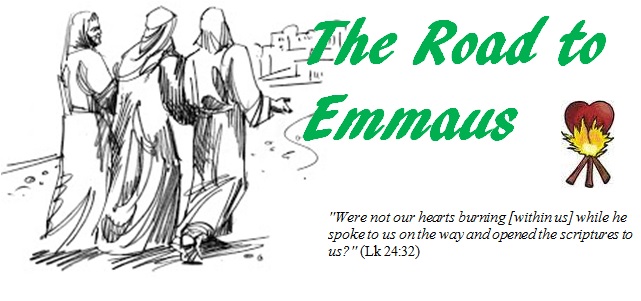
When he was at table with them, he took the bread. He blessed the bread, and broke it, and gave it to them. And their eyes were opened and they recognized him!(Luke 24:13-35)

Friday, March 13, 2020

The ultimate love story


We’ve heard Jesus’ story of the Prodigal Son so many times (Luke 15:11–32).  It’s the ultimate love story; the story of a loving father who doesn’t give up on his wayward younger son.  We draw comfort from hearing Jesus remind us that our heavenly Father must be like this father who is positioned out by the road longing for his son to return.  This father doesn’t even wait to hear the forlorn son’s practiced examination of conscience, deep contrition and apology.  This father is ready to celebrate his son’s return.

Sometimes, because of this wonderful image of God’s love, we can miss the real point of the story.  Jesus tells this story in a concrete situation.  Very devout religious people are quite uncomfortable with, and actually quite upset with, Jesus’ partying with former sinners.  These religious people don’t seem to care that these people are “former” sinners and that Jesus is celebrating with them because their heavenly Father is rejoicing at their return.  These religious folks can’t get past the fact that these people are “sinners” and what truly religious people ought to do is condemn sinners, isolate them and have nothing to do with them.  They should be made an example of.  In fact, to “blur” the fact that they are sinners with such lavish partying is to blur the difference between them and truly religious people, who never sinned in the first place—or at least not the way these people sinned.

This is the context for all three parables of mercy that Jesus tells in Luke, chapter 15: The Parable of the Lost Sheep (Verses 1-7), The Parable of the Lost Coin (Verses 8-10), and the Parable of the Prodigal Son.  The made-for-TV epic “Jesus of Nazareth” that was first aired in 1977 portrayed the scene best for me.  I cried when it first aired, and I still cry whenever it turns up again, usually around Easter.  

There is a dinner party in a relatively small home with open windows on a warm evening.  Everyone outside can hear all the fun that is going on inside.  These people are really having a good time.  And there are the religious critics standing at the doorway, announcing their challenge to Jesus’ way of behaving.

It is at this scene that Jesus quiets the party to tell His three teaching stories.  Everyone inside is nodding, and even applauding as He tells the stories of a single lost sheep being sought and found, and the ensuing celebrating.  Then there is more nodding, applauding, and perhaps some genuine laughter added at the seeming absurdity of a woman turning her house upside down to find a single lost coin and then telling her neighbors to celebrate with her after she finds it again.

Finally, Jesus gets to His best story.  He starts telling it with a little more volume, so that the religious folks can be sure to hear Him.  Everyone gets quiet and the scene is very solemn as Jesus tells about the terrible sin of the younger son.  Imagine asking for and then squandering half your father’s assets.  Every former sinner in the room must have gotten very quiet as the young son practices his confession speech.  Then, the room warms as Jesus completes the story with the father’s welcome of the son and Jesus’ dramatic telling of the details:  a robe, sandals, a ring, a big banquet with the fattened calf.

But, when Jesus starts to tell the rest of the story, the room grows quiet.  The religious critics have already begun to get the point that this story was for their benefit.  The older son, like them, won't join in the celebration.  Of course, as Jesus tells the story, it is as though God the Father is pleading with these righteous elder sons to lighten up and come in and join in the celebration.  God is inviting them to be merciful, to not judge, to celebrate the power of God's mercy.  Showing them the obvious obstinacy of the older son in the parable, Jesus hopes to soften the heart of His religious opponents.  In the movie, it is Simon who is on the outside looking in, and he recognizes himself as the “older brother” in the parable.  He starts to cry uncontrollably, and rushes in to apologize to Jesus and the host of the party.  That’s when my own tears start flowing because I, too, recognize a bit of the older brother in myself.

Unfortunately, we know the rest of this story, too.  Some among them sought to kill Him, to eliminate this message of love and forgiveness.

As we continue our Lenten journey the next few weeks, we can take this story to prayer and let ourselves be in the sandals of the older son, to see how it relates to our impatience with others who fail, with our judgments of those around us who don't practice their faith as we do, those people we know who have made other choices than the ones we have made.  Are we out on the road, praying for them, longing for them to know the Lord's love for them, desirous of being an agent of their experiencing the Lord's love?  Or are we wanting them to grovel a bit, to apologize, to restore what they did wrong first?  Are there parts of this elder son or daughter in us?

This is the season to ask for the grace to say, "Father, thank You for Your love and mercy, toward me and toward all of us who stand together beneath the Cross of Your Son.  Of course, I want to enter in with You in the celebration of healing mercy.  Let the partying begin with the transformation of my heart. Give me greater freedom to see and experience my solidarity with all sinners before Your love."

Thoughts on the COVID 19 coronavirus


I just finished watching the Presidential news conference declaring a National state of emergency, and thought I would write down a few thoughts.  

The most disturbing thing about the spread of the COVID 19 virus is the sense of the unknown.  How bad will the pandemic get?  Will it affect me?  How will it further change my way of life?  Just as we try to calm down and remind ourselves not to worry beyond the facts, the next day's news reveals something more shocking.  Fear is a very unsettling emotion.  It can paralyze us and take away our abilities to remain balanced and reasonable and to discern the right choices before us. 

It’s critical that we follow good sound advice from the medical community and do what we can to prevent ourselves from getting the virus or from spreading it to others.  But, on a far deeper level, we need to turn to prayer, to our relationship with God, to find the comfort and the peace that we need the most.  Once again in the history of mankind, we’re in a time when we should place ourselves in our Lord's hands and to ask for the grace to trust.

We can pray that the epidemic will come to an end soon, and that people who contract the virus will receive the care they need.  And, we can pray for those who are suffering, for the most vulnerable all over the world, and we can pray with those who are grieving the loss of loved ones.  We can also pray for a greater understanding of the causes of the virus and how to combat it quickly.

Letting our Lord comfort us with a peace that nothing else in this world can give is to pray at another level.  We can begin by reminding ourselves that we’re loved by God.  In the Christian tradition, we can remind ourselves of the Good News itself.  We’re saved from the power of sin and death through the death and resurrection of Jesus.  Many other religious traditions offer us hope and consolation in God's love and presence with us.

How do we find that peace in the midst of so much anxiety and worry about the future?  We can take precautions and be prudent, but we don't have to worry about what we can't control.  We can trust that by turning to our God, we can rely on God's love and presence.  We can take courage from a sense that we’re not alone.   And, we can let go of the anxieties and be brought deeper into that relationship which feels "at home" and reminds us of our truest self.

Most of all, faith and trust can help us replace our anxiety with our mission - the mission each of us has to love as we have been loved.  When we ask for the help, in our relationship with our God, to grow in compassion and care for those around us, a new level of purpose is given to us.  We can feel the grace of being sent (“missioned”) to be for and with others in crisis.  We can comfort others and help calm their fears.  We can be a source of strength for others who are struggling.  Our charity and the ways we reach out to others will transform our hearts, and theirs.  And, we can make a real difference.  Perhaps someone we know, who is quarantined at home, needs a call every day, or perhaps a quick trip to the store for necessities.  The possibilities will come to us as we let our hearts be calmed and be filled with compassion.  Gratitude leads to generosity and courage lets our hearts move from being fearful to being bold.

Most loving God, Creator of us all, we turn to you to care for your people in need. We thank you for your presence among us and the peace you offer us. Send us your Spirit to fill us with courage and hope, so that we might be your instruments of love and assistance for others in need. Through this crisis, may we come together, as people of faith in a crisis so often do by your grace, and may we come out of it more united and more determined to care for those most in need. Thank you for your fidelity and the graces we need these days.  Amen.

Thursday, March 12, 2020

Spread the Word


Abortion, genocides, apathy for the oppressed, unbridled hatred; all over the world today, we are witnesses to cold-blooded evil.  But my reflection today is on a couple of tales of this cold-blooded evil and how God uses this evil for the eventual greater good.

Joseph’s brothers were envious of the attention their father paid to him, and they were probably afraid of losing their inheritance.  So greed probably played a part in their evil as well.  And how cold-blooded were they?  After throwing Joseph into the cistern, they sat down to lunch as if nothing had happened! (Genesis 37:3-4, 12-13a, 17b-28a)

In the case of the tenants of the vineyard, greed was the reason they wanted to kill the owner’s son. They didn’t want to give up what they thought was theirs, even though they knew it wasn’t. (Matthew 21:33-43, 45-46)

The chief priests and Pharisees didn’t get it.  The brothers didn’t get it.  They thought that getting rid of the “troublemakers” would make their lives easier and they could go back to the way things were.  What they didn’t know was that God sometimes allows evil acts to occur so that His love and mercy can become greater!

In Joseph’s case, we all know the end of that story.  Israel undergoes a great famine and Jacob’s children are forced to go to Egypt for food.  Who has God blessed and made the high “mucky-muck” in charge of the granaries in Egypt?  God has humbled the aggressors, but shown them mercy at the same time, allowing the family to reunite. (Psalms 105:16-17, 18-19, 20-21)

As for the Pharisees and chief priests who got rid of Our Lord by crucifying Him, look at the good that came out of that!  All sins erased once for all, everlasting happiness for all who believe in Him and follow His commandments, and extending His Covenant to all people, Jew and Gentile.

So for any of us who worry about the evil in the world today, remember that Christ’s mercy is already at work for us.  Our job is to spread the word and help one another obtain that mercy.  The cornerstone has been laid.

Wednesday, March 11, 2020

Love is the beauty of the soul....


“‘If they will not listen to Moses and the prophets, neither will they be persuaded if someone should rise from the dead.’” (Luke 16:19-31)

People won’t be persuaded to cross the great chasm between the rich and the poor (a chasm that, let’s not kid ourselves, exists just a much in this world as Abraham says it does in the next) even if one were to rise from the dead?

Then what hope is there to change our lives?  What could convince us to, as Pope Francis keeps saying, come out of ourselves and go to the peripheries?

It’s at moments like this, with questions like these, that Jeremiah’s words make all the more sense: More tortuous than all else is the human heart, beyond remedy; who can understand it? (Jeremiah 17:5-10)

Not I, only God.  There’s only one thing that I understand; that the only thing that spans the chasms within our tortured human hearts is love.  A generous and boundless love.  A love we have not deserved.  A love that teaches us to trust it not because we are faithful, but because it is.

It’s not the miraculous that spans such chasms, and it’s not guilt, or obligation, or fear.  Certainly there are miracles, but we don’t cross chasms because we’ve been awed.  Certainly we’re guilty of not living up to the love we’ve been given, but chasms are not crossed by those seeking to distract themselves from guilt.  Certainly we’re obliged, but we don’t cross chasms out of obligation.  And certainly we’re afraid, but chasms are not crossed by those in flight.

It’s only love that sets a heart nearly beyond remedy alight; a cocooning love that gives us space to change; a cooling love that teaches us not to fear the heat, to reach out despite rejections.  To reach out because that is what lovers do, reach out to each other.

“… that one is like a tree planted beside the waters that stretches out its roots to the stream: It fears not the heat when it comes, its leaves stay green; In the year of drought it shows no distress, but still bears fruit.”

Tuesday, March 10, 2020

Everybody can be great....


Ambition can be a powerful force in people’s lives.  The Gospels reveal how even the worst ambitions can be masked by what appear to be good intentions.  Ambitious people sought to trap Jesus and eventually to put Him to death.  That same ambition, however, clouded their vision to the point where they saw Jesus as a threat to their power.

The Reign of God, the kingdom, rejects such ambitious power.  Jesus tells us what true kingdom values are: “Whoever wishes to be great among you shall be your servant; whoever wishes to be first among you shall be your slave.  Just so, the Son of Man did not come to be served but to serve and to give his life as a ransom for many.” (Matthew 20:17-28)

Jesus invited His disciples – and us - to live in power; not the ambitious, self-serving power, but the liberating power of sacrificial love.  The Kingdom of God is a kingdom where the power of love unites us to live as a community of disciples and as servants of the people of God.

Following Jesus is not something we ought to do half-way.  If we want to be a true follower of Christ then we, too, need to drink the chalice of His Precious Blood deep into our souls and to be nourished by that gift so that we are ready and willing to give of ourselves to the point of a total sacrifice.  We need to be ready and willing to hold nothing back, even if that means the greatest of sacrifice.

Very few people will be called to be literal martyrs like the Apostles were, but we are ALL called to be martyrs in spirit.  This means that we must be so completely given over to Christ and His will that we have died to ourselves.

So when Jesus asks us, “Can you drink of the chalice that I am going to drink?”, our resolve should be to say “Yes,” drink the chalice of His Precious Blood and daily offer our life in total sacrifice.  It will be well worth it!

"Wash yourselves clean..."


Humility seems like such a contradiction.  We are easily tempted to think that the way to greatness involves letting everyone know all that we do well.  There is a constant temptation for most people to put forward their best face and to hope others will see that and admire it.  We want to be noticed and praised.  And we often try to make that happen by the little things we do and say.  And often we tend to exaggerate who we are. 

On the flip side, if someone criticizes us and thinks ill of us it has the potential of being devastating.  If we hear that someone said something negative about us, we may go home and be depressed or angry about it the rest of the day, or even the rest of the week!  Why?  Because our pride is wounded and that wound can hurt.  It can hurt unless we have discovered the incredible gift of humility.

Humility is a virtue that enables us to be real.  It enables us to cut through any false persona we may have and simply be who we are.  It enables us to be comfortable with our good qualities as well as our failures.  Humility is nothing other than being honest and true about our lives and being comfortable with that person.

Jesus gives us a wonderful lesson in the Gospel that’s very hard to live but is absolutely key to living a happy life: “Whoever exalts himself will be humbled; but whoever humbles himself will be exalted.”  (Matthew 23:12)

He wants us to be exalted!  He wants us to be noticed by others.  He wants our light of goodness to shine for all to see and for that light to make a difference.  But He wants it done in truth, not by presenting a false persona.  He wants the real “me” to shine forth.  And that’s humility.

Humility is sincerity and genuineness.  And when people see this quality in us, they’re impressed.  Not so much in a worldly way but in an authentic human way.  They will not look at us and be envious, rather, they will look at us and see the true qualities we have and enjoy them, admire them and want to imitate them.  Humility enables the real you to shine through.  And, believe it or not, the real you is someone who others want to meet and get to know.

God pleads with us: "Wash yourselves clean! Put away your misdeeds from before my eyes; cease doing evil; learn to do good" (Isaiah 1:16).  We want to live this way, but it sure isn’t easy.  We need supernatural help.  We need special graces.  Praise the Lord, this is exactly what’s offered in the Sacrament of Reconciliation!  Because it is a Sacrament, it’s an encounter with the supernatural.

God wants to make it easier for us to put away evil deeds and use the gift of holiness that He's given us. And He never asks for the impossible.  He's the one who makes saintly living possible.  It's up to us to avail ourselves of this help.

"Come now, let us set things right, says the Lord: Though your sins be like scarlet, they may become white as snow...." (Isaiah 1:18)

Monday, March 9, 2020

Our hope for mercy depends on our own use of it


God is the judge of the good and the bad.  Sure we should look at good actions and be grateful when we see them and even offer affirmation for the goodness we see.  And, sure, we should notice poor behavior, offer correction as needed, and do it with love and mercy.  But judging the actions is much different than judging the person.  We ought not judge the person, nor do we want to be judged or condemned by others.  We do not want others to presume they know our hearts and motives.   

The world needs more people who are non-judgmental and non-condemning.  We need more people who know how to be true friends and love unconditionally.  And God wants you to be one of those persons.  If you offer this sort of friendship you will most likely be blessed with others who offer this sort of friendship right back!  And with that you will both be blessed!

Jesus has said that because God gives us His mercy, we are to be merciful to others (Luke 6:36-38).  The moment we refuse to give mercy to anyone (think of the most difficult person to love), we pull ourselves away from Him again. And again He waits for us to return to Him whole-heartedly.

Giving mercy doesn't mean condoning the sins of others, nor ignoring them, nor allowing them to continue.  Mercy means that while we wait for others to repent, we don't judge them as unworthy of our love.  God who is so great and awesome never believes that we are unworthy of a relationship with Him, no matter how lousy and unholy we are!  He never turns away from us, even though we turn away from Him.  This is the same love that we should give to others.

Mercy also means that while we wait, we hope for, we pray for, and if we can, we speak up for whatever is necessary to build a holy relationship.  For a short while, the relationship might not exist anymore, but that's not our preference.  If we've contributed to the break-up (for example, we've retaliated against evil deeds with our own sinful reactions), we need to seek forgiveness and reconciliation, doing whatever we can to restore what has been lost, but if the reconciliation is not equal and reciprocal, we continue to wait in brokenness and separation.

And mercy goes one step further.  We can all think of examples in the news, and maybe even in our own lives, of people who have done or said some very sinful things in the past.  Election year rhetoric and “hit pieces” by politicians are rife with these examples.  When sinners repent, God "forgets" the sins.  How can He forget?  Doesn't He know everything?  Do we have better memories than He does?  Of course not.  Forgetting simply means that He doesn't hold the past against us, and likewise we don't condemn others for what they did in the past and might do again. 

This doesn’t mean that we ignore the possibility of getting hurt again.  Rather it means that, with wisdom gained from the past, we give the repentant sinner the opportunity to act upon the changes he or she wants to make, and at the same time we make adjustments in our lives to protect ourselves from that person's particular vulnerabilities toward sin.  We stay out of harm's way while giving the other person room to grow.

Lord, “Do not remember against us the iniquities of our forefathers; let your compassion move quickly ahead of us, for we have been brought very low” (Psalm 79:8).

Sunday, March 8, 2020

Lord, it is good that we are here...


Lent is a time to examine our lives and to see our sins most clearly.  It’s a time we are given each year to pause from the confusion of life and to reexamine the road we are on.  Looking at our sins can be hard. It can be depressing and can tempt us to depression, hopelessness and even despair.  But the temptation to despair must be overcome.  And it is not overcome by ignoring our sin, rather, it is overcome by turning our eyes to the power and glory of God.

The Transfiguration was an event given to Peter, James, and John to give them hope as they prepared to face the suffering and death of Jesus.  They were given a glimpse of glory and hope as they prepared to see Jesus embrace their sins and endure the consequences (Matthew 17:1-9).

If we face sin without hope, we are doomed.  But if we face sins with a remembrance of Who Jesus is and what He has done for us, then facing our sins will lead us not into despair but into victory and glory.

As the Apostles looked on and saw Jesus transfigured, they heard a voice from Heaven say, “This is my beloved Son, with whom I am well pleased; listen to him” (Mt. 17:5).  The Father spoke this of Jesus, but He also desires to speak it of each one of us.  We need to see in the Transfiguration the end and goal of our lives.  We need to know, with the deepest conviction, that the Father desires to transform us into the whitest light, lifting all sin, and bestowing upon us the great dignity of being a true son or daughter of Him.

As I reflect today on my sins, I also reflect upon the transfigured and glorious nature of our divine Lord.  He came to bestow this gift of holiness on each one of us.  This is our calling.  This is our dignity.  This is who we must become, and the only way to do so is to allow God to cleanse us of every sin in our lives and to draw us into His glorious life of grace.

Only when we believe, in the depths of our being, that Jesus is truly the Son of Man and that He has been raised from the dead for the salvation of the world and is the only way to everlasting life, then our faith will not be contained by doubt, but rather will live a new life that will urge us to tell this vision to one and all.  We can say, as Peter did on the special day, “Lord, it is good that we are here.” (Matthew 17:4)

Friday, March 6, 2020

Love your enemy..


In Matthew’s Gospel (Matthew 5:43-48), Jesus instructs His followers to “take the higher road,” to look beyond divisions or past offenses and love the other.  At first blush, this passage is challenging; however, Jesus’ message also offers the promise of freedom — freedom to live as we are created to live, as human beings.  As Jesus says, “that you may be children of your heavenly Father.”  He does not command us to be God, the heavenly Father; rather, Jesus liberates us with His words to be children of God.

Jesus calls each of us to look upon people (including the self) as God does.  Jesus encourages us to turn away from the human tendency to idolize the self and let God be the one to execute judgment on His creations.  God is the one who causes “the sun to rise and fall over the good and bad” (v. 45).  We were not created to leverage judgment upon the world; we were created for and out of love—that is our purpose, our reason for being. 

As we look toward the week to come, let’s pray together to God and ask for help to set aside our tendency to judge others and ourselves and learn to walk in the way of offering love to everyone we encounter.  Let’s look for how we are complicit in systems that keep our “enemies” at bay and impact the lives of blood and flesh human beings.  In doing so, we will become ever more so the people of God (Deuteronomy 26:19).

A good start is to practice what Ellen Degeneres exhorts everyone to do at the end of each of her performances; “Be kind to one another”. 

Too great a burden


There is no denying it; we live in an age of anger.  So many situations today are causes or effects of anger—partisan politics, religious hatred or envy, inequality, Russian interference in US elections, school shootings, antifa, road rage, hypocrisy.  Wouldn’t it be great if all of us could, as Jesus commands us, to let go of our anger and be reconciled with each other?  We need to be peacemakers—on the personal as well as the global level.  We must release our rage or our need to win at any cost and embrace compromise, forgiveness, and mercy. 

Jesus names one of the initial ways that anger kills: To shout "raqa" at someone is to call them a nitwit or imbecile.  It destroys their self-esteem.  It belittles them.  It is abuse; nothing less (Matthew 5:20-26). 

Jesus warns that calling someone a fool is even worse.  No longer an "imbecile," the person under attack is "worthless".  His listeners understood that this word was filled with contempt.  To hate someone so much as to see no value in them (for example, seeing unwanted pregnancies as burdens to get rid of rather than as precious humans) is to condemn oneself to Gehenna.  We must think of others with love, even if we vehemently disagree with what they stand for, and even if they don’t or won’t reciprocate our love. 

The way to God–the way to follow the supreme commandment of loving God—is through one another and the second greatest commandment.  In some respects, it’s easier to love God, who isn’t trampling our petunias or invading our nation, than it is to love our neighbor.  It seems simpler and less messy to approach His altar than it is to have a meal or negotiate a peace treaty with those who have offended us or whom we’ve offended.  But Jesus is adamant.  We must settle with our opponents before going to God.  His allusions to the scribes and Pharisees, who were very big on the letter of the law and correct behavior, remind us that the spirit of the law is even more important.  Our actions should be infused with a sense of love; our hearts should not be hardened.  We must always aim for reconciliation because love of God and love of neighbor are inextricable.

The word reconcile means “to bring together again.”  We would be a much happier world if we looked for opportunities to forgo anger, mend wounds, and get back together with those at odds with us. 

Wednesday, March 4, 2020

His will be done....


Jesus is very clear when He says, “Ask and it will be given to you; seek and you will find; knock and the door will be opened to you” (Matthew 7:7).  But I sometimes wonder.  Sometimes I can ask, and ask, and beg, and it appears that my prayer goes unanswered, at least in the way I want it to be answered.  So what does Jesus mean when He says to “ask…seek…knock” and you will receive?

The key to understanding this exhortation from our Lord is that, through our prayer, God will give “good things to those who ask” (Matthew 7:11).  He doesn’t promise us whatever we ask for; rather, He promises that which is truly good and good, in particular, for our eternal salvation.

This begs the question, “Then how do I pray and what do I pray for?”  Ideally, every prayer of intercession we utter should be for the Lord’s will to be done, nothing more, and nothing less.  Only His perfect will.

That can be harder to pray for than one might first expect.  Too often we tend to pray that “my will be done” rather than that “Thy will be done.”  But if we can trust, and trust on a profound level, that God’s will is perfect and provides us with all “good things,” then seeking His will, asking for it and knocking at the door of His heart will produce an abundance of grace as God desires to bestow it.

Tuesday, March 3, 2020

Why do I feel uncomfortable?


Have you ever pleaded with God to give you a sign?  I have, and I still do; usually when I find myself torn with a tough decision I need to make.  That brings to mind a few questions.  How do we interpret “signs”?  How do we know that a sign is actually a sign and not a desire for a sign creating something out of nothing?  Does God actually send us signs?  I believe He does!  It’s discerning whether the sign is from God or from the ‘evil one’ that will make all the difference.   

Jesus says that Jonah was a sign to the Ninevites (Jonah 3:1-10, Luke 11:29-32).  Imagine yourself as a Ninevite, minding your own business, chopping wood or washing the laundry.  Imagine Jonah, a stranger, walking through town shouting that God was going to destroy your town.  How would you react?  Would you take this as a sign from God? 

I think I would be pretty skeptical.  I think I would pass Jonah off as a lunatic and go back to my laundry.  If I’m honest with myself, as I publicly wave him off, I might also secretly repent out of fear that he was right.  I might ask God to give me a sign that His sign is truly a “sign”!

Whether signs are actually inspired by God or our own imaginations, the message of the prophet and Jesus remains clear.  Repent!  Jonah and the Son of Man preached the same message to different crowds and in different places. 

The people of Jesus’ time were blessed with hearing the actual words of the Savior of the World.  But so are we!  We have the Gospels, the teachings of the Church, the witness of the great saints, the shepherding of the Holy Father, the Sacraments and so much more.  We have countless methods of obtaining the Gospel message in our technological age and, yet, we can easily fail to heed Christ’s message.  Why?

Because it makes us uncomfortable.  We might be afraid that we will suffer in some way.  We can’t allow the prospect of pain and suffering deter us from doing what is right and just.  Nowhere in the Gospels does it say this life will be free from suffering.  Suffering is a tool God uses to get our attention and to accomplish His purposes in our lives.  It is designed to build our trust in the Almighty, but suffering requires the right response if it is to be successful in accomplishing God’s purposes.  Suffering forces us to turn from trust in our own resources to living by faith in God’s resources. 

In Nineveh, the king decreed that everyone should "turn from his evil way."  He didn't simply say they should stop doing evil.  Turning from evil means moving in a new direction; the direction of goodness and holiness.  It means changing our way of handling situations.  It means altering the way we treat others, even if it makes us uncomfortable.

As we continue through the Lenten season, I pray that each of us repents.  God already sent us our sign, His son.  Repent and choose God.  Choose life, freedom, truth and love. 

Life gives us lots of choices, Eternity gives us only two. 

Monday, March 2, 2020

Justice is fulfilled by mercy


“If you forgive men their transgressions, your heavenly Father will forgive you.  But if you do not forgive men, neither will your Father forgive your transgressions.”  Matthew 6:14–15

In our very flawed, very human way, we are all too ready to look upon the failings of others than we are to look in the mirror and see our own.

One of the things Jesus tells us is to purify ourselves, to see ourselves for what we really are.  It is only by knowing ourselves thoroughly that we can begin to know and understand others.  We have so much bombarding our senses in our culture today.  Our thoughts go outward in response to these auditory and visual stimuli.  “Smart phones” have made us anything but.  We ponder the news, listen to music, read and watch too much television.  While these activities are worthwhile to a limited degree, they can cut into our time for quiet self-reflection.  We might not be in touch with our innermost thoughts.  We might not realize our tendencies to react inappropriately, such as by judging others.

We should evaluate how much time we are setting aside from the noises and harmonies of life to set our own house in order.  One of the reasons we are so willing to accuse others is that we know so little about ourselves.  More often than not what enrages or irritates us about another is our own flaws that we know about but do nothing to correct; we’d rather deflect attention away from ourselves.  Jesus offers the remedy for this: self-awareness.  And it is in this self-awareness that empathy and sympathy for the sinner grows.  It is in understanding our own sinfulness that we become aware of the splendor of the love of God.  By looking in the mirror and seeing our sins, we learn the compassion of Jesus.  Frequent examination of my conscience and the great Sacrament of Confession has been a great source of comfort to me in these trying times.

Leading others to God rarely begins with haranguing them about their sins and weaknesses.  Although this is sometimes the ploy one must use on the most hardened cases—those who appear to take pleasure in leading others to join them in their sins.  More often than not, we open the hardened heart of a sinner by sitting and listening without judging, without trying to fix all the problems we are hearing.

In short, the solution begins with unconditional love, prayer and compassion.  And this awareness of our own sinfulness teaches us compassion and unconditional love.

Jesus presents us with an ideal we must strive for.  He also presents us with the consequences if we do not strive for this ideal.  Forgive and be forgiven.  Both must be desired and sought after.

When forgiveness is properly understood, it’s much easier to desire, give and receive.  When it’s not properly understood, forgiveness can be seen as a confusing and heavy burden and, therefore, as something undesirable.

Perhaps the greatest challenge to the act of forgiving another is the sense of “justice” that can appear to be lost when forgiveness is given.  This is especially true when forgiveness is offered to someone who fails to ask forgiveness.  On the contrary, when one does ask for forgiveness, and expresses true remorse, it is much easier to forgive and to abandon the feeling that the offender should “pay” for what was done.  But when there is a lack of sorrow on the part of the offender, this leaves what can feel like a lack of justice if forgiveness is offered.  This can be a difficult feeling to overcome by ourselves.

It’s important to note that forgiving another does not excuse their sin.  Forgiveness does not mean that the sin did not happen or that it is OK that it happened.  Rather, forgiving another does the opposite.  Forgiving actually points to the sin, acknowledges it and makes it a central focus.  This is important to understand.  By identifying the sin that is to be forgiven, and then forgiving it, justice is done in a supernatural way.  Justice is fulfilled by mercy.  And the mercy offered has an even greater effect on the one offering mercy than the one it is offered to.

By offering mercy for the sin of another, we become freed of the effects of their sin.  Mercy is a way for God to remove this hurt from our lives and free us to encounter His mercy all the more by the forgiveness of our own sins for which we could never deserve on our own effort.

It’s also important to note that forgiving another does not necessarily result in reconciliation.  Reconciliation between the two can only happen when the offender accepts the forgiveness offered after humbly admitting their sin.  This humble and purifying act satisfies justice on a whole new level and enables these sins to be transformed into grace.  And once transformed, they can even go so far as to deepen the bond of love between the two.

Maybe today, we can reflect upon the person we most need to forgive.  Who is it and what have they done that has offended me?  Don’t be afraid to offer the mercy of forgiveness and don’t hesitate in doing so.  The mercy we offer brings forth the justice of God in a way that we could never accomplish by our own efforts.  This act of forgiving also frees us from the burden of that sin and enables God to forgive us of our sins.

Loving the unlovable person


What is it that enables us to have eternal life?  What is the one thing that will enable us to live forever in the Kingdom of God?  For Jesus, it’s pretty simple.  Treat every single person you meet at if they were Jesus Christ.  Whatever you do for God’s people, you do for God.  “Amen, I say to you, whatever you did for one of these least brothers of mine, you did for me.” (Mt 25:31-46)

This is easier said than done.  Most of us can say this verse from memory without really even thinking about it.  Yet, it’s difficult to see Christ in every single person.  Where is Christ in a man who murders his two little boys in a fire?  Where is Christ in an employer who consciously underpays employees in order to make more money for him or herself?  Where is God in the person who cuts you off in traffic or who bullies you?  Where is God in the person who treats you as an object rather than with the dignity you deserve?  Where is God in the celebrity of the week who denounces the very existence of Him?  Or worse, the one who believes He exists but mocks Him anyway?   

As hard as it is to believe, God is in every single one of these people.  Genesis tells us that we are created in the image and likeness of God (Genesis 1:27).   Jesus takes this one step further and tells us that not only are we created in the image of God, but we must treat each other as the image we are. God loves each one of us deeply, personally, and passionately.  So too, are we to treat the world around us.  It’s really difficult, but that’s where faith in God, our hope in Christ, and the charity of Holy Spirit that we receive at Baptism and Confirmation comes to the rescue, if we but let go of ourselves and let Him guide us.

Saturday, February 29, 2020

Overcoming temptation strengthens us


Is temptation good?  Certainly it’s not a sin to be tempted.  Otherwise our Lord could never have been tempted Himself.  But He was (Matthew 4:1-11).  And so are we.

In the Lord’s Prayer we say to the Father, “And lead us not into temptation, but deliver us from evil”.  To be clear, temptation is never from God.  But God does permit us to be tempted.  Not so that we fall, but so that we grow in holiness.  Temptation forces us to rise up and make a choice either for God or for the temptation.  Though mercy and forgiveness are always offered when we fail, the blessings that await those who overcome temptation are numerous.  So, in the Lord’s Prayer, we are really asking for the strength to overcome the temptations that will cross our paths.

Jesus’ temptation did not increase His holiness, but it did afford Him the opportunity to manifest His perfection within His human nature.  It is that perfection we seek and His perfection that we must strive to imitate as we face the temptations of life. There are five clear blessings that can come from enduring the temptations of Satan: 

·       Enduring a temptation and conquering it helps us see the strength of God in our lives.

·       Temptation humbles us, stripping away our pride and our struggle of thinking we are self-reliant and self-made.

·       There is great value in completely rejecting the devil.  This not only robs him of his ongoing power to deceive us, but it also clarifies our vision of who he is so that we can continue to reject him and his works.

·       Overcoming temptation clearly and definitively strengthens us in every virtue.

·       The devil would not tempt us if he were not concerned about our holiness.  Thus, we should see temptation as a sign that the evil one is losing hold of our lives.

Overcoming temptation is like acing an exam, winning a contest, completing a difficult project or accomplishing some challenging feat.  We should take great joy in overcoming temptation in our lives, realizing that this strengthens us to the core of our being.  As we do so, we must also do so in humility, realizing that we have not accomplished this on our own but only by the grace of God in our lives (“Deliver us from evil”).

The opposite is true also.  When we fail a particular temptation over and over again, we get discouraged and tend to lose the little virtue we have.  But we know that any and every temptation from the evil one can be overcome (Romans 5: 12-19, 1Corinthians 10:13).  Nothing is too great.  Nothing is too difficult.  Humble yourself in confession, seek the help of a confidant, fall on your knees in prayer, trust in the almighty power of God.  Overcoming temptation is not only possible, it’s a glorious and transforming experience of grace in your life.

Friday, February 28, 2020

Take the 'Leap'


Every four years we have an extra day in our calendar.  An extra day! Twenty-four additional hours!  My reflection today is about what I could do with an extra day.  Sure, it’s really ‘just another Saturday’, but there must be time for something different from other Saturdays if I can resist the temptation to fill it up with “things to do”.

These days you can’t call any large company without having to go through a lot of automated questions that you either have to answer by voice or push a number on the phone, which just leads to another set of questions and finger exercises (in more ways than one!)  If you’re lucky, you may even get an answer from someone before you forget why you called.  And even then, you can consider yourself fortunate if your issue is addressed promptly and effectively.

Unlike the large companies, Heaven is open 24 hours a day, 365 days a year and the phone lines are open, and you don't even need a phone!  It’s called prayer; earnest, heart-felt prayer.  Confident prayer.  Short prayers.  Long prayers. Formal prayers. Loud prayers. Quiet prayers.

God takes all calls immediately and simultaneously.  And whether you’re calling to thank Him or ask Him for a favor or even complain about something, He will take all the time in the world—at least as far as we who are in time are concerned—to handle your call personally.

If for some reason you feel your issue isn’t worthy of God’s personal immediate attention, or you don’t want to “bother” Him with it, He also has experts standing by.  These are the patron saints, who have certain experiences or traits that make them uniquely qualified to understand your specific plight and implore our Lord to help you out.  You can leave a message with one of them and have confidence that Jesus will get it.  His Blessed mother is your best bet.  She has never failed to take one of my requests to her Son. 

Those who don’t believe in prayer might say that with our instant communications these days through cell phone technologies, IM, Facebook, Twitter, and whatever else is out there, we have become so independent we don’t need God.  Believe it or not, God knows what you need before you do!  He just wants you to ask!  What can be simpler than that?

We’re three days into Lent and the Church reminds us that it’s a time to grow closer to God.  A time to reflect on how we are building up the Kingdom of God.  Keeping the Sabbath and helping others in a time of need.  Isaiah reminds us of the spiritual gifts that are given to us when we do good things for others and when our mind and heart are focused on God (Isaiah 58:9-14).

In the Gospel Jesus calls Levi, a tax collector, to follow Him.  The next line is, “And leaving everything behind, he got up and followed him” (Luke 5:27–32).  What is unsaid in the Gospel is that he must have walked away from all the money that he was collecting at the customs post.  I wonder how long that stayed on the table before people started grabbing the money?  He was probably not popular with the Roman authority over this and the scriptures never mention that the authorities came after him.  One would think Levi would be afraid to do such a thing.  When Jesus called Levi it had to be a powerful spiritual experience for him to be moved to just leave everything behind.

Maybe that is what this extra day is about.  Leaving the ordinary Saturday tasks for something extraordinary.  Taking time for quiet reflection.  Listening to music and taking time to just be.  To enjoy the “extra” day as a gift to be explored rather than filling it up.  I see Lent as a time to allow myself more experiences of just being.  To read the Sunday readings and ponder them.  To not turn on the television, filling the house with useless noise and instead, spending time in silence and praying.

May you enjoy your extra day and discover what extraordinary experiences await you. Happy Lent!

A path to perfection


Lent is the perfect time to grow closer to God through an examination of conscience and renewing our quest to “be perfect” (Matthew 5:48).  The Spiritual and Corporal Works of Mercy are a means, in conjunction with the Sacrament of Reconciliation and Penance, of satisfying the temporal punishment due to sin and loving our neighbor as ourselves.  They are, in a nutshell, behaving in a Christ-like manner.  God, through His Holy Spirit, provides us with the opportunities every day to perform every one of them.  We just have to be aware of the circumstances He puts us in to obtain these graces. And the best way to become aware of these opportunities is to put aside at least part of our busy day (sometimes it can be less than 30 minutes a day) for prayer.  The rosary is a good start.  Reading a few verses of the Bible and reflecting on them is another. 

The Spiritual Works of Mercy

Admonish sinners—Correction is sometimes as hard to give as it is to take.  It means standing up for moral principles at work, at school, in politics, or in the home.  It means taking the time to give needed correction, even discipline, especially to children whose minds are impressionable and whose wills are not yet steadfast in truth.

Instruct the uninformed—Not everyone can be a schoolteacher but taking time out to help a child with math or spelling or religion homework is instruction as well.  So is "showing the ropes" to a new person at work, teaching CCD, and reminding oneself and one's family about basic morality.  In a Godless environment, a word about one's own religious values often leaves a thought-provoking impression on others.

Counsel the doubtful—As the saying goes, "Advice is cheap", but counsel implies something more loving.  It's a Christian approach to solving problems. Doubts about one's faith; about abortion, marriage, or questions arising from death or divorce do not need a brush-off with a lame excuse.  Doubts need direction in the Christian point of view, solicited or not.

Comfort the sorrowful—Sorrow and suffering take many forms.  How much death, divorce, grave illness, unemployment, family problems, mental distress, or surgery afflict the people around us and yet go unnoticed without so much as kind word, without so much as a whispered prayer?  Sometimes giving a sympathetic ear or just "being with" a sorrowing person is a great act of mercy.

Bear wrongs patiently—Patience, the bane of a world that hurries only to have to stand in line.  Strive for patience with the small child's constant prattling or the chronic complaints of the elderly.  Try patience with the slowness of the freeway traffic or the drudgery of a job.  Maintain patience with those who never say a kind word, with those whose nagging puts your teeth on edge.  Have patience with your own personal pain and suffering; don't add to the griping around you.

Forgive Offenses—Forgive the sharp criticism, the angry retort so easily and thoughtlessly said.  Physical injuries heal faster than mental or spiritual ones; dwelling on a wrong only increases its size, breeding hatred (Proverbs 10:12), the antithesis of Christ's love.  Injuries, voluntary or involuntary, are inescapable; forgiveness heals them.

Pray for the living and the dead—It’s impossible to physically aid the many people, even those in our own families, who need our help.  But we can reach out to them in prayer.  All people, dead or alive, benefit from a remembrance in prayer, including those praying.

The Corporal Works of Mercy

Feed the hungry—There are many people in this world who go without food.  When so much of our food goes to waste, good stewardship practices of our own food habits can benefit others who do not have those same resources.  I try to remember what Pope Francis said on June 5, 2013 about the ‘culture of waste’ in some countries; “Wasting food is like stealing from the poor.”

Give drink to the thirsty—Many of our brothers and sisters in Christ do not have access to clean water and suffer from the lack of this basic necessity.  We should support the efforts of those working towards greater accessibility of this essential resource.

Clothe the naked—So many in our society need basic protection from the weather, not to mention the sense of dignity one gets from having clean, presentable clothing.  How many of us have clothing that we have outgrown, or that we no long wear simply because it’s ‘out of style’?     

Shelter the homeless—There are many circumstances that could lead to someone becoming a person without a home.  There are millions of children and families who are on the move, fleeing from war, illness, hunger and impossible living conditions, and searching for peace and safety. Christ encourages us to go out and meet those without homes, affirming their worth and helping them seek a resolution to the challenges they face.

Visit the sick—Those who are sick are often forgotten or avoided.  In spite of their illness, these individuals still have much to offer to those who take the time to visit and comfort them.  Take a chance!

Visit the imprisoned—People in prison are still people, made in the image and likeness of God.  No matter what someone has done, they deserve the opportunity to hear the Word of God and find the Truth of the message of Christ.

Bury the dead—Funerals give us the opportunity to grieve and show others support during difficult times.  Through our prayers and actions during these times we show our respect for life, which is always a gift from God, and comfort to those who mourn.