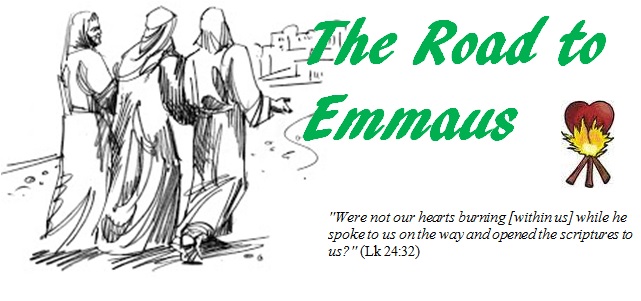
When he was at table with them, he took the bread. He blessed the bread, and broke it, and gave it to them. And their eyes were opened and they recognized him!(Luke 24:13-35)

Wednesday, January 11, 2023

A hardened heart is dangerous


At the Christmas Mass a couple of weeks ago, Father Mark gifted all of us parishioners with a book that just came out written by Matthew Kelly titled, “Holy Moments (a Handbook for the Rest of Your Life)”.  I finally picked it up today to start reading it. 

The Prologue ties in so well with my reflection today on Hebrews 3:7-14.  I don’t think it’s a coincidence.  When I woke up this morning, I had no clue what the focus of my reflection was going to be today.  Usually, I can tie the first Scripture reading to the Psalms and/or the Gospel, but I was having a tough time today.  After reading the passage from Hebrew in conjunction with the prologue of Mr. Kelly’s book, it was clear.  The next paragraph is the result of my reflection on Hebrews. 

A hardened heart is a dangerous spiritual predicament because when our hearts are hardened nothing can touch them, nothing can enter into them; hardened hearts are closed to God’s spirit and life, closed to any possibility of healing and hope. Our hearts harden over time—sometimes so gradually that we have no idea what is happening to us—when we shut our lives to others, when we settle into self-serving routines that suck life from us and those around us, or when we become so comfortable with who we are and what we believe that we're no longer willing to grow and to change. With erring hearts, we slip slowly away from God by letting other things (other persons, our own pleasures, money and possessions) take the place of God. With erring hearts, it is not that we suddenly begin to love the wrong things, but that we love them in the wrong ways, giving lesser goods far more attention than they deserve. And with evil and unfaithful hearts we act as if we ourselves are gods, doing whatever we want and getting whatever we want no matter how much hurt and harm it brings to others.

Here is Mr. Kelly’s prologue story so that you can see how closely my reflection and his are aligned.  Kelly, of course, wrote an entire chapter with the same theme, so his reflection is much longer.

Once upon a time, there was a monastery deep in the forest.  It was full of monks, they were full of joy, that joy was contagious, and people traveled from far and wide to visit.

One day a young man asked the Abbot why people came to the monastery.  “Most come looking for answers to their questions,” the old monk explained.  The young man was curious what type of questions people asked.  The Abbot continued, “They come seeking answers to the same questions all men and women ponder.  What should I do with my life?  Am I wasting my one short life?   Where do I find meaning?  How do I get the most out of life?”

The young man had traveled a long distance to visit the monastery, and as he walked away the old monk wondered what question the young man’s heart was wrestling with.

Time passed and life at the monastery changed.  It was ever so gradual at first.  A couple of the monks became cranky.  They had slowly closed their hearts to God and each other.  Other monks became jealous.  A younger monk was more handsome and popular with the visitors.  Some of the monks began to argue about things of no consequence, and the poison of gossip crept into the monastery.

Visitors noticed that little by little life at the monastery was deteriorating.  They perceived the monks were losing their joy, they noticed the monks were not as kind to each other, and over time they observed the monks growing impatient with their visitors.

The seasons came and went, and fewer visitors came to the monastery, until one day, the people stopped coming altogether.

The Abbot rose each morning an hour before his brother monks and sat in the chapel asking God to give him the wisdom necessary to revitalize the monastery.  But another summer came and went, and in the depths of the coldest winter ever, a profound sadness gripped the old Abbot’s heart.  He thought he had tried everything.

For hundreds of years people had come here longing for a glimpse of God and the monastery had thrived.  What had he done wrong?  He was wrapped with guilt and shame.  The gap between his faith and his life had widened, and he didn’t know how to close it.

On the first day of spring, the Abbot announced at breakfast that he was leaving the monastery to make a journey.

“Where are you going?” Brother Killian asked.

“I will visit the Hermit in the mountains to seek his counsel on our situation here at the monastery.”

There was a wise Hermit who lived in the mountains thirty miles to the north.  People traveled into the mountains to seek his wisdom.  The Hermit and the Abbot had been childhood friends, but this the other monks did not know.

“When will you return?” Brother Owen asked.

“Three days,” the Abbot replied.

“Who is in charge while you are gone?” Brother Fabian asked.

“I will let you decide that among yourselves,” the Abbot said.  His words were still hanging in the air when the arguing broke out.

There was a time when the other monks would have been concerned about him making such a journey.  But they were no longer concerned for each other, only for themselves.  There was a time when one of the others would have offered to accompany him, but those days were gone.

The Abbot slipped quietly out of the monastery and began his journey toward the mountains.  Walking through the forest, in those first miles of his journey, he observed that his heart was anxious.  But with each passing mile he became aware of a rising hope in his heart.

As dusk was falling, he came upon a small clearing in the foothills and decided to sleep there for the night.  The old monk gathered some wood, made a fire, ate a little bread and cheese, and settled down to sleep.

He was startled in the night by the howling of wolves and screeching of wild parrots.  He noticed his heart was racing, but he was not afraid.  He did not fear death, he feared the torture of a life without meaning.

Late the following morning he arrived at the Hermit’s cave.  The Hermit was standing just outside the cave.  As the Abbot approached, he said joyfully, “I have been waiting for you!” and the two men embraced like long-lost brothers.

“I’ve something to ask you,” the Abbot said.

“I know, but that can wait,” the Hermit replied.  “First I want to show you something.”  The Abbot was possessed by an impatience that surprised him, but he followed his old friend.

The two men walked peacefully through the trees and after about fifteen minutes a fine lake was before them.  It was breathtaking.

The Hermit sat on a large boulder at the side of the lake and the Abbot sat on a smaller boulder next to him.  They sat in silence for over an hour and the Abbot felt a deep peace rising in his soul.

The lake was clear and still.  The surface was like glass and the sun was reflecting perfectly on the water like a golden disc.  The Abbot was mesmerized.

When the sun had reached its pinnacle, the Hermit began to speak, “A still pond reflects the sun perfectly.  God is the sun.  You are the lake.  When your soul is still and clear you reflect the truth, beauty, and goodness of God to everyone you encounter.  As the day goes on, the wind will pick up, the lake will be full of ripples, and you will barely be able to see the sun’s reflection in the water.”

After a few minutes the two men walked back through the cypress trees to the cave.  As they sat drinking tea the Abbot described what had happened at the monastery over the past several years.  The Hermit listened closely and when the Abbot had finished asked a handful of clarifying questions. “What have you come here to ask?” was the Hermit’s last question.

“What wisdom do you have for us?  How do we rejuvenate the monastery?  How can we best serve the people who come to visit?” the Abbot asked.

“That’s three questions,” the Hermit said with a smile so radiant that the Abbot had to look away.  “I will answer your three questions with one answer,” the Hermit continued.  “Go back and tell the brothers…the Messiah is among you.”  And with that the Hermit closed his eyes and slipped into a deep meditation.

“The Messiah is among us, what can that possibly mean?” the Abbot mumbled to himself.  But as he walked slowly down the mountains the full meaning of the Hermit’s words took root deep in his soul.

Back at the monastery the monks were growing concerned.  The Abbot had said he would be gone three days and he had already been gone five days.  The next evening when there was still no sign of him, they began discussing what fate might have befallen him.  The following morning Brother Fabian callously suggested he was not coming back either because he had died in the mountains or because he had abandoned them for some other life.

Just as the sun was setting that afternoon Brother Bartholomew saw a figure approaching the monastery and cried out, “We have a visitor.”  It was not a visitor.  It was the Abbot.

He whispered softly to Bartholomew, “Gather everyone in the chapel.”  The Abbot was radiant as he sat before the whole community on a small wooden stool.  He looked 10 years younger.  The monks could not remember a time when he seemed so fully alive.

He told the other monks of his journey and shared with them the message he had received, “This is what I asked the Hermit. ‘What wisdom do you have for us?  How do we rejuvenate the monastery?  How can we best serve the people who come to visit?’  The Hermit replied, ‘That’s three questions.  I will answer your three questions with one answer.  Go back and tell the brothers…the Messiah is among you.’”

The monks were astonished and gasped.

From that moment on they looked at each other differently, they thought of each other differently, and they began to treat each other differently.

The monks wondered day and night who the Messiah among them was.  Was it Adrian, Bartholomew, Killian, Owen, Fabian, or was it the Abbot himself? And as the brothers wondered they began to treat each other with renewed kindness and a profound respect.

As time passed the Abbot noticed little things.  There was a new spirit of cooperation.  The brothers praised and encouraged each other, compassion and forgiveness returned to their hearts, and they were kind to each other.

These little things, these Holy Moments, breathed new life into the community.  The monks were flourishing.  The monastery was flourishing.  Even the flowers in the fields and the cows in the barn seemed happier.

And then one day it happened.  The visitors returned.  At first it was just one or two visitors like it had been in the past.  But then they brought their friends, and their friends brought their friends.

Those that came to visit the monastery noticed that the monks were overflowing with joy.  They perceived the monks had a profound reverence for each other.  And they observed the monks’ unquenchable patience with their visitors.

In a few short years the monastery had been transformed from the brink of collapse and was thriving like never before.  A village sprung up around the monastery, and the monastery became the center of life for the people of the village.  The monks loved the people, the people loved the monks, and they all lived together in harmony and happiness.

 One Saturday afternoon the old Abbot was sitting on a bench in the courtyard looking gratefully toward the mountains, when a woman approached.  Sitting down next to him she asked, “What happened here?”

The old monk beamed his warm, knowing smile and asked, “What do you mean?”

“This place has been completely transformed," the woman explained.

“No,” the Abbot disagreed gently, “the place is exactly the same.  It’s the monks who have changed.”

“How did it happen?” she asked.

“We started living as if the Messiah were among us,” the Abbot replied.

The woman pondered that for a moment and then began to weep.  The old monk put his arm around her to comfort her.  She told him about her life and troubles.  The woman shared with him the question that was tormenting her soul, the question that had urged her to visit the monastery.  And they sat in silence for a long time.

“What advice do you have for me?” the woman asked, breaking the silence.

The two sat quietly for another long moment before the old man spoke, and then he said, “Treat every person you ever meet like the second coming of Jesus in disguise.”

[Excerpt from “Holy Moments A Handbook for the Rest of Your Life”, by Matthew Kelly published by Blue Sparrow]

My divine Lord, help me to see that which is within me that most harms my relationships with others. Help me to see that which causes isolation and hurt. Give me the humility to see this and the trust I need to turn to You to confess it and seek Your healing. You and You alone can free me from my sin, so I turn to You in confidence and surrender. With faith, I also await Your healing words, “I do will it. Be made clean.” [Mark 1:40–41] Jesus, I trust in You.

Tuesday, January 10, 2023

If you ever need a punch line.......


If you ever need a punch line, there's one you always can depend on: "...my mother-in-law!" Guaranteed laugh.  As long as it’s told in good fun.

Fact is I loved my mother-in-law very much and still think of her often.  But mothers-in-law are just about the only group of people you still can pick on (besides maybe Nazis) without having anyone make a peep.  There's nothing politically incorrect about ragging on the mom of your spouse — or all moms of all spouses.  

This attitude has seeped so thoroughly into our culture that one of the ways people do get happy, it seems, is by hearing jokes in which the mother-in-law is not alive.  Henny Youngman who was known as the King of the One-Liners had several that he used in his act that always got roars from the audience:

"Out of the blue, my mother-in-law told me she'd like to be cremated. I said, 'Great. Go get your coat.'"

"'My mother-in-law's an angel,' said Fred. 'You're lucky,' I told him. 'Mine's still alive.'"

"I wanted to do something nice, so I bought my mother-in-law a chair. Now they won't let me plug it in."

Yep, the jokes are out there and, as we know from Mark’s Gospel, even Simon Peter had one…a mother-in-law that is, not a joke!  And the Lord loved her very much and cured her from a debilitating fever, even as He cured many others in the same town.  Naturally, the people flocked to the front door of Peter’s home searching and hoping for something miraculous to happen.  Yet, Jesus’ response was most revealing as He later said very quietly, "Let us go on to the nearby villages that I may preach there also.  For this purpose have I come."  [Mark 1:29-39]

Jesus "had to become like his brothers and sisters in every way" but sin, so that He could live His human life for us by being "tested through what he suffered" and thus "be able to help those who are being tested." [Hebrews 2:14-18]  This message from Hebrews expresses in words what Mark’s Gospel illustrates in actions as we see Jesus reaching out, praying and caring for, curing, driving out demons from, and preaching the Good News of God’s kingdom to God’s people.  Both of these passages are supplemented by Psalm 105, which reminds us that "the Lord remembers his covenant forever," the covenant He made with "the descendants of Abraham" and all the peoples who thank "the Lord, invoke his name, [and] make known among the nations his deeds." [Psalms 105:1-9]

I can’t help reflecting on some quotes from Saint Mother Teresa of Calcutta, who used to say that, "unless a life is lived for others, it is not worthwhile."  We know that, like Jesus, Mother Teresa’s missionary work of charity speaks stronger than her words.   She lived a life that has become a life-giving legacy of love for others.   Just as Jesus did, she put into practice whatever she preached to the world.   She used to say: "If we pray, we will believe; if we believe, we will love; if we love, we will serve."  This is exactly what goes on in Mark’s Gospel today, for we see God’s healing and liberating power being manifested in and through Jesus’ praying for, believing in, loving, and serving God’s people.

The above actions are humanly and spiritually required to give a strong and valid witness to Jesus’ gospel of love, because the Gospel is all about being faithful to Jesus’ teachings on prayer, faith, hope, love, and service.  Like Jesus, Mother Teresa, and many other genuine Christian witnesses, we’re called to make known among others God’s love, justice, and mercy by being inclusive and nonjudgmental, as we go about proclaiming and enculturating the Gospel throughout the many places we find ourselves in.

My precious and all-powerful Lord, I turn to You and You alone as the source of all Truth and the fullness of Truth. May I listen to Your voice alone and reject the many deceptions of the evil one and his demons. In Your precious name, Jesus, I rebuke Satan and all evil spirits, their lies and their temptations. I send these spirits to the foot of Your Cross, dear Lord, and open my mind and heart only to You.  Jesus, I trust in You.

Monday, January 9, 2023

Trust in the power of God


 As a general societal rule, we aren’t taught to accept compliments, even if well-deserved.  We’re taught to deflect or minimize them.  Although we crave affirmation for ourselves and our work, we don’t know what to do with it when it’s given.

I wonder if even Jesus, human that He was, struggled with that.  When the demon named Him as the Holy One of God, Jesus quickly silenced it before He freed the man from possession [Mark 1:21-28].  At that point in His ministry, was Jesus uncomfortable with the title bestowed on Him?

Or maybe He was uncomfortable with other people’s perception.  Maybe Jesus didn’t need affirmation of His worth or His special relationship with God, plus He knew that having His “fame” spread throughout Galilee was not necessarily a good thing.  He didn’t want to be idolized; He wanted to be imitated.  He didn’t want to be a celebrity; He wanted to be a model of what we all can be.  Living out His mission could be impeded by such recognition.

I suspect there was a bit of both at play in this interaction.  So, how do I balance that in my own life?  I believe the first step is to unlearn my well-practiced tendency to base my self-worth on what others think.  I too often use praise and affirmation to assure myself of my value and lovability.  And of course, when I get the opposite, I feel demeaned and unlovable.

Instead, I need to center my worth as Jesus did – in my core identity and status as a precious, beloved child of God whom no one can demean or destroy.  Human admiration, loyalty, and love can be so fickle.  Only God’s love is unwavering, ever-present, and has nothing but my best interests at heart, even when the demons of past hurts and suffering arise and even with all my scars and imperfections.  So, despite how insignificant and unworthy I can feel, I need to sit in prayer and simply let God love me.

Then I need to respond to that undeserved outpouring of love.  I must keep God at the center of all I do and live out my own mission, trusting that I will indeed make a difference when my open heart allows the Spirit to touch others through me.

Finally, when I am praised, I can be grateful and accepting.  It’s not boastful to sincerely appreciate the confirmation that I am serving as an instrument of God.

That all is much harder in practice than it is in writing.  I may even have to start backwards – learning to graciously accept compliments that I can then take into prayer.  Regardless, perhaps we can all work to believe in our core identity and value in God, and then help free others from the demons that prevent their recognition of the same in themselves.  We’re all in this together with Jesus – lovable, precious, and sent to the world.

It's a fact that the evil one is constantly at work all around us.  Consider the people and circumstances in your life where the pure and holy Truth of God is attacked and rejected.  It’s in those situations, more than any other, that Jesus wants to bestow upon you His divine authority to confront evil, rebuke it and take authority over it.  This is primarily done through prayer and deep trust in the power of God.  Don’t be afraid to allow God to use you to confront the activity of the evil one in this world.

Lord, give me courage and wisdom when I face the activity of the evil one in this world. Give me wisdom to discern his hand at work and give me courage to confront and rebuke him with Your love and authority. May Your authority be alive in my life, Lord Jesus, and may I daily become a better instrument of the coming of Your Kingdom as I confront the evil present in this world. Jesus, I trust in You.

Sunday, January 8, 2023

Fulfilling the right order


The feast of the baptism of our Lord brings the Christmas season that we've been celebrating to a conclusion. In the Scriptures assigned to today’s feast, we're reminded of the extraordinary truth that God, the God who is transcended above and beyond all of creation, this God who is the source of all being, has become one like us, fully human, in every way except sin. [Isaiah 42:1-7, Psalms 104:1-30, Acts 10:34-38, Luke 3:15-22]

Why would Jesus be baptized?  After all, John was preaching a baptism of repentance, a baptism for the forgiveness of sin.  In fact, if you look in Matthew's Gospel at the account of the baptism, John himself seems confused.  Jesus arrived from Galilee and came to John at the Jordan to be baptized by him, but John tried to prevent Him.  He said, "How is it that you come to me? I should be baptized by you." [Matthew 3:13-17]

Jesus tells John, "Let it be like that for now so that we may fulfill the right order."  He doesn't fully answer John, but He gives a hint because Jesus, though He is Son of God, wants to follow what He calls the right order.  He wants to be fully identified with us, with humans, with those who are sinners, those who are marginalized, oppressed, pushed aside.  In that crowd that came to follow John and be baptized, there were people of every class, every order, every nationality.

There were Gentiles, there were Jews, there were rich, there were poor, there were soldiers, there were peacekeepers -- everyone -- and Jesus comes to be one with them, and therefore, with all of us.  He is fully human, the Son of God but also the son of Mary.  It's a mystery that is beyond our comprehension. We accept it in faith, that this God is one like us in every way, so He's our brother.  He's our friend.  He's part of our human family.  He's part of our human history.

That's the mystery of Christmas.  But then also Jesus came -- and this is what we learned from the second reading in Acts today -- not for a few, not for the chosen people only. He came for all.  Jesus came to enter into the human family, to bring fullness of life to the whole human family, to everyone. That's why Peter, who at first thought he should preach only to the Jews, the chosen people, thought that Jesus had come for them alone.

Peter, now directed by God, as Luke describes in the passage from the Acts, had been directed by God to go to the house of Cornelius.  Cornelius was ready to hear about Jesus.  Cornelius is a Roman, a Gentile, a non-Jew, and Peter was amazed that God has asked him to do this, but he went.  God showed him the way, and Cornelius and his whole house, everyone is baptized, and the Holy Spirit is poured forth upon them as Luke tells us in this Acts of the Apostles, where he says, "Peter was still speaking when the Holy Spirit came upon all who listened to the word. The believers of Jewish origin who had come with Peter were amazed."

God gives and pours the Holy Spirit on foreigners also.  This is the second thing about Christmas that is important for us to recognize.  Jesus came for all, not for a few.  He came to enter into the human family, to be one with us in every way, and to bring the whole human family into the fullness of God's life. Finally, Jesus came in order to transform the world into the Reign of God. That's what we learn if we listen carefully to the first reading today from that beautiful song of the servant that Isaiah proclaims.

He says, "Here is my servant whom I uphold, my chosen one in whom I delight." Then he goes on to describe the work of this servant. "I put my spirit upon him. He will bring justice to the nations."  He will bring about the Reign of God where everyone has a chance for a full human life, but he does this in a very special way.  He does not cry out loud in the streets.  That would be a call to arms.  The servant of God doesn't do that.  Instead, as Isaiah says, "He does not break the bruised reed. He does not quench the wavering flame."

This is a servant who is nurturing, loving and gentle.  In the baptism of Jesus, as recorded in Luke's Gospel, God says, "Here is my chosen one, my beloved, in whom I am well pleased."  That's the first line of the Servant Song.  Jesus would have known that song by heart.  He knew the scriptures, so He would understand. This is His work, to transform the world, to make it the Reign of God where justice, peace and fullness of life come for all, are available to everyone.

Often a parent or both parents present their child to be baptized with fear and trembling. They are uncomfortable and unfamiliar with the church, a marriage irregularity or no marriage is usual, there is a fear of the unknown – what do we need to do now that we are here?  Will we encounter anger or be yelled at?  It’s so sad that such a beautiful moment is lost.  Or maybe and hopefully it’s a beginning, a life-giving moment, not only for the child baptized, but for parents and godparents and the community. We are commissioned to renew our lives and faith in the mystery of Gods’ grace.  To us is the child’s baptismal candle entrusted so it will be kept burning brightly and this child can go forth in life as a child of light, alive with everlasting life.

Our whole universe will be transformed into the Reign of God.  That's the reason why Jesus came.  We, who are the disciples of Jesus, we now remind ourselves of this full meaning of Christmas.  We first of all give thanks that God has become one of us.  Jesus is our brother, our friend, to be with us in every way whenever we’re in need in any way.  Jesus has come to bring the word of God, the love of God, God's message, to all people everywhere.

We rejoice in that and give thanks for that.  Also, we understand that Jesus comes with a mission, and if we are His followers, His disciples, we accept that mission as our own.  Now it's our task to work with Jesus, to enter into His work to transform our world, to bring justice, peace, love, consolation and joy wherever we can, in whatever part of our life where we can share this love of Jesus.  

Lord, I thank You for Your humble act of baptism by which You opened the Heavens to all who are sinners. May I open my heart to the unfathomable grace of my own baptism each and every day and more fully live with You as a child of the Father, filled with the Holy Spirit.  Jesus, I trust in You.

Saturday, January 7, 2023

The most appropriate gift


I think everyone has at one time or another, had a song stuck in their head almost to the distraction of everything else in their daily life.  The exercise can be annoying to the point of frustration!  I’ve had that experience every day for the last two weeks since Christmas Mass.  The song I couldn’t get out of head until I started writing this reflection today was the “Gloria”. 

Historically, the Gloria is known as the “Angelic Hymn” because it contains the words sung from the Heavens by the angels on the night of Christ’s birth.  Luke 2:13 reads: “And suddenly there was a multitude of the heavenly host with the angel, praising God and saying: Glory to God in the highest and on earth peace to those on whom his favor rests.”

The Gloria is a beautifully ancient prayer that is meant to point our hearts towards a spirit of awe.  It reminds us, gathered in the pews of the church, that we are called to praise and glorify the maker of our hearts and souls.

The irony of my experience was made manifest today, two weeks after the birth of Jesus, when the Church celebrates the Epiphany, and the visit of the three kings to honor Him.  I imagined what the Magi felt when they walked into the stable where Jesus was born.  When “they prostrated themselves and did him homage,” two things they didn’t do for Herod, by the way (Matthew 2:11).  Despite the humble surrounding and humble parents, they recognized the King and presented their most appropriate gifts of gold, frankincense, and myrrh.  “Our response to the Father’s offer of salvation must be that of the Magi: To proclaim Christ’s Kingship, to adore his Godhead, and to acknowledge his mortality” (Saint Odilo of Cluny).  Despite the humble surrounding and humble parents, they recognized the king and presented their most appropriate gifts.

When I read the Gospel for today, I realized the reason I’ve been singing the Gloria so much!  It has been my own appropriate ‘gift’ to the baby Jesus.  We sing the Gloria because it is a song of absolute joy and praise to God – what better way to start and end each day than to glorify Him!

Glory to God in the highest, and on earth peace to people of good will.

We praise You, we bless You, we adore You, we glorify You.  We give you thanks for Your great glory, Lord God, heavenly King, O God, almighty Father.

Lord Jesus Christ, Only Begotten Son, Lord God, Lamb of God, Son of the Father, You take away the sins of the world, have mercy on us; You take away the sins of the world, receive our prayer; You are seated at the right hand of the Father, have mercy on us.

For You alone are the Holy One, You alone are the Lord, You alone are the Most High, Jesus Christ, with the Holy Spirit, in the glory of God the Father. Amen.

Friday, January 6, 2023

A command of love

“His mother said to the servers, 'Do whatever he tells you.'”  [John 2:5]

It’s a command of love, spoken by our Blessed Mother to the servants at the wedding feast in Cana.  And though her words were initially spoken to those servants so as to bring forth the first miracle and sign of Jesus’ divinity, we can be certain that our Blessed Mother also speaks them to each one of us.

Mary has appeared as apparitions under many titles to many diverse peoples in different periods of history.  The more popular devotions are her appearances in Lourdes (France), Fatima (Portugal), Guadalupe (Mexico), and Knock (Ireland).  She suffered a sword piercing her heart as she watched her son's Passion and Death, and she is constantly alert to even our smallest sufferings.  Our Blessed Mother comes to us when we need her most, with a message and guidance specific to the problems and suffering at hand.  Her message is always one that leads us to her Son.

“Do whatever he tells you.”  What a beautiful command of love!  When we hear these words spoken to us, we must hear them as our Blessed Mother’s perfect and ongoing guidance.  So often in life we do what we want to do.  We’re drawn here or there by our passions and disordered desires.  We struggle with being selfish and often make poor choices for our lives.  This is the simple reality of sin that we struggle with every day.  But if we can heed the Blessed Mother’s words, hearing them as words spoken from her heart to ours, then we will have a new direction in life.

Doing the will of God first requires that we listen to the voice of God.  We must listen to our Lord speak to us.  Our minds are often flooded with many thoughts, and we’re easily influenced by many things.  Not only do our disordered passions, feelings and emotions confuse us at times, but there are so many varied and confusing voices within our world itself.  We’re influenced by those we encounter every day for good or ill, by the mass media, by the things we read or watch, and even by the evil one himself as he tempts us day in and day out.

If we can daily strive to eliminate the many misleading voices within our lives and tune in to the simple, clear and profound voice of God, then we’ve taken a good first step.  But from there, we need to “do” that which God asks of us.  Hearing God speak can be difficult but doing what we hear from God can be even more difficult.  It’s been said that the road to hell is paved with good intentions.  Good intentions are not enough.  Doing God’s will with all our might is the answer.

“Do whatever he tells you.”

Dearest Mother, please speak these words to me every day. As you do, please pray for me that I may listen to all that your Son asks of me and obey His voice with my whole heart. Thank you for your perfect “Yes” and your obedience to God in all things. May I learn to imitate you every day more fully.  Mother Mary, pray for us.  Jesus, I trust in You.


Thursday, January 5, 2023

It's not just a list of unpronounceable names...it's a plan


“When Jesus began his ministry he was about thirty years of age. He was the son, as was thought, of Joseph, the son of Heli, the son of Melea…”  [Luke 3:32–24]

Both Luke’s and Matthew’s Gospels share the genealogy of Jesus according to Saint Luke.  Matthew’s version might be more familiar since it comes at the very beginning of his Gospel.  Though the two genealogies differ significantly for various reasons, they both have the goal of tracing Jesus’ lineage.  Luke inserts the genealogy of Jesus in Chapter Three of his Gospel, after Jesus is baptized and just before His public ministry. He presents the genealogy in ascending order, starting with Jesus and ending with Adam, identifying seventy-seven generations.  Matthew presents the genealogy in descending order, beginning with Abraham and concluding with Jesus, identifying forty-one generations.

The Farnsworth family held a reunion in the eighties (I think it must have been ’82 or ’83, because Sarah was very young—my memory is that she was still an infant) and my sister Florence had printed out and distributed a paper with our genealogy going all the way back to Adam.  I give a lot of credit to the Mormon sensibilities regarding genealogy, but not a lot of credibility.  There were several kings and Old Testament prophets in the lineage she presented to us.  There’s a lot of folklore and ego involved in the searches made by the Mormon Church…I’m just sayin’.   It’s just a list.  We aren’t meant to read any meaning into it.  In fact, for me, I get more chuckles out of the Farnsworth list than any spiritual meanings.

But the two genealogies in the Gospels have been commented on by much more scholarly folk over the centuries, adding to their authenticity.  Saint Augustine, in commenting upon Luke’s genealogy, points out that Luke identifies seventy-seven generations because Jesus states that we must forgive seventy-seven times [Matthew 18:21–22].  Furthermore, since Jesus had just entered the waters of baptism, Augustine sees this as a way of saying that the Sacrament of Baptism offers all people of all times the unlimited gift of the forgiveness of sins.

Perhaps one of the most important reflections we can take from either of Jesus’ genealogies is the fact that He came to give us the gift of new life as the new Adam.  His gift of baptism is a way of starting over with fallen humanity.  From the time of our creation, we sinned.  Adam and Eve sinned.  And all generations to follow have sinned.  Thus, in Christ, through Baptism, we are able to begin again, to be born again, and to be transformed from the natural fallen order to the supernatural order of grace.

Over the next week or so, we will celebrate the Epiphany and the Feast of the Baptism of our Lord.  After that, we enter into the beginning of Ordinary Time when we ponder the public ministry of Jesus.  As we do so, we must regularly remind ourselves of the reason Jesus came.  He did not come simply to inspire us or to teach us His wisdom.  Rather, He came to save fallen humanity in accord with the perfect plan of the Father.  The Father’s plan began at the beginning of time when humanity fell from grace.  From there, the Father prepared the world for the coming of His divine Son through generation after generation of prophets, priests and kings.  Slowly, He revealed His plan of salvation until it came to fruition and perfection in the Person of His Beloved Son.

Jesus, my Savior, I do thank You for the unfathomable gift You have given me. You took on our fallen human nature and transformed it by this unity of Your divinity and humanity. You died for my sins and the sins of all who turn to You, and You opened the doors to Heaven. May I always grow more deeply in gratitude for all You have done for us. Jesus, I trust in You.

Wednesday, January 4, 2023

Putting aside preconceptions and fears


But Nathanael said to him, “Can anything good come from Nazareth?”  [John 1:46]

I remember being extremely proud of a project I completed for work years ago that I was sure everyone was going to appreciate.  The immediate response to the project from those it was intended for was quite underwhelming.  Because of the lack of enthusiasm my project was met with, the air was let out of my sails, so to speak.  Then, a few weeks later, I started getting positive feedback from some of the employees for whom my project was targeted.  Our sales and profits grew in part because some of the more open-minded team members gave my ideas a chance.  That, in turn, gave me strength to keep coming up with more fresh ideas!

Have you ever gotten really excited about something, so excited that you couldn’t wait to share it with your friends or family?  You might even set up a special time to meet with them just to tell them about it.  Maybe it’s a book you’ve read, or a TV series that you fell in love with.  But, when you do share it with them, they respond in an indifferent manner.  Maybe they even dismiss it as being of no value at all, “I don’t read historical books,” or “Science Fiction has never interested me.” The feeling of letdown can be disappointing, even devastating.

Or perhaps you have been the dismissive one when someone shared something with you. I wonder sometimes if that is how God feels when he sees me turn away from His plan. Not that any of us know God’s plan in any detail, but with a well-formed conscious, you can usually tell when you’re slipping. God offers us a world where we can find love, by loving others. Where we can find compassion by being compassionate. Where we can find peace by sharing His peace. And yet we turn away to build up our own ego.

This brings me to my opening quote, taken from John’s account of the calling of the first disciples.  Nathaniel was dismissive of Jesus at first, but Philip gently prodded him, “Come and see.”  And, to his credit, Nathanael did not let his preconceived notions get in his way of following his friend’s request.  He followed Philip and met Jesus and he himself was amazed at what he found.

My prayer for myself and you today is that we will always be willing to put aside our preconceived notions of how the world should be, or the way that it is, and listen to God’s invitation us to help Him build His kingdom here on earth.

Come, and you will see.


“They said to him, “Rabbi” (which translated means Teacher), “where are you staying?”  He said to them, “Come, and you will see.”  So they went and saw where he was staying, and they stayed with him that day.”  [John 1:38–39]

Jesus’ invitation was unique: “Come, and you will see.”  With that invitation, these two disciples (Andrew and John) went and remained with Jesus that day.  But that’s not all that happened.  It’s clear that by spending the day with Jesus, these two disciples came to faith in Who Jesus was.  Later in the passage, Andrew goes to his brother Peter to tell him, “We have found the Messiah.”  What was it about their day with Jesus that convinced them of Who He was?

Though the details of their stay with Jesus are not included in the Gospel, it seems clear that simply being in Jesus’ presence is all that these disciples needed.  Consider, again, Jesus’ twofold invitation: “Come…” followed by “and you will see.”

When our Lord speaks to each of us, His invitation is quite similar.  First, He will invite us to come with Him.  We are to come to the place where Jesus is staying.  Where is that?  For us, it’s not necessarily a physical place; rather, it is first and foremost a place of prayer.  We must hear Jesus invite us to come to Him through the interior journey of personal prayer.  It is there, within the depths of our soul, that we will rest with our Lord.  He invites us to simply be there in His divine presence.

When we come to Him and rest with Him in His presence, another thing will happen: “and you will see.” We will see Him, come to know Him, be enlightened by Him and come to faith in Him.  At first, this happens by His spoken Word.  Ultimately, this takes place through an interior revelation that we can only receive in prayer.

Tuesday, January 3, 2023

Hearing God Speak


“John testified further, saying, “I saw the Spirit come down like a dove from the sky and remain upon him. I did not know him, but the one who sent me to baptize with water told me, ‘On whomever you see the Spirit come down and remain, he is the one who will baptize with the Holy Spirit.’  Now I have seen and testified that he is the Son of God.” [John 1:32–34]

It’s interesting to me that in the Gospel of John, Saint John the Baptist never baptized Jesus, as is depicted in the Gospels of Matthew, Mark and Luke.  Instead, in the Gospel of John, John the Baptist simply witnessed the descent of the Holy Spirit from a distance, and then spoke the quoted line above. The next day, the Baptist pointed to Jesus as the “Lamb of God,” and two of his own disciples left the Baptist to follow Jesus.

As I reflect on this passage in John’s Gospel, I think it’s clear that the Baptist was given a unique spiritual knowledge by the Father that Jesus was the “Lamb of God.”  In this Gospel, the revelation of Who Jesus was did not take place in a way that everyone present heard and saw.   Rather, John’s Gospel focuses upon the interior realization that John the Baptist received from the One Who sent him.  And the One Who sent him was the Father in Heaven.

One spiritual truth worth pondering from the account of the Gospel of John I read today is that the conviction and certainty given to the Baptist about Jesus’ identity was so certain that he knew Who Jesus was beyond any shadow of a doubt.  This personal revelation given to the Baptist changed his life.  From that moment on, all he did was point people to Jesus.

In Exodus Chapter 33:19-23 there’s a wonderful passage that I think has a similar message.  Moses asks to see God’s glory, but God says He will pass by and Moses is to see only God’s back.  There are several interpretations of this passage, but I like to think of it as we know God by what He has done – hence all creation speaks to us of Him, and all living beings echo that love song of God.  So the God of infinite love and mercy is there for all to see, and we shall see Him as He is.

May we all find God in all things and all events, and know that there is Love, there is Mercy.

Sunday, January 1, 2023

Greatness is achieved through humility


Do you want to be great?  Deep down we all do.  This desire goes hand in hand with our innate desire for happiness.  We want our lives to have meaning and purpose, and we want to make a difference. The question is “How?”  How do you do this?  How do you achieve true greatness?

From a worldly perspective, greatness can often become synonymous with success, riches, power, admiration from others, etc.  But from a divine perspective, greatness is achieved by humbly giving God the greatest glory we can with our lives.

Giving God all the glory has a double effect upon our lives.  First, doing so allows us to live in accord with the truth of life.  The truth is that God and God alone deserves all our praise and glory.  All good things come from God and God alone.  Second, humbly giving God all the glory and pointing to the fact that we’re unworthy of Him has the reciprocal effect of God reaching down and elevating us to share in His life and His glory.

Never shy away from humbling yourself before the greatness and glory of God.  Doing so will not demean you or hamper your greatness.  Rather, only in the deepest humility before the glory of God is God able to draw you into the greatness of His very life and mission.

Saturday, June 11, 2022

It's simple---or is it?


There’s a little story of a bishop who, when officiating at a Confirmation, asked the young people to explain the Trinity.  The class clown stood up and mumbled something quietly.  The bishop remarked, “I didn’t understand that.”  The kid spoke up louder, “You’re not supposed to, it’s a mystery.”  While the bishop and the rest of the congregation in attendance chuckled, the fact is that the Church has wrestled with all manner of ways to understand a “Three-Person” God.  It's a mystery that takes more faith than words to explain.  For most of my life, and I’ll bet for most people, “It’s a mystery” was enough.  That doesn’t mean we shouldn’t try to understand the Holy Trinity on a deeper level because it is, as the Catechism states, “the central mystery of Christian faith and life.  It is the mystery of God in himself.”

We’ll never be able to grasp the reality of the Trinity – one God, three persons of Father, Son and Holy Spirit – until we experience the fullness of God’s love in our eternal life.  This hasn’t stopped us, though, from trying to get our heads around this idea of the Trinity.  Church history is filled with attempts to tie down its meaning, all of them coming up short and many of them earning heresy status.

If we’ve failed to tie down the mystery of the Trinity through theological concepts, we moved to analogy and art.  Just a few examples include the equilateral triangle; three intersecting circles; circle within a triangle; St. Patrick’s shamrock; and the famous icon by Andrei Rublev depicting three identical persons around one altar. Again, each comes up short.

But this shouldn’t surprise us.  Imagine trying to perfectly represent love.  Imagine being asked to define in words or a picture a relationship that grips us at the very core of our life.  The love of a parent for a child, the bond of husband and wife, or the friendship with the one who knows us best are beyond words, beyond art, beyond poetry, beautiful as they might be.  They always come up short.

Father, Son and Holy Spirit is the most real and profound relationship that exists.  The gospels tell the story of the Son of God sent by the Father to reveal the depth of God’s love for us, and how, through the Spirit, we’re sent – in the name of the Father, Son and Holy Spirit – to love as we have been loved [Matthew 28:19, John 13:34].

We enter the mystery of this Trinitarian relationship just as we do in any other relationship.  We begin with a personal relationship, by coming to know the other and allowing the other to know us.  We begin by spending time with Jesus and opening ourselves up to Him.  When this happens, all our other relationships begin to reflect – even if imperfectly – the perfect relationship of love of Father, Son and Holy Spirit.  It all begins with the mystery of falling in love and allowing ourselves to be loved in return.

Thursday, June 2, 2022

But...Do you love Me?


I consider myself somewhat a romantic.  As a result, I’m a sucker for a good musical (they’re best if performed live, but a good movie will suffice) and ‘Fiddler on the Roof’ has always been one of my favorites.  In this show two of the principal characters, Tevye and Golde, sing a duet.  The song is “Do you Love me.”  Tevye, who is married to Golde asks her, after these many years of marriage, “do you love me?”.  At first, she resists even answering; but he keeps asking and she then answers that for 25 years she has looked after him, cared for the family and done so many things, but she doesn’t use the words he longs to hear.  So, he asks again, and she replies, ‘I’m your wife’ and goes on to speak about the many aspects of their relationship – still stressing the actions she does for him – like being with him, sharing intimacy together etc.  Finally, after he persists, she says the word ‘love’.

In the end they both sing that saying they love each other may not change the way they’re together nor affect the many actions they do for each other, but it is ‘nice to know’.

Jesus and Peter might be said to have a similar dialogue in John’s Gospel [John 21:15-19].  Jesus wishes to reassure Peter that he’s close to Him, that He and Peter will share a bond of no less than love itself and that Peter for his part only need to assent to this.  Because we read this text translated to English, the word ‘love’ seems to be used equally by Jesus and Peter.  But in fact, Jesus and Peter are using different words for ‘love’.  It seems Peter can’t bring himself to use the same deep and intimate word for ‘love’ that Jesus is using, preferring instead to use a ‘softer’ word.  Finally, it’s Jesus who changes His terminology and uses Peter’s language so as to reach a point of unity and communion between them.

And the ‘assent’ that Jesus is seeking is one of the heart – not just an assent of mind and will.  This is so that Peter may be a true leader for the people; because leadership in the vision of Jesus requires not just competence, or energy and availability, true as they are, but it requires relational commitment to the people.  For Jesus to be a leader is to be a person with a heartfelt love for others and someone who lives only to serve.  This often also entails a sacrifice of self for others.

What’s more, Peter is being asked to now care for a flock that has become more sedentary and settled.  That is, we see it reflects the life of a Christian community that has lived in the light of the resurrection for many generations already and who are at home with the Spirit’s influence in their lives. The church in the Johannine vision is more established and requiring more attention to its internal needs.  Peter is being asked to exercise a ‘pastoral’ role and not only a missionary one (more suited to the evangelizing mission of the early church).  Thus, we see in the scene the movement from fishing (missionary work) to a commitment of ongoing pastoral care (and thus the symbolic image of the church as a flock needing care and nourishment i.e., ‘feed my sheep’).

This balance of the church missionary, and the church pastoral is one we live to this day.  Whether we serve the Lord in missionary outreach or in pastoral care of the community itself, let our actions always be a response to his call ‘Do you love me?”.  Let’s take consolation too in the reality that all our service will find its nourishment in the Eucharist – as does Peter in his meal on the beach with Jesus.

Friday, May 20, 2022

Slow down, listen, and discern


Early on in my management career I learned to set daily goals and create my “to do” lists.  On most days I was single-minded about getting those goals and tasks accomplished.  But I also found myself being frustrated when things went wrong or when stuff happened to prevent or limit my accomplishments.  Does this sound familiar to you?

“They traveled through the Phrygian and Galatian territory because they had been prevented by the Holy Spirit from preaching the message in the province of Asia.” [Acts 16: 1-10]

The early Church was most focused on preaching and teaching the gospel message resulting in the people growing in faith and increasing in numbers.  I find it most interesting that when things went wrong or didn’t go the way they thought it should, the early Christians saw this as a sign of the Spirit leading or preventing them from proceeding.  Usually, when things don’t go my way, I sometimes get frustrated or angry rather than discern that God’s Spirit is speaking to me and providing guidance.

I remember learning a prayer when I was very young that the CCD teacher told us would be a great morning “offering”: “O Jesus, through the Immaculate Heart of Mary, I offer you my prayers, works, joys, and sufferings of this day for all the intentions of your Sacred Heart.”

What if each of us begin each day offering our day and our “to do” lists to God and ask for attunement to the Spirit speaking to us.  Lord, help me to slow down, to listen and discern Your guiding and leading me this day.  Amen.

Thursday, May 12, 2022

Belief and Trust


The overriding theme in my reflection on Scriptures today seems to be, our belief and trust in God.  A reading from Acts [Acts 13:26-33] made me stop and consider, “When in my life have I failed to recognize God or failed to see that an event was a blessing from God.”  It  also reminded me of my need to truly find God in all things and to stay prayerful in my journey, living life according to the example of Jesus and to follow God’s hopes and desires for me.

“Serve the Lord with fear and rejoice before him; with trembling rejoice.”  When I read this line in Psalms [Psalm 2:6-11] I got a feeling of overwhelming thankfulness for all that God has blessed me with, including a rich relationship and belief in the power of God.  I’m thankful for my past and current blessings and am thankful for blessings I know that I’ll receive in the future.

I love the stories about the relationship between Thomas and Jesus.  Early in my life I remember thinking, ”I wonder why Thomas had difficulty believing when he actually lived at the time of Jesus.”  For me, Thomas is that part of me which questions, “Is this my will or is this God’s will”.  “How do I know this is God’s will for me?” “Master, we do not know where you are going; how can we know the way?”  I have to remind myself about the power of quiet prayer.  I want to trust and go in “a way” that, if it’s God’s will for me, life will unfold according to His plan. “Do not let your hearts be troubled, you have faith in God; have faith also in me.” [John 14:1-6]

Wednesday, May 11, 2022

Exhortation


Paul offered a word of exhortation at the synagogue at Antioch after the readings of the law and the prophets [Acts13-13-25].  As I imagine what the setting might have been like, it seems to me that Paul was probably the guest preacher who gave a short sermon.  He was asked to present it in the form of an exhortation, a style of speaking that must have been a tradition for the church at Antioch.  An exhortation is an urgent appeal in language that’s intended to incite or encourage. It can also give warning or advice.  I tend to like sermons of this type that strongly urge me to listen to some important advice.  But not all pastors or priests use this sermon style.  Some, however, like Paul, are gifted at exhortation.  In fact, many of the rest of us also have the spiritual gift of exhortation.  If we’ve worked with children or youth, we’ve probably used it, but we don’t often use it with our peers.  But we should.  The gift of exhortation allows God to speak through us to call others to important action.


Paul exhorted the people of Antioch to make the connections between the promises God made to his people in the Old Testament and the Gospel message of Christ.  In the Gospel of John, Jesus exhorts His disciples to recognize the fulfillment of the Scriptures through Him.  He then encourages them to receive the Holy Spirit on behalf of God the Father through Him [John 13:16-20].  Where are we in all of this?  We’re like the people in Antioch and the disciples.  We’re exhorted to acts of repentance and faith.  We’re also exhorted to let God and the Holy Spirit work through us with humility, just as Jesus demonstrated humility when He washed His disciples’ feet.  Today I pray for those among us who have the gift of exhortation, to let God work through them that they may encourage and give warnings or advice to others.  I pray that we’re all exhorted to greater faith, repentance, and mission.