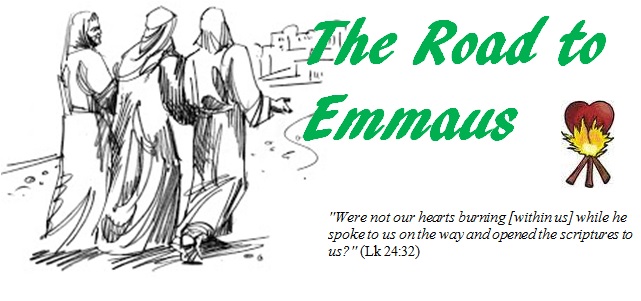
When he was at table with them, he took the bread. He blessed the bread, and broke it, and gave it to them. And their eyes were opened and they recognized him!(Luke 24:13-35)

Wednesday, November 11, 2020

Distractions


I’m easily distracted.  As I sat down to write this reflection I logged onto the computer and noticed an unread email in my inbox.   After reading that email, another showed up.  Then I went to the internet to start my reading of the Scriptures for the day.  My browser is set up to show me headlines of various news items for the day, so naturally I “had” to scroll through those.  Within some of those stories were links to other things that interest me, so down the rabbit hole I went!  My distractions distracted me, and I forgot what I set out to do.  At an unconscious level, I think that I seek out these distractions, hoping they’ll satisfy some deep longing, some unmet need, some restlessness.  Perhaps my distracted seeking parallels that of all of us who seek the Kingdom of God.

Jesus reminds us that the Kingdom of God cannot be observed (Luke 17:20-25).  It’s not here or there.  It’s not a place we go to or an event we attend.  It’s not an activity we do.  And it’s certainly not one of my countless distractions.  Instead, the Kingdom of God is among us.  In other words, Jesus is the Kingdom of God, dwelling here among us.  When we focus our attention on Christ, we’ll find the Kingdom of God.  When our attention strays from Christ, we become distracted and restless.  In contrast, we know we’re focused on Christ when our hearts are full of trust, love, and mercy.  We can then act with boldness, as St. Paul did (Philemon 7-20).

When St. Paul wrote to Philemon in his own hand, he knew that he was writing to save a life.  Onesimus, a slave, ran away, befriended Paul and became a Christian.  The name "Onesimus" means "useful", and Paul took advantage of that to tell Philemon that the formerly useless slave was to be respected and compassionately reinstated in his job.  Paul asked Philemon to accept his slave back as "a brother…in the Lord" and to "welcome him as you would me".   Isn’t this the challenge each of us has when someone has harmed us?  To forgive and to remember that the other person is our "brother in the Lord" is the hallmark of a faithful Christian.  Philemon remained the master and Onesimus remained his slave, but the quality and tone of their relationship was forever changed. They became "brothers in the Lord".  (At least I hope so—Scripture doesn’t tell us if Philemon did as Paul asked him to.)

How many “Onesimuses” do we know?  These are the persons who seem worthless to us and the people who’ve cheated us.  We’re to treat everyone as if we’re meeting Jesus Himself (Matthew 25:31-46).  Saint Francis of Assisi used to genuflect at the feet of each person he encountered.  That gesture might be a bit drastic in today’s world, but we can at least smile at everyone we interact with, in my opinion.

The reign of God comes to us every day through every person we meet.  If we bring Jesus into the encounter, the occasion becomes sanctified, holy.  And isn't it interesting and ironic that God likes to speak to us through those who seem useless and ignorant!

"Welcome him as you would me" was Paul's invitation to Philemon.  He was speaking the words of Christ himself, who said that what we do to the least - the very least liked of all people - we do to Him.  We must train ourselves to recognize the reign of God where we least expect to find it!

Tuesday, November 10, 2020

Actions speak louder than words


Social distancing to avoid disease is nothing new.  Long before the germ theory of disease, isolation and fear of contagion kept anyone with visible skin disease “unclean,” on the outskirts of society.  According to custom, one could re-enter society only after a priest certified a cure.

The ten lepers in Luke’s Gospel (Luke 17:11-19) needed to raise their voices to be heard from their (socially safe) distance.  “Jesus, Master! Have pity on us!”  Jesus only instructed them to show themselves to the priests.  As they were going, all were cured, but only one – a foreigner – returned to thank Jesus.

Again a raising of the voice – a loud voice giving glory to God, and the cured one no longer distanced himself but courageously and with great faith approached Jesus, threw himself at Jesus’ feet and thanked Him.

As I reflected on this Bible account today, a question occurred to me.  Did Jesus ever say “Thank you” to anyone in the Gospels?  After a bit of (I’ll admit) quick research, my answer is yes, but it would seem only to His Heavenly Father.  Before He raised Lazarus from the dead Jesus prayed: “Father, I thank you for having heard me…” (John 11:41)   At the last Supper the night before Jesus died “…taking bread and giving thanks, he broke it and gave it to them saying: ‘This is my body to be given for you.’” (Luke 22:18)   Again before Jesus multiplied the loaves and fishes to feed the 5000, “Taking the seven loaves, he gave thanks, he broke them and gave them to his disciples to distribute…” (Mark 8:6)   Since everything belonged to the Father, His only possible response to God was a simple “Thank you!”

But to everyone else who befriended or helped Him Jesus didn’t say “thanks”; instead, He did something for them to show His gratitude.  When Peter allowed Jesus to use his boat as a pulpit, He didn’t say thanks.  Instead He provided him with the miraculous catch of fish (Luke 5:1-11).  When Mary supplied the amenities that Simon failed to offer, Jesus said her act of kindness would be retold till the end of time (Matthew 26:6-13).  And when the Canaanite woman responded to His request for a cup of water, Jesus gave her water springing up to eternal life, the gift of faith (John 4:1-42).

When someone thanks us we know how it makes us feel satisfied, sometimes even needed.  It bonds people together making us realize that we are our neighbor’s keeper.  Whereas ingratitude breeds ingratitude.  When people react in an ungrateful way, it distances people one from another making them feel superfluous, perhaps even a nuisance or menace.

Following Jesus’ example is the path to holiness and eternal life.  So being ever ready to express gratitude by deeds, or at least words of thanks, should be our spontaneous response to every act of help or kindness shown to us.

For me it takes courage to raise my voice to God, to ask for a felt closeness, a sure knowledge of His love for me.  But when I do, it’s in the going that He answers me.  God’s love for me becomes felt in acts of kindness toward those He presents to me throughout the day.  Isolated as we are during Covid-19, a phone call, a letter, a prayer for others all manifest God’s love for us.  I can feel it.

May we all throw ourselves at Jesus’ feet and thank Him, through our actions towards our fellow “lepers”.  Actions do speak louder than words. 

Monday, November 9, 2020

Strive for the extra-ordinary


One of the most amazing features of our wonderful lives as human beings is the fact that we are bound by, moved by, and immersed in “time”.  We can think about what happened yesterday, imagine what tomorrow might bring and, at the same time, live in the present.  Many words have been written about just how to juggle all of that and whether “knowing where you’ve come from”, “living in the present moment”, or “thinking ahead” should take pride of place.

A portion of the letter of St. Paul to Titus (Titus 2:1-14) talks about how to live in the present: “temperately, justly and devoutly.”  And it tells us what we wait for in our future: “the appearing of the glory of the great God and of our Savior Christ Jesus.”  But what might be missed in our neat “timeline” is a fact “from the past” that remains effective in the present and propels us to our future: “the grace of God has appeared.”

The deceptive simplicity of this statement uncovers for us the revelation of Jesus as God’s presence among us.  This simple fact has changed many things, including the way we relate to time.  In Jesus, God’s grace (presence, strength) is no far-off, occasional visitor.  Neither is it “once and done”, or “someday far away.”   God’s grace has appeared (hidden in Jesus of Nazareth), appears each day (hidden in faces and events all around us as well as within us) helping us to live “temperately, justly and devoutly”, and will appear as the Lord lets us see His glory face-to-face.

Now we can say with amazement, but without fear, that in Jesus Christ, we are living in the past, the present and the future.  “Jesus Christ:  the same, yesterday, today and forever.”

And yet “the same” does not mean “static”.   For instance, the obligations of being a Catholic seemed much harsher as I was growing up.  These obligations included abstinence from meat on Fridays, Mass on Sundays and on holy days, fasting from midnight until the reception of the Eucharist, fasting in Lent, and many more.  Since the Second Vatican Council in the early 60s, the obligations are fewer and there’s an expectation that we each will make our own personal choices for sacrifices and service that express our love for God.  Superficially it seems that things have become laxer, but it’s actually become more challenging because we have to take more personal responsibility.  We each have to discern what it is that God is calling us to do to serve Him and those around us. It’s not an easy task sometimes because He doesn’t lay it out in black and white, and sometimes it’s frightening that he may call us to do something beyond our comfort zone.

The lesson Jesus is trying to teach us in Luke’s Gospel (Luke 17:7-10) is that it’s not enough to just meet our obligations: “So should it be with you. When you have done all you have been commanded, say, ‘We are unprofitable servants; we have done what we were obliged to do.’” It can be tempting to pat ourselves on the back or even look for acknowledgement from others when we’ve met our obligations within a very secular society.  Just meeting our obligations is nothing extraordinary; it’s the extra-ordinary that we should strive for in our service to God and others.

Sunday, November 8, 2020

We are God's temple


Today we celebrate the Feast of the Dedication of the Lateran Basilica in Rome.  Constantine built it in the fourth century and the Church has been celebrating this on November the 9th at least since the twelfth century.  This is a day to remember our unity with the Chair of Peter and the mother church.

A temple is supposed to be a sanctuary, a holy place.  From that temple should flow love, joy, peace, healing, and holiness.  Ezekiel “saw” such a temple (Ezekiel 47:1-12).  Water flowed out of it.  That water made salt water fresh and caused living things to multiply.  Trees along the river produced abundant fruit and their leaves were used for healing.  This image of God’s temple reminds me a lot of Abraham and Joseph (Genesis).  When Abraham lived by faith, everything he touched turned to gold.  People were blessed simply because Abraham and his family lived in the neighborhood.  Joseph was a teenager locked up in prison for no good reason.  Yet, from that prison, the water flowed until the whole earth was blessed through him.  The Psalms tells us how this can be (Psalm 46).  The temple is the city of God, the holy dwelling of the Most High.  The waters that flow out of the temple to enliven the earth first gladden the city of God.  St. Bernard said it well: “You cannot be a channel if you are not first a reservoir.”  If God’s temple, be it Abraham, Joseph, or us, has a deep reservoir of faith, then that water will flow out and fulfill the promise to Abraham that all the nations of the earth will be blessed through him.  We don’t produce the water; we’re “instruments of his peace.”

Saint Paul takes this image even further (1 Corinthians 3:9-17).  He says that we as a people are God’s temple.  To be His temple we need to stand on the firm foundation, the only foundation of this temple, Jesus Christ.  When we serve the Church as builders by sharing our faith and bringing others into God’s temple, we need to be sure that we’re bringing them into the temple that has Jesus as its foundation, and not a building of our own choosing.  In fact, Paul gets fairly blunt about it.  This temple is holy because the Holy Spirit dwells here.  So, if we do anything to destroy that temple, God will destroy us.

John’s Gospel shows us how serious this is (John 2: 13-22).  Jesus drives the moneychangers out of the temple.  They had turned a house of prayer, God’s temple, into a marketplace.  Did Jesus have the right to make this judgment and get angry like He did?  

The key is to understand what sort of “anger” Jesus had.  Normally when we speak of anger, we mean a passion that’s out of control and, in fact, controls us.  It’s the loss of control and is a sin.  But this isn’t the anger Jesus had.

Obviously, Jesus was perfect in every way, so we have to be extremely careful not to equate His anger with our normal experience of anger.  Yes, it was a passion for Him, but it was different from what we normally experience.  His anger was an anger that resulted from His perfect love.

In Jesus’ case, it was love for the sinner and His desire for their repentance that drove His passion.  His anger was directed at the sin they were engrossed in and He willfully and intentionally attacked the evil He saw.  This certainly must have been shocking to those who witnessed it, but it was, in that situation, the most effective way for Him to call them to repentance. 

At times we’ll find that we also must be angered by sin.  It’s way too easy for us to use this example of Jesus to justify losing control of ourselves and entering into the sin of anger.  Righteous anger, as Jesus manifested, will always leave one with a sense of peace and love for those who are rebuked.  There will also be an immediate willingness to forgive when true contrition is perceived.

The leaders of Jesus’ day destroyed God’s temple by nailing it to a cross.  On the third day, that temple was raised up.  From the altar of His body the life-giving water and blood flows for the healing of the nations.  Today we celebrate a basilica in Rome.  It’s a good day to look in the mirror and celebrate “that” basilica, too.  And be holy. 

Saturday, November 7, 2020

Keeping our candles lit with the oil of wisdom


Wisdom can be defined as “grace with action.”  Wisdom isn’t just something above the eyebrows, it moves us.  Too often we don’t realize until long after how something within caused us to act in an unexpected, but right, manner.  It’s not only the quality or state of being a wise person; it’s also the knowledge of what’s true or right coupled with action upon our wisdom for other’s sake.  

Wisdom “is readily perceived by those who love her” and is “found by those who deliberately ask or seek her” (Wisdom 6:12-16).  Simply said, love is primarily “paying attention with care.”  It takes our intention and deliberate focus for the Holy Spirit to fully engage with us.  God’s love for us respects our free will.  And wisdom takes a lot of waiting, but it’s an expectant, faith-filled waiting on the Lord.  

A lot is packed into Jesus’ short parable (Luke 11:15-26) in which a wedding feast is compared to the kingdom of heaven and the “ten virgins who went out to meet the bridegroom”.  The wise ones couldn’t share their oil with the foolish ones if they wanted to.  What is required to enter the feast must be what we’ve experienced or what we’ve done ourselves.  We can’t share our relationship with Jesus with someone else, as the unprepared virgins wanted the others to do.  We have to experience the love of Christ personally to have a relationship with Him.  The oil is our love and relationship with Christ.  The unprepared virgins were foolish to think that they could purchase this at the last minute.  If only they would have stayed and asked the lord for mercy and forgiveness, they could have entered the wedding feast or Kingdom of Heaven.  Jesus Christ, the Bridegroom, with a word of command, can wake us up and take us to be with Himself if only we have faith.  If we bless Him while we live and call upon His name, it won’t be in vain.

Jesus’ future coming transforms the present by motivating us to love Him and live for Him to the fullest. The ones who wisely plan ahead, are rewarded; the unprepared are rejected.  A few weeks ago, the rejected guests were those without a wedding garment (Matthew 22:1-14), now it’s the ones without working lamps.  At baptism we were clothed in Christ and were given a lighted candle.  Only those who put on Christ and light the way are welcomed to the kingdom.  We must live out our baptism and let our God-given wisdom give us the urgency we need each and every day.  The door is open, let’s keep our candles lit with the oil from a strong relationship with Jesus!

Friday, November 6, 2020

The burden of riches


We live in a world in which we’re made more aware of the disparity that exists within it with each news story.  The very fact that we sit here looking at a screen reading this reflection separates us from most of the world who can’t do so.  We try extremely hard each day to be caring for those around us but our efforts, no matter how grand, seem to be insignificant because there’s always so much more to do.  Guilt can overwhelm us.

God loves us so much that He’s given us an amazingly bountiful and renewable world so that we might ensure that everyone has what they need to live a good life.  Unfortunately, there’s no bell within us that rings and says, “Okay, enough, you have plenty; let someone else have the rest.”  The more we have, the more we want; and God knows that ultimately this stops us from loving Him fully.  We can’t.  We’re too distracted.

Jesus often spoke about the burden of riches and how it keeps us from devoting our lives to God.  His messages are always simple and clear.  We can’t accumulate wealth without it interfering with our relationship to our God who has made all that we have possible, no matter how much or how little (Luke 16:9-15).  The problem comes in knowing what it is that we must do in order to be among those who will “inherit the kingdom of God” (Mark 10:17-31).  Or is it like the story of the young, rich man who asks Jesus what he must do to have eternal life and is told to give away all of his wealth to the poor? (Matthew 19:16-26)

For all of my adult life I’ve been blessed, or maybe cursed with being a privileged white man, meaning I’ve been able to financially meet my needs.  I relate well to what Saint Paul writes in his letter to the Philippians, “I am very well supplied because of what I received from you…” (Philippians 4:18)

Whatever we have in this life is on loan and can be taken away in the time of a single breath.  We must work to understand that the day will come when we’ll leave behind every “thing” we’ve accumulated to those who follow us.  Wouldn’t all of us want that to be memories of someone who was loved rather than the things that we’ve bought?

It's all about relationships.  How we relate to God and how we relate to our fellow man.  Think about Christ's relationship with Thomas.  Thomas had walked with Christ.  He’d seen most of the miracles with his own two eyes.  And yet, at the resurrection, "doubting Thomas" wouldn’t believe (John 20:19-31).  Did Christ reject him?  Did He send him packing?  Did a lightning bolt fly down from heaven?  No.  Christ afforded Thomas an opportunity not granted to any other disciple or to anyone else that we know of.  Thomas touched Christ's wounds.  And then Thomas went out as an ambassador for Christ and changed the world forever.  Being called a "doubting Thomas" shouldn’t be considered a bad thing.  It's OK to doubt.  God's the one who gave us the brain where doubts arise.

How we live our life should be how we relate to God.  Our relationship with God should be all about the spirit with which we wake up in the morning and get busy, the faith that shapes how we love and care for our family, and the grace we rely on from God to face the mystery of life and death each day.  

Our relationship with God is as much about what we decide to buy, how we choose to present ourselves, what sacrifices we become comfortable making, as it does if we go to church and whether or not we take time for formal prayer each day.

“God knows the heart!”  What a great truth to be deeply aware of.  So often in life there are misconceptions we have of others and misconceptions that others have about us.  The passage in Luke (16:14-15) goes to the heart of this tendency of the Pharisees to create a false image of themselves for others to see and to care little about the inner truth that only God is aware of.

So what’s more important to you?  What do you prefer?  Are you more concerned about the opinions of others or the truth of your life in the mind of God?

This struggle can go two ways.  On one hand, like the Pharisees, we can strive to present a false persona of ourselves to others while, at the same time, God is fully aware of the truth and is aware of the false image we are trying to portray.  On the other hand, we may find that others have a false image of who we are, which can cause us much hurt.  When this happens, we can be led into anger towards others and tend to irrationally and excessively defend ourselves. 

But what’s important?  What should concern us?  The Truth is what matters, and we should care little about that which God is not concerned.  We should care only about that which is in the mind of God and what He thinks about us and our lives. 

God wants us to live an honest life by which we present ourselves in the truth, and not to be like the Pharisees who were obsessed with the flattering and false images others had of them.  Worry only about living in the truth and what is in the heart of God and leave the rest to Him.  In the end, that’s all that matters. 

Thursday, November 5, 2020

Don't get ahead of grace!


In the course of my job, I often had to choose between what was good for the company or “right” for the customer.  For example, one time I was assigned the simple task of paying for, then recovering a trailer that had been impounded by the police when the driver of the car pulling our trailer was arrested for having a suspended license.  To make a long story short, I had the option of taking possession of the goods in the trailer and taking them to a safe self-storage facility or allowing the customer’s wife to unload the goods before I took the trailer.  Since she was a three-hour drive away and I was in the high desert in temperatures well over 100 degrees, I was really leaning towards just getting my trailer and heading for cooler temperatures in the 90’s.  But when she related some hard luck stories to me that she had recently been experiencing, I wanted to make her life just a little more pleasant and hopefully show her a Christian attitude.  So I told her I would wait for her to come and pick up her husband’s possessions.  Three hours turned into four and I was feeling a bit hot under the collar--not due to the weather.  When she finally did show up, she had the audacity to ask me if I would deliver the goods to a nearby city that the trailer was headed for when her husband was arrested! 

There were two reasons why I agreed to help her out.  First, I would have to go through the city to get back home anyway and second, she had brought along as company her elderly mother!  When I saw the old lady struggling to walk and stay positive in the oppressive heat of the afternoon and circumstances, I was swept up with a feeling of compassion.  I was going to help her to help her daughter cope with the situation in any way that was in my discretion.  So I basically wasted a day of the company’s time, and in the end, I think the outcome was worth it.  So did my boss when I related the story to him that day.  In fact, even though I had violated several company policies to get to my end result, he commended me to his boss!  After all, the two of us had been trying to get our teams to understand that in today’s business world, companies have to be advocates for the customer!  Other colleagues in our company thought I went too far.  In my mind, I was merely helping my ‘neighbor’ through a small portion of her current life crisis.

Many of us are experiencing crises these days.  It may be a loved one sick or dying from Covid-19 or another illness.  Perhaps the family business is struggling, or you’ve lost your job.  The cries for racial justice in our communities in response to the killings of our Black brothers and sisters at the hands of police are unrelenting.  And as we witness the devastating wildfires and high number of calamitous hurricanes that reveal the widening environmental destruction on our planet, many are shaken to the core.

As I reflect on the parable of the Dishonest Steward (Luke 16: 1-8) today , I think  Jesus told this parable as a way of highlighting the fact that the “children of the world” are indeed successful in their manipulation of worldly things, whereas the “children of light” are not as shrewd when it comes to worldly things.  So what does this tell us?

It certainly doesn’t tell us that we should enter into a worldly life striving to live by worldly standards and working toward worldly goals.  In fact, by acknowledging this fact about the worldly, Jesus is presenting us with a strong contrast as to how we should think and act.  We’re called to be the children of light.  So we shouldn’t be surprised at all if we’re not as successful in worldly things as others are who are immersed in the secular culture. 

This is especially true when we look at the numerous “successes” of those who are fully immersed in the world and the values of the world.  Some are successful in obtaining great wealth, power, or prestige by being shrewd in things of this age.  Take, for example, the entertainment industry, or politics.  There are many who are quite successful and popular in the eyes of the world and we can tend to have a certain envy of them.  Compare that to those who are filled with virtue, humility, and goodness.  We often find that they go unnoticed. 

The parable of the Dishonest Steward is confounding.  Why would a steward, dismissed for mismanagement be praised for cutting debt owed to his rich master?  It makes no sense, until we realize that Jesus is teaching His disciples their God-given capacity to manage a crisis.

According to some scholars, the steward forgave the debtors a portion of the debt that was the commission the steward received for collecting the debt. This was a clever act which kept him in good stead with the debtors and the rich man.

Jesus says we, His disciples, have all the gifts of the Holy Spirit we need to manage life’s crises.  But our disposition must be an openness to the grace and wisdom available to us.

I’ve heard it said, “Don’t get ahead of grace.”  If we stew and become anxious about a pending crisis, a predicted disaster, an illness, or death yet to happen, we’re trying to get ahead of grace. The Gospel assures us that we’ll have the grace we need to manage crises when they come.  Not before.  I have no doubt that’s why throughout Scripture God tells us “Be not afraid!”

As the steward, a “child of this world,” was prudent in protecting his social connections, so we, “the children of light” will have what we need to deal with anything life throws our way, no matter how tragic.

Reflecting on the power of God to provide what we need when we need it gives us an inner peace, serenity, composure in every situation.

We should use this parable to remind ourselves that all that matters, in the end, is what God thinks.  How does God see us and the effort we give in living a holy life?  As children of the light, we must work only for that which is eternal, not for that which is worldly and passing.  God will provide for our worldly needs if we put our trust in Him.  We may not become huge successes in accord with worldly standards, but we will obtain greatness in regard to all that truly matters and all that is eternal. 

Wednesday, November 4, 2020

I'm part of the "1%"


These days, it almost like we can’t turn on the news or visit the web without hearing about “The 1%.”  In the context of economic justice, the 1% are seen as those who hoard resources at the expense of the 99%.  They’re perceived as privileged, above the law, disdainful of those they feel are beneath them. There are protests and rallies and even disruptions of our economic lives to bring attention to this imbalance by various politicos, especially during election years.

But this isn’t the 1% that Jesus talked about in Luke (15:1-10).   Although social and economic justice were frequent themes in His teachings, this time Jesus turned conventional wisdom on its head.

Even if we don’t want to admit it, it’s easy to think that people with greater resources and easier lives are more favored by God.  This was certainly true in the time of Jesus.  Those people that held high social status and were well off, were seen as blessed by the Lord.  The 1% of that time were God’s favorites, or so it seemed.  Jesus shows us a different view of God’s kingdom.  According to Jesus, the 1%, the elite, the favored, the ones most deserving of the Father’s attention, were those who had strayed.  And in Jesus’ example, God (the shepherd), doesn’t wait for the lost lamb to return, but leaves the 99 “good” lambs to search for the 1%.  “What man among you having a hundred sheep and losing one of them would not leave the ninety-nine in the desert and go after the lost one until he finds it?”   (Luke 15:4)

We all stray from time to time.  At least I know I certainly do.  Saint Paul himself said he was the greatest sinner (1Timothy 1:15).  But God considers all sinners to be the 1%, those who have a special place in His kingdom.  The tax collectors and sinners were all drawing near to listen to Jesus, but the Pharisees and scribes began to complain, saying, “This man welcomes sinners and eats with them.” (Luke 15:1-2) In His eyes we’re all deserving of His full and undivided attention, at all times!  Why is it so hard for us to accept this?

It’s quite easy to be harsh and critical toward those who “deserve it.”  When we see someone clearly going astray, we can almost feel justified in pointing the finger and putting them down as if we were better than they or as if they were dirt.  What an easy thing to do and what a mistake!

If we want to be like Jesus, we must have a much different attitude toward them.  We must act differently toward them than how we may feel like acting.  Sin is ugly and dirty.  It’s easy to be critical toward one who is caught in a cycle of sin.  Yet if we do so, we’re no different than the Pharisees and scribes of Jesus’ time.   And we’ll most likely receive the same harsh treatment right back from Jesus for our lack of mercy. 

It’s interesting that one of the only sins that Jesus consistently rebukes is that of being judgmental and critical.  It’s almost as if this sin shuts the door on God’s mercy in our lives.

We must recommit ourselves to mercy and a complete lack of judgment of others.  Judgment is Christ’s to give, not ours.  We’re called to mercy and compassion.  If we can offer just that, we’ll be much more like our merciful Lord.

Tuesday, November 3, 2020

Putting God first


“If anyone comes to me without hating his father and mother, wife and children, brothers and sisters, and even his own life, he cannot be my disciple.”  (Luke 14:25-33)

No, this is not an error.  Jesus really said this.  It’s a strong statement and the word “hating” in this sentence is quite definitive.  So what does this actually mean?

Like everything Jesus said, it must be read in the context of the entire Gospel.  Jesus said that the greatest and first commandment was to “Love the Lord your God with your whole heart…”  He also said to “Love your neighbor as yourself.” (Mark 12:29-31) This most certainly includes family.  Then we hear Jesus telling us that if anything whatsoever gets in the way of our love of God, we must eliminate it from our life.  We must “hate” it.

But I don’t think Jesus means the sin of hate; it’s not an anger welling up within us that causes us to lose control and say mean things.  Rather, He means we must be ready and willing to distance ourselves from that which gets in the way of our relationship with God.  If it’s money, prestige, power, the flesh, alcohol, etc., then we must eliminate it from our lives.  Unfortunately, some will even find that they must distance themselves from their own family in order to keep their relationship with God alive.  But even in this case, we’re still loving our family.  Love simply takes on different forms at times.

The family was designed to be a place of peace, harmony, and love.  But the sad reality that many have experienced in life is that sometimes our family relationships directly interfere with our love of God and others.  And if this is the case in our lives, we must hear Jesus telling us to approach those relationships in a different way out of love for God.

Perhaps this Scripture could be misunderstood and misused at times.  It’s not an excuse to treat those in the family, nor anyone else, with spite, harshness, or malice.  It’s not an excuse to let the passion of anger well up in us.   But it is a call from God to act in justice and truth and to refuse to allow anything to separate us from the love of God.

Jesus wants us to be His disciples, closer to Him than to anyone, to anything else.  He wants to be at the center of our hearts.  He knows this will involve taking up crosses to follow Him that completely.  He isn't just talking about enduring crosses that come our way.  We surely do that.  He's talking about taking up a cross that has discipleship with Him written all over it.

Jesus talks about assessment and preparation.  He advises us not to try to be His disciple without really choosing it and planning for it.  We shouldn’t try to be a best friend to someone, to enter into a marriage or to take on a big responsibility, without realizing it’s going to take generosity, freedom, and hard work to do it well.  We've all heard people who have struggled with commitments, with the words, "I didn't know it would be this challenging."  Jesus wants us to know what a relationship with Him will involve.  So He asks us to consider what else has possession of our hearts.  He asks us to assess if we have what it takes.  This is where the desire comes in.  We know from our human experience that we really can do what we really want.  The assessment is whether we’re desiring the right things.  Re-aligning our priorities—the things we keep finding ourselves choosing, doing, wanting more of—that aren't part of our relationship with Jesus come to our attention.  We may discover some things we treasure and value which are opposed to our relationship with Jesus.  It takes real reflection and assessment to do this.

Jesus is helping us see that we can't simply say, "Of course, I want to be your follower," without really preparing for what that will mean.  St. Paul tells us to “Work out your salvation with fear and trembling. For God is the one who, for his good purpose, works in you both to desire and to work.” ...And to “Do everything without grumbling or questioning.” (Philippians 2:12-18) While we’re about working out our salvation, it’s God who works in us to desire and accomplish what we do.  It’s the right balance of grace working within us. We fail if we try to do it all ourselves.  It fails if we don't do our part.

We should reflect upon that which is the greatest obstacle to our relationship with God—who or what tears us away from loving God with our whole heart, mind, and soul.  Hopefully, there’s nothing or no one who fits this category.  But if there is, we should hear these words of Jesus today encouraging us to be strong and calling us to put Him first before anything else in life. 

Monday, November 2, 2020

RSVP God's invitation with the attitude of Christ


Life isn’t fair.  It wasn't fair to Jesus; it isn't fair to most of us.

Most unfair is the undeserved suffering that marks our lives, and there’s plenty to go around these days—COVID, personal misfortune, poverty, rioting, disease, hurricanes, accidents.  We Christians face no greater obstacle to personal faith.

St. Paul also faced this problem.  In his letter to the Philippians (Philippians 2:5-11), written while in prison, he told them that handling undeserved suffering was profoundly simple: handle it the way Jesus did: "Have among yourselves the same attitude that is yours in Christ Jesus."  He was quick to remind Christians that Jesus truly did suffer and was never protected from suffering because of His equality with God; He was like us in all ways, "taking the form of a slave and coming in human likeness."

And so He opened himself totally to God, humbling Himself and being ready to embrace whatever God willed.  We get insight into Jesus' attitude from His prayer in Gethsemani before His passion and death.  After pleading three times in prayer that His chalice of suffering be taken away He finally grasped that it was His father's will that He embrace His crucifixion (Matthew 26: 36-46) and so, "he humbled himself, becoming obedient to death, even death on a cross."  

Then comes the comfort: precisely because of his acceptance a remarkable thing happened: Jesus was raised from the dead and transformed, "Because of this God greatly exalted him and bestowed on him a name that is above every other name, that at the name of Jesus every knee should bend."

The lesson for us is clear: unmerited suffering handled with trust in God is transforming.  When all human supports are gone and we throw ourselves absolutely into the arms of our Father, we can be changed.  External observers may see nothing but senseless tragedy, but we’ve been invited into a radical new intimacy with our Father—an intimacy possible only because the suffering itself has opened a new dimension of faith and trust.  Handling suffering in faith places us at the heart of the Christian mystery: we’re participating with Jesus in His Paschal Mystery.

“I will praise you, Lord, in the assembly of your people” (Psalm 22:26-32).  This Psalm gives us guidance as to how to proceed, as members of Christian faith communities.  We’re being encouraged to be vocal and to share, with others, how our faith and how living our faith impacts our lives.

The Gospel of Luke gives the story of our invitation to a “great dinner” in the Kingdom of Heaven (Luke 14:15-24). The Scripture highlights three people who excused themselves from the feast for “good” reasons.  One just bought a field and had to go examine it, one just bought some oxen and had to go care for them, and another just got married and had to be with his wife.  All three had what they thought were good excuses and thus failed to come to the feast.

The feast is the Kingdom of Heaven.  But it’s also any way that we’re invited to participate in God’s grace: Sunday Mass, moments of daily prayer, the Bible study we should join, the mission talk we should attend, the book we should read or the act of charity that God wants us to perform.  Every way that grace is offered to us is a way in which we’re invited to the feast of God.  Sadly, it’s too easy for some to come up with an excuse for denying the invitation of Christ to share in His grace.

Another way to participate in God’s grace is through our suffering; it “invites” us to time spent in prayer, reflection, celebration of and service to others.  In other words, take on "the attitude that is within us through Christ Jesus."  It can be joyful and is essential if we’re to nurture and grow in relationship with God and with others. “Blessed is the one who will dine in the Kingdom of God.”

Sunday, November 1, 2020

The will of the Father


In Mexican tradition (Dia de los Muertos) there’s a saying that people die three deaths.  We experience the first death when our physical bodies die, the second death occurs when our bodies are lowered into the earth out of sight.  The third death occurs years later when there’s no one left on earth who remembers us.  In Catholic tradition, there is no third death.  The faithful dead, as members of the body of Christ, are seen as members of the communion of saints.  Therefore, the living and deceased are yet alive in Christ. 

So on All Souls Day we celebrate, reverence, and remember those who have gone before us.  We remember our loved ones – family, friends, colleagues, co-workers, neighbors, and significant strangers.  We remember those alive in our hearts, and those forgotten in history.  We remember all who have gone before.

As I meditated on this today I asked myself what I would do if I stood in a room with two exit doors – one marked ‘my past’ and leading to a room packed with all the events of my life to date, and the other door marked ‘my future’ and this room would be filled with my dreams and hopes for the future.  To make the choice hard, I imagined only being able to choose one of the doors – either to revisit the past or look ahead to the future.

Obviously, this is an artificial choice, but one that might just be hard to make.

For some people relishing and celebrating the past with all its achievements or memories of exciting or meaningful times might be a fulfilling and happy experience.  Perhaps too the past might just contain all those happy memories of loved ones who are not part of one’s life any longer and whose absence is deeply felt. 

For others, looking forward is their fundamental approach to life and they would draw energy from such a perspective.  In some cases, people allow the future to lead them onwards; inspiration, dreams and hopes are strong drivers in their life choices.

Neither the past or future reality – or indeed the present moment – is complete without the other dimensions.  Indeed, today’s feast of All Souls speaks to the dimensions of past, present and future.  We, the Church on Earth, in this moment honor and pray for those who have gone before us into the future life of heaven.  We celebrate and place our trust in the promise of God that eternal life is not only their gift now but is also an inheritance that awaits us also.

The image of the Church on Earth praying for the Faithful departed, and in turn them praying for us is a comforting one.  Today is one day where that reality is not only imagined but celebrated.

We offer our prayers to God today – prayers of gratitude or intercession for our dear departed precisely because we want to share their memory with God and because we believe that they pray for us too. 

As I sit in silence and prayerfully reflect on my family – as far back as I can go – I experience a deep sense of connectedness.  I experience a rich fullness.  I delight in the stories of my adventurous great and grandfathers who left home and family to sail the high seas, or travel across country in search of – what?  I’m amazed at the courage of my great and grandmothers who with children left their families and accompanied their husbands across oceans, fields, and the Great Plains.  I’m fascinated by the unknowns that drew them on and dictated when they had arrived.  What kept them going in the face of overwhelming hardships?  I’m inspired by the rich diversity of religions, faith traditions and beliefs that color my story.  I’m in awe of the accomplishments, of the endless giving, and selflessness of friends, family, and significant strangers.  I embrace those whose lives were filled with pain, anger, tragedy, and apparent failure.  I’m filled with gratitude for this ever-expanding community of blessed and redeemed humanity, the community of saints.  And I’m equally grateful for the gift of the pain, suffering, and vulnerability they’ve shared and passed down via oral stories, diaries (like my mom’s blog) and letters.

We’re created with an intrinsic emptiness, an unquenchable thirst, a driving hunger, a holy longing which only God can satisfy.  This holy longing speaks to my innermost being and draws me to God.  The path may be slippery, rocky, and convoluted, but the attraction is more than of tidal proportion.  The path of my vocation (husband, father, grandfather, pseudo-evangelist), of my gospel story, like that of all who have gone before, is embedded in the holy yearning within.  It’s the will of the Father that I, we, none of us be lost.  It’s the Will that we have eternal life.  This holy longing, holy yearning for The Other connects us and keeps us moving singly, in family and in community toward the source of our longing – God.

The Good News is that it’s the desire of the Father that we, that all souls, rest in the eternal peace of the Father in the community of All Souls. 

Saturday, October 31, 2020

A call to be holy


All Saints Day is a beautiful feast celebrating the call to holiness open to all the daughters and sons of God—those already wrapped in God’s loving embrace and those of us still on the road. 

In Leviticus (19:2) God summons Moses to tell the people: “Be holy, for I, the Lord your God, am holy”—a command that rings down through the entirety of the Bible.  The notion of humans imitating the holiness of God is something distinctive about our Jewish heritage and our Christian faith.  Most ancient religions didn’t correlate the worship of their gods with the values that ought to guide their lives of their devotees.  They hoped that homage to their gods would protect them from harm and lead to prosperity, but they didn’t derive their code of conduct from the example of their gods. 

For the Bible, however, the “holiness” of God referred to the awesome beauty and power of God and God’s astounding tender love and mercy towards God’s people.  One of the earliest acclamations about God is found in Exodus (34:6) as Moses encounters God at Sinai: “The Lord, the Lord, a God gracious and merciful, slow to anger, and abounding in love and fidelity.”  God’s steadfast mercy, fidelity, and abiding love define what “holiness” means and set a pattern for the way we’re to live our lives.  As Genesis (1:16) affirms, the God of Israel creates humans in the divine “image and likeness”—we’re endowed with a God-given capacity for holiness.

For those of us in the Christian faith, God’s holiness is embodied in the person of Jesus.  In His very being and in the manner of His own life, Jesus revealed God to us.  As Pope Francis has repeatedly said, “Jesus is the human face of the Father’s mercy.”  God’s Old Testament command to “be holy as I the Lord your God am holy” becomes for Christians equivalent to Jesus’ call to His disciples, “Come, follow me.” (Matthew 4:19) In striving to live as Jesus lived, we find the path to holiness.

In the Book of Revelation we find standing before the throne of God and the Lamb (the exalted Christ), “a great multitude which no one could count from every nation, race, people and tongue” crying out in exaltation, praising God and the Risen Jesus (Revelation 7:2-14).  Psalm 24 also exults in God’s beauty and power: “The Lord’s are the earth and its fullness; the world and those who dwell in it.”  And it expresses the longing we are to experience as we, too, strive for a life of goodness, a life of holiness: “Lord, this is the people that longs to see your face!”

The First Letter of John (3:1-3) underscores the link between God’s love and the quality of our lives: “Beloved: See what love the Father has bestowed on us that we may be called the children of God.”  John affirms over and over that to be a child of God is to love as God loves, the central command of Jesus’ teaching.

And, finally, in a gospel passage from Matthew (5:1-12)  we hear Jesus’ beatitudes that begin the Sermon on the Mount, a  summation of the values and commitments that lead to authentic holiness, and, in fact, reflect Jesus’ own manner of life:  Comfort for the poor, for those who mourn, and for the meek;  Blessing on those committed to mercy, to peacemaking, to justice even at the cost of persecution.

At this tense and fractious moment in our history, this Christian vision of what authentic human life can be is balm for our souls.  God calls all of us to be holy as God is holy!  It’s certainly something to reflect upon for the entire month of November—a month dedicated to prayer with all of the saints for all souls.

Friday, October 30, 2020

The "Mother of all sins"


Google defines pride as a feeling or deep pleasure or satisfaction derived from one's own achievements, the achievements of those with whom one is associated or from qualities or possessions that are widely admired.

With this definition, pride can be a good thing.  But too much of anything can lead to sin—with the notable exceptions of faith, hope, and love (1 Corinthians 13:13). 

The Bible more often defines pride as, and warns us against arrogance, haughtiness, and conceit.  Pride emphasizes the self over others, and it rejects God’s greatness.  Pride occurs when sinful human beings subconsciously aspire to the status and position of God and refuse to acknowledge their dependence upon Him (Luke 14:7-11).

We can never examine our consciences often enough concerning pride.  Pride is referred to as the “Mother of all sins” for a reason.  Pride leads to every other sin and, in many ways, is the source of all sin.  If we want to strive for perfection in life (Matthew 5:48), we should seek true humility on a daily basis.

Humility is nothing other than seeing things as they are.  A humble person sees him/herself in the truth of God.  This can be hard to do because it requires that we see ourselves as weak and dependent upon God.  We may be able to accomplish many worldly things through our own strength and hard work.  But we can’t achieve happiness and goodness unless we open ourselves to the truth of our weaknesses and dependence upon God for all things. 

Humility also helps to purify our hearts of something that’s extremely hard to let go of.  Pride causes us to deeply seek out the esteem of others and to be dependent upon that esteem for our happiness.  That’s a dangerous road to go down because it leaves us constantly dependent upon the opinions of others.  And far too often, the opinions of others are based on false and superficial criteria.

Sure, we need to regularly seek out advice from those we know and love.  But we must allow ourselves only to be dependent upon God and His Truth.  When we do that, we’ll be well down the road of true humility.

At times, the coronavirus pandemic has felt to me like a prison.  We don’t know what the immediate or long-term future holds, whether on a personal, political, or epidemiological level.  But our mission as Christians remains the same – to serve others to enable their progress and joy in the faith.

As we reflect on pride and humility in the coming days on holy saints and good souls, we should thank God for the everyday saints who have responded to this pandemic: the healthcare workers who have tirelessly treated the sick and dying; the volunteers who have stepped up to feed the hungry, clothe the poor, and house the homeless; public health officials who have labored, often thanklessly, to limit the spread of the disease; the priests, chaplains, and ministers who have provided spiritual care for the sick and lonely; and the friends, relatives and neighbors who sustain community in this time of quarantine and isolation.

In humbling themselves, these ordinary saints are exalted.  May God bless them, keep them, and sustain them in their labors, now and always.

Thursday, October 29, 2020

Encouraging words


On a sabbath Jesus went to dine at the home of one of the leading Pharisees, and the people there were observing him carefully.  (Luke 14:1)

There were two things worth pondering as I read just the first line of the 14th Chapter in the Gospel of Luke today (Luke 14:1-6).

First, Jesus went to dine at the home of one of the leading Pharisees.  This was no small thing.  In fact, it was most likely the source of much discussion among the people and the other Pharisees.  It shows us that Jesus doesn’t play favorites.  He didn’t come just for the poor and weak.  He also came for the conversion of the wealthy and powerful.  Too often we forget that simple fact.  Jesus came for all people; He loves all people and responds to invitations from all who want to have Him in their lives.  Of course this passage also reveals that Jesus wasn’t afraid to come to the home of this leading Pharisee and challenge him and his guests so as to move them to a change of heart.

Second, this passage states that people were “observing Him carefully.”  Perhaps some were merely curious and were looking for something to talk about later with their friends.  But others were most likely observing Him carefully because deep in their hearts, they sincerely wanted to understand Him.  They could tell there was something unique about Jesus and they wanted to know more about Him.

These two lessons should encourage us to realize that Jesus does love us and will respond to our openness to His presence in our lives.  All we have to do is ask and be open to Him coming to “dine” with us.  We should also learn from the witness of those who were observing Him carefully.  They reveal to us the good desire we should have to keep our eyes fixed on Jesus.  Though some who observed Him carefully turned against Him and mocked Him, there were others who observed Him carefully and embraced Jesus and His message.

I also reflected a bit on the beautiful letter from Saints Paul and Timothy “… to all the holy ones in Jesus Christ who are in Philippi…” (Philippians 1:1-11)

I can imagine this letter being written to us, today, wherever we find ourselves.  It’s a message to all of us who are trying to live faithful lives in response to the Gospel message.

“I give thanks to my God at every remembrance of you…

I am confident of this, that the one who began a good work in you will continue to complete it…

And this is my prayer:

That your love may increase ever more and more in knowledge and every kind of perception,

to discern what is of value…”

This is precisely the message we all need in 2020!  We need the encouragement to keep going even though our mind, body, and spirit may be very tired.  We need to be confident that others are with us on this great journey.  We need to be enlightened to know that we’re here for His reason; and that He will be with us always, even unto the end of time. (Matthew 28:20)

Wednesday, October 28, 2020

Drawing strength


Draw your strength from the Lord and from his mighty power.  (Ephesians 6:10)

As I reflected on this passage in the scriptures today, I can’t help but think that they’re perfect for where we are at this moment in our country and the world.  I’m sure many prayers have risen to heaven to end the COVID virus or prayers for family and friends who have contracted the virus.  Prayers for the healthcare workers and first responders.  Prayers for protection.  Prayers to get through home schooling children and many countless prayers for many other things.

Paul’s letter to the Ephesians is another example of how the scriptures give us what we need when we need it.  He gives us the instruments to help get us through the strain of a pandemic.  The uncertainty of the election and the change that seems to be occurring as our eyes are forced open to look at racism and inequality at the local, state, and national levels.  With his analogy of a soldier going to war, Paul tells us to put on “armor of God, “gird our loins with truth; “clothe ourselves with the breastplate of righteousness; “hold faith as a shield”; “take the helmet of salvation; “and the sword of the Spirit, which is the word of God.  As I read those phrases again, the words that ‘speak’ to me the loudest are God, truth, righteousness, faith, salvation, and word of God.  The scriptures have always been important to me and now all the more since March.  

My faith has grown into a deeper trust that God has my back if I trust in Him.   My own family, as far as I know has escaped the virus.  My grandchildren’s schools have done an outstanding job of making learning in the unfamiliar environment as safe as possible, although Marilyn and I (and the kids) were very anxious the first couple of weeks.  So far, so good.  Whether it’s conscious or unconscious we have all put on the armor of God and acted in faith and trust acting in hope and not fear.

In Luke’s Gospel (Luke 13:31 -35) Jesus also acts with the armor of God.  He trusts in the Father’s will for Him and continues His journey to Jerusalem where He knows His end will be.  He makes a prophetic statement to the Pharisees who have come to warn Him, “Behold, I cast out demons and I perform healings today and tomorrow, and on the third day I accomplish my purpose.”  While Jesus knew His purpose, we don’t.  We hope and believe that we’re doing what God has asked of us for today.  That’s all that’s asked of us.  To trust in God.  To search our hearts and listen deeply for God’s peace and love as we make our way through these tough days.  

My reflection on Luke’s Gospel had another interesting angle to me; the exchange between Jesus and some of the Pharisees.  It’s interesting to look at both the action of the Pharisees as well as that of Jesus.

Some Pharisees came to Jesus and said, “Go away, leave this area because Herod wants to kill you.” He replied, “Go and tell that fox, ‘Behold, I cast out demons and I perform healings today and tomorrow, and on the third day I accomplish my purpose.’” (Luke 13:31-32)

I have to ask why the Pharisees spoke to Jesus in this way, warning Him of Herod’s intent.  Were they worried about Jesus and, therefore, were they trying to help Him?  Probably not.  Instead, we know that the majority of the Pharisees were jealous and envious of Jesus.  In this case, it appears that they were warning Jesus of Herod’s wrath as a way of trying to intimidate Him to leave their district.  Of course, Jesus wasn’t intimidated.

Sometimes we experience the same thing.  At times we may have someone come and tell us some gossip about us under the guise of trying to help us, when in fact it’s a subtle way of intimidating us so as to fill us with fear or anxiety.

At every company I worked for in my career, there was always someone “higher up” who would come to visit and/or inspect me and my teams’ performance on a semi-regular “unannounced” timetable.  I say “unannounced” in quotation marks because we almost always got a ‘heads up’ warning from somebody else that they were coming, so that we could be ready to impress them.  The amount of time we had to prepare varied, but the news most often came with a warning that ‘heads could roll’ if we were not on all programs when they arrived.  It was very intimidating. 

I learned over the years that the key to keeping my sanity was to react to these ‘warnings’ in the way that Jesus did when confronted with foolishness and malice.  Jesus didn’t give in to the intimidation.  He wasn’t at all concerned by Herod’s malice.  Rather, He responded in a way that told the Pharisees, in a sense, “Don’t waste your time trying to fill me with fear or anxiety.  I’m doing the works of my Father and that’s all I should be concerned about.”  That’s exactly the tactic I eventually learned.  If I followed the programs that my company deemed important at every minute of every day, I would have nothing to worry about. 

The only thing we should be concerned about is doing the will of the Father in Heaven.  When we’re confidently doing His will, we’ll also have the wisdom and courage we need to rebuke all deceit and silly intimidation in our lives.