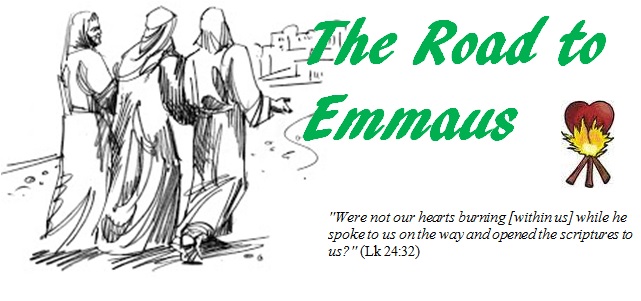
When he was at table with them, he took the bread. He blessed the bread, and broke it, and gave it to them. And their eyes were opened and they recognized him!(Luke 24:13-35)

Monday, August 17, 2020

Camels and needles, Humility and prayer


Jesus turned to the disciples and said, “It is easier for a camel to pass through the eye of a needle than for one who is rich to enter the Kingdom of God.” (Matthew 19:23-30)  

In the first century, the “eye of a needle” referred to small openings in city walls that were sometimes used after the main gate had closed.  They were so small though, that in order for a camel to enter, it had to bend down on its knees and crawl through to the other side; in most cases, the camel would also have to be unburdened of all of the “things” it was carrying for its owner’s comfort or livelihood.   We pile so many worldly attachments upon our backs that we're like camels laden with luggage!  None of this baggage can squeeze through the gate into God's kingdom.  If we try to hold onto them, we don't fit through the gate.  Identifying all of our worldly bags so that we can free ourselves from their weight seems impossible.

In this day and age, we too ask the same question that the disciples asked; "Then who can be saved?"  Jesus STILL answers in the same way; "For you this is impossible, but if you seek God's help, it will become very possible."

In His image of the camel and the eye of the needle, Christ wasn’t talking about an impossible occurrence, albeit a difficult one.  Instead, He was preaching to us the importance of humility.

When we’re asked to ponder the characteristics of a hero or heroine, we often come up with virtues like strength, courage, bravery, and honor.  Sometimes we may include love, trustworthiness, and faithfulness, but humility is not something we hold in high esteem.  Humility is for those who aren’t strong enough to fight through a difficulty or trial.  Humility is for those who are weak.

And yet, humility is what should separate Christians from all others.  It’s the greatest weapon in our fight against the devil.  As St. Vincent de Paul tells us, “For as Satan does not know how to employ humility, neither does he know how to defend himself from it.”  When we act out of true humility, the devil is powerless to oppose us.  We each must strive to become nothing in the eyes of the world, so that we might stoop to serve the lowest in our lives.  We should pray to be delivered from our fears of being ridiculed as well as from our desires of being honored and extolled.  In addition, we must also pray for the grace to desire that others become more esteemed and praised than our own selves. 

In all things, though, we must pray.  We must be willing to let God speak to us in the quiet of our hearts because, as Mother Teresa teaches us, “If you face God in prayer and silence, God will speak to you.  Then you will know that you are nothing.  It is only when you realize your nothingness, your emptiness, that God can fill you with Himself.”  Just as a camel can only pass through the eye of a needle on its knees, so too a rich person can only enter the Kingdom of Heaven on his knees before his God and King.  Just as Indiana Jones discovers in The Last Crusade, “The penitent man will pass before God,” and he does so on his knees in prayer.

Sunday, August 16, 2020

Interior Poverty


I wonder how many of us identify with the rich young man who asked Jesus, “Teacher, what good must I do to possess everlasting life?” (Matthew 19:16-22)   I know that I often ask that same question in prayer.

Jesus answered the young man’s question in two stages.  First, Jesus told him, “If you wish to enter into life, keep the commandments.”  Jesus’ advice confirms that the commandments comprise the attitudes and actions that lead to life.  But Jesus distinguishes between “entering into life” and possessing fullness of life.  Obeying the commandments, which the young man has always done, puts us on the path of life; but it’s not enough to lead us into everlasting life.  That’s why in the second part of His answer Jesus said that if the young man truly seeks “perfection,” he must rid himself of his possessions and “give to the poor.”  In other words, if the rich young man truly wanted to cross the threshold into fullness of life by becoming the person God created him to be and that God’s grace, love, and goodness enabled him to be, he had to strip himself of anything that would prevent that from happening.  Because he couldn’t yet let go of a lesser good for the sake of a much greater good, the rich young man “went away sad.”  His attachment to wealth and possessions kept him from the wholehearted commitment to Christ that leads to fullness of life.

Jesus does call some people to literally sell all their possessions and give them away.  For those who answer this call, they discover great freedom in their detachment from all material belongings.  Their vocation is a sign to all of us of the radical interior calling we each have been given.  But what about the rest of us?  What is that radical interior calling given to us by our Lord?  It’s a calling to spiritual poverty.  By “spiritual poverty” we mean that each and every one of us is called to detach from the things of this world to the same extent as those called to literal poverty.  The only difference is that one calling is both interior and exterior, and the other calling is only interior.  But it must be just as radical.

What does interior poverty look like?  It’s a Beatitude; “Blessed are the poor in spirit,” as St. Matthew says (Matthew 5:3), and “Blessed are the poor,” as St. Luke says (Luke 6:20).  Spiritual poverty means we discover the blessing of spiritual riches in our detachment from the material enticements of this age.  Material “things” are not inherently evil.  That’s why it’s fine to have personal possessions.  But it’s quite common for us to also have a strong attachment to the things of this world.  Too often we want more and more and fall into the trap of thinking that more “things” will make us happy.  It’s not true and we know that deep down, but we still fall right into the trap of acting as if more money and possessions will satisfy.  There’s an old saying, “He who has money never has money enough.”

In the rich young man we meet ourselves because like him we’re afraid to relinquish whatever we love and trust and care for more than God.  Until that changes, we’ll spend our lives walking away sad.

Saturday, August 15, 2020

Faith is more important than miracles


From the brief encounter between Jesus and the Canaanite woman in Matthew’s gospel (Matthew 15: 21-28) we can see that God isn’t limited by any “theology.”  


Jesus said that His priority was to bring salvation to the “lost tribes of Israel and not to the Gentiles.  


Jesus paid attention to the Canaanite woman’s plea after she listened to His explanation that His priority was to care for the “people of Israel.”  Kneeling, she continued her request saying that “even the crumbs off the table are appreciated by the dogs.”  Jesus was impressed by her “great faith”, and her daughter was healed.


Nothing stands in the way of God’s compassion.  We can never have “enough” faith.  This story in Matthew tells us that the woman’s faith was much more important than the miracle.

Friday, August 14, 2020

Joy in the midst of instability


On every August 15th, the Church celebrates the Assumption of Mary.  The Catholic Church teaches as dogma that the Virgin Mary "having completed the course of her earthly life, was assumed body and soul into heavenly glory".  One of the Bible readings for the day is from The Book of Revelation, which indicates that the early community of believers had a special place for the Mother of our Lord (Revelation 11:19; 12:1-10).  This is complemented with the Gospel of Luke (Luke 1:39-56), which is frequently referred to as the Canticle of Mary, and sometimes called the Magnificat.  For many of us, we often hear this text, or recite or sing it as part of our “daily office”. 

But this year, on this Solemnity, it’s extraordinarily different.  It’s different because of Covid-19.  It’s different because of the unrest and demonstrations in our streets.  It’s different because of loved ones we’ve lost.  It’s different because we understand this virus is global, affecting people all around the world.  It’s different because of financial instability, radical changes in business and jobs, and evictions.   It’s different because we’ve lost a lot of the stability that we thought we were standing on.  And we’re questioning and re-evaluating what stability even means.   It’s different because our world has been turned upside down.

Yet it’s no different than what Mary sings in her canticle; she describes a world which, because of the birth of Jesus, gets turned upside down.  And her song forces us to re-evaluate life based on our belief in Christ.

The hungry get filled with good things.

The rich are left with emptiness.

The mighty and powerful are cast from their thrones.

The lowly have been lifted up.

And she, a woman, a teenager, unmarried, pregnant, with no rights according to the Law, discovers her blessedness!   As Elizabeth says to Mary, “Blessed are you who believed that what was spoken to you by the Lord would be fulfilled.” (Luke 1:45)

Today, things have been turned upside down for all humanity in much the same way they were in Mary’s day.  But it’s not the first time, and certainly won’t be the last.

I’m reminded of another story of our Church history which isn’t in the Gospel accounts.  It takes place in the third century when Christians were harshly persecuted.  It’s the story of a deacon in Rome named Lawrence.  The account tells us about the remarkable deed he performed a few days before he was martyred.

A Roman official came to Lawrence demanding that Lawrence give him the treasure—or riches—of the Church. The official said that the emperor needed the money he would receive if crucifixes and sacred vessels like chalices were melted down and the gold sold.

Lawrence agreed, but he asked the official for three days to prepare the “treasures.”  During those three days, Lawrence sold everything he could and gave the money to the poor, the sick, orphans, widows, and anyone in need.  He asked all of those people then to go with him to the official. The legend says that Lawrence lined all the people up and announced to the official, “These are the treasures of the Church!”   The Roman official was furious. Lawrence was immediately arrested and brutally executed, burned alive over coals.  As he was led to his death, Lawrence said these words: “I rejoice greatly because I have been considered worthy to be a sacrificial victim for Christ”.   I can’t think of St. Lawrence without remembering that he is the patron saint of comedians.  Because while he was being burned, it's reported that he said to his tormentors, “Please turn me over.  I’m done on this side!”  

Perhaps amidst all the truths we’re learning about society and humanity these days,  today is more about the joy and delight Mary and Lawrence can teach us in finding Joy in the Lord our God in spite of all the other things in our lives which are being turned upside down.  There is time to respond to all that, but today Mary reminds us that we need to rejoice because our citizenship is written in the Book of Life.   Knowing this priority, and God’s faithful stability, empowers us to face the challenges of tomorrow with confidence, and yes, joy.

Thursday, August 13, 2020

Is ignorance bliss?


What if you heard on the news this morning that said stepping on spiders was the cause of the COVID pandemic and that anyone who has stepped on a spider over the last two or three years was to blame? What would you think?

Many of us, and perhaps all of us, have stepped on a spider either accidentally or on purpose, so we all have that experience.  We also know there is no causal relationship between this act and the pandemic.  So we wouldn’t believe the news because we have the personal experience and knowledge to see the faultiness in its logic.  We wouldn’t be able to help but feel that we’ve been attacked unjustly, and that someone is trying to pull the wool over our eyes.

In the same way, Matthew’s gospel pitted the overmatched Pharisees against Jesus in a battle of wits.  The Pharisees were trying to trap Jesus by getting Him to contradict Himself so that He would lose credibility; or worse yet, to renounce Mosaic Law, which would put Him at odds with His very own disciples (Matthew 19:3-12).  Of course, the issue at hand was not divorce, or even law.  In either case, this would result in a great blow to His ability to minister to the people.

Obviously, Jesus deftly identified these tactics and answered truthfully and without guile; the only way one could get out of this trap, because He is governed by a higher, spiritual law, which rises above the smoke and mirrors that often characterize human law.

As this is a presidential election year, this is an appropriate reading for the beginning of the heavy-duty and unprecedented COVID campaign season.  Anyone who watches any amount of television or uses social media for the next 3 months or so will hear and see a number of attacks between the candidates.  If these campaign ‘ads’ and memes are not the epitome of a Pharisee-style assault, I don’t know what is.

“So what’s the harm in it?” one might ask.  One might also ask what real harm might have been caused by the Pharisees in Matthew’s gospel.  There’s a way to ask questions without really wanting to know the answers, or to ask questions that are more like statements than bona fide questions.  Viewed in this way, we could see the Pharisees’ assault on Jesus as a mockery of the educational process.

So, too, are many of the negative campaign ads a mockery of the educational process.  They’re disguised as ways to inform the public of the issues, but instead they use half-truths and misleading statements to try to persuade the public to vote their candidates’ way.   I acknowledge that both political parties and even the so-called “impartial” press are guilty of this, so this isn’t an endorsement for any one party or candidate.

The ads only work when the audience is not knowledgeable enough about our government and our social issues to see the faultiness in their logic, so that same audience can’t detect the blatant misuse of the media—or worse yet, the collusion of the media—to attempt to sway them towards the sponsor’s political agenda.

The answer to this, of course, is education and common sense.  My opinion is that educating our citizenry, especially our children, will enable most of us to have the knowledge and critical thinking skills necessary to give us the best chance of choosing the best candidate to run the country, based on the real issues, well into the future.  Ignorance may be bliss, but it’s not a good position from which to choose a president. 

Wednesday, August 12, 2020

God's ways are not our ways


“The word of the Lord came to me: Son of man, you live in the midst of a rebellious house; they have eyes to see but do not see, and ears to hear but do not hear, for they are a rebellious house.” (Ezekiel 12:1-12)

These words remind me of the sin of racism in our country.  For centuries many of us have denied the humanity of Black Americans, as well as many other races and cultures that differ from our own.  We choose not to see African Americans as children of God or to hear their cries of pain and frustration.  For the most part, we “White” Americans haven’t had to deal with the issue of race because it hasn’t affected our lives.  We haven’t had to be mindful about how our actions might destroy our life or the lives of our family. 

It’s somewhat heartening that so many White Americans are now ‘seeing’ and ‘hearing’ how race impacts and often limits people of color’s lives and opportunities.   I wonder why the death of George Floyd seems to be the most powerful impetus of change.  After all, there have been many other needless deaths of people of color allegedly attributed to racism over many years.  I just don’t know the answer.  But I do know that I’m grateful that a “rebellious people” can now see and hear. 

Along with the awakening of many of us to our own sins of racism, there seems also to be a misguided call for retribution and even retaliation.  Neither retribution nor retaliation bring about change.  Forgiveness does. 

The gospel of Matthew gives a harsh look at what should be the least harsh subject, forgiveness.  It brings up the difficulties in forgiveness; that it can be hard to do.  We’re supposed to forgive others “seven times seventy times” like God forgives us, but we’re still human and have human emotions and motivations. (Matthew 18:21–19:1)

The servant in the Gospel owed a huge debt, impossible to repay in an instant.  His master was justified in turning him over to the authorities, but the servant begged for more time, swore he’d pay the debt when he was able, and the master forgave him the debt.  This man must’ve been enormously relieved and quite happy.  I’m sure this problem had been hanging over his head, clouding all his activities, and was the motivating factor in most of his decisions.  But now he was frantic to get the money to his master and he dunned people who owed him money.  When his fellow servant begged for more time (as he himself had recently) this man had no mercy.  His own master gave him more time, but he sent his fellow servant to the authorities for the return of his money.  When the master learned that his lesson of mercy didn’t continue, he rescinded it. Why should he extend mercy to someone who was not willing to do the same?

I remember an episode of 60 Minutes when they interviewed a mob hit man.  He’d killed at least twenty people in cold blood, but he kept up his Catholic faith.  The interviewer asked him how he could reconcile that. The hit man said he went to confession and confessed his mob activities.  He said his penance was ten Hail Marys, ten Our Fathers, and don’t do it again.  He got jail time too, reduced because he was an informant.  And he said he hadn’t done it since and had no plans to do it again.  I think that penance sounds a little light, but then am I like the servant in the Gospel?  I haven’t murdered one person, let alone twenty plus, but if I had, wouldn’t I hope for forgiveness?  And being given it, should I resent anyone else being given forgiveness?

Rather than being resentful or judgmental about the mob man’s forgiveness, and perhaps blocking our own possibility of forgiveness, we should feel heartened and hopeful that our own lesser transgressions might be forgiven as well.

May God be with us and may we remember “God’s ways are not our ways” (Isaiah 55:89) as we strive to create a country that sees and hears and values each one of us as a Child of God. 

Victim or victor?


"If your brother should commit some wrong against you...." (Matthew 18:15-20)

Growing up in a household with five brothers, this line from Matthew’s gospel was the focal point for my reflection today.

"Mom!  Dad!  Do you know what Tom did to me!? "   When my brothers and I were younger we knew exactly what to do when a wrong had been committed against us.  It sounds a lot like social media and politics today.  There’s something almost enjoyable about clearly being the victim, knowing that retribution of some form is well-deserved.  There’s an order to things: first we tell everyone else what happened, then we wait for the guilty one to 'get' what he or she deserves. 

But Jesus leads us in a different direction.  He asks us to care deeply for the one who’s hurt us.  And the first thing He tells us to do is "to keep it between you."   We can't use this wrong as an opportunity to perfect our role as victim.  We aren't told to run down the reputation of the other, even if it's under the guise of "sharing the pain of our hurt" with a third party.

In a clear departure from our tell-all culture, Jesus asks us to be silent about the wrong against us, except to return to the person who hurt us and talk to him or her.   We’re invited to care for that person by talking, discussing the injury privately, trying to resolve our differences.  If the person doesn’t respond, Jesus says we may ask someone else to help moderate it, even bringing it to the Church.  Each of these steps is designed not to get our own well-deserved justice, but as a way of caring for the other person.

If none of this works, we’re asked to simply avoid that person.  We’re not asked to talk about that person or carry the injury or hurt for years.

Jesus’ direction seems to be asking us to behave in a radically different way.  We’re asked to take our role as victim and use it as a special way to care for the one who hurt us, transforming not only the injury, but ourselves.  As humans we’re bound to be at both ends of committing hurts.  Wouldn't this be a wonderful guideline for life when we’re the ones who inevitably will have hurt someone else?

In the end, Jesus invites us to prayer, especially to gather together for prayer.  Could it be that we’re invited to pray with and for the one who hurt us?  How different our lives and our world would be if we could accept such an invitation from Jesus!

Monday, August 10, 2020

Turn


What God desires is our simplicity, our childlike wonder and awe at how wonderful things are.  Take a moment and look at your hand, for instance.  Think about how it can move.  Think about all of the things that make it possible; the muscles, the bones, the blood vessels, how they’re all put together.  Something as simple and everyday as your hand is full of wonder if you take a moment to consider it.

But today’s culture doesn’t encourage reflection.  It’s nonstop all the time!  Every waking hour has to be filled.  If the page doesn’t come up in five seconds, click on to the next.  I don’t have time to talk, so I’ll just text, or even better, “tweet.”

And so I begin my daily reflection with this in mind…….

The disciples asked Jesus, “Who is the greatest in heaven?”  It’s a question with which they seem almost obsessed.  James and John asked Jesus if they could sit in the greatness of His left and right in the kingdom (Mark 10:35-37).  In Matthew’s gospel, it was their mother who made the request on their behalf (Matthew 20:20).  Jesus, the perfect teacher, responded with a powerful visual aid, a kind of living parable to drive home His point.  He placed a child in their midst and said: “…Unless you turn and become like children, you will not enter the Kingdom of heaven” (Matthew 18:3).

The disciples weren’t ready for Jesus’ answer, nor do I think we are, either.  If you’re like me, we hear Jesus’ words and think of our innocent, trusting children who love us unconditionally.  Jesus obviously must be using children to show us how He wants us to be.  And why not interpret Jesus’ message this way?  Our culture places great importance on our children.  In the way we treat them, with love and protection, we show unmistakably that they hold high status within the fabric of family, society, and its institutions, such as education.  But if we care to study a bit, we find out that this was not the case in the first-century Jewish world.  Children – and women – held low social status. 

Women and children were among the thousands who followed Jesus, and whom He fed when He multiplied the loaves and fishes (Matthew 14: 13-21).  But they didn’t count, at least not in the view of the evangelist.  They were invisible, insignificant, inconsequential, the no-counts in a stubbornly patriarchal world.  Recall the last line of the passage: “Not counting women and children, there were about 5,000 men who ate” (Matthew 14:21). 

So when the disciples asked, “Who is the greatest in the Kingdom of heaven?” Jesus hit them between the eyes with His shocking answer. “Turn and become like children.”  “Turn”; in other words, repent, be transformed, turn your eyes, your minds, and hearts, to see as God sees.  God sees these children, these women.  They are the greatest in the kingdom.  In a flashing moment of revelation, the young Mary, both child and woman, proclaimed that which Jesus taught His disciples.  “My soul proclaims the greatness of the Lord…He has cast down the mighty from their thrones and has lifted up the lowly” (Luke 1:46-55).  This was Mary announcing the great reversal of the sin of Adam and Eve.  This is Jesus overturning our values like a clutter of tables in a temple (Matthew 21:12).

Today’s culture still hasn’t changed, refusing to or unable to recognize the unimportant, the invisible among us.  Jesus challenged His disciples (and us) to undergo a radical realization in how we view the kingdom right here on earth.  He calls us to reject the worldly views of greatness and importance, to humbly become like children, the insignificant by the world’s standards.  This isn’t a warm and fuzzy message Jesus gives us today.  He’s blunt.  He hits us between the eyes.  Unless we turn, repent, and become like children, there is no entering the Kingdom of heaven.  I’m trying, Lord, I am. With Your help. 

Sunday, August 9, 2020

A call to service


I haven’t set foot in a grocery store since March and the onset of the COVID scare.  My daughter has been doing all the shopping for the household at least once and sometimes twice a week.  Every once in a while, I will ask her to pick up something for me that I’ve been craving: a certain brand of lunchmeat, or a specific flavor of ice cream, for example.  Her usual reply to me is, “If it’s in stock, I’ll get it!”  Then she explains that the “hoarding” of just about everything is one of the more frustrating, yet preventable side effects of the pandemic mentality, next to the refusal of some to wear a face mask when in public.  It brings to mind the news reports we saw on TV of people literally running through Costco the minute it opened up so they could fill their entire cart with toilet paper.  Some people bought 8 packages of 12 rolls each – 96 rolls of toilet paper!  Others hoarded Lysol, flour, pasta, or whatever they felt they must secure for themselves before someone else got it.  Evidently, based on my daughter’s observations, it’s still going on.

As I reflected on this today, I think that the root of this behavior is an attitude of scarcity, which teaches that there’s only so much, and if I allow you to get some, there’s less for me.  So I’d better get all of it that I can, even if I won’t use it in a year’s time and even if it means several other people can’t have any at all.  We can contrast that with an attitude of abundance, which says that even if there’s a finite supply, there’s enough for everyone.  Your gain is not my loss.  In fact, your gain is my gain, too.  The entire world benefits when more people have what they need.

I believe this is what Jesus meant when He said that “whoever loves their life in this world will lose it, but whoever hates their life in this world will gain eternal life.” (John 12:24-26) He didn’t mean we shouldn’t enjoy our lives, provide for our families, and love with all our hearts.  Jesus certainly loved life – so much so that He was accused of being a drunkard and a glutton (Luke 7:34, Matthew 11:19)!  But He doesn’t want us to cling to the things of this life, to grab whatever we can at another’s expense, to discriminate against anyone, or to strive for power and prestige.  In fact, Jesus immediately continued this teaching by saying that we need to be servants of all, putting others before ourselves, and follow Him.

Whenever someone needed comfort, healing, care, or kindness, Jesus gave willingly and generously.  When others were hungry, He shared His food and helped them multiply their food until all were filled.  He never turned His back, told people they deserved their state in life, called them demeaning names, or judged them.  He always looked for ways that He could personally make it better, and at the same time He called out the authorities and powers of the day for the ways they made it worse.  He operated from an attitude of abundance. He was never concerned that if someone else gained something, He was diminished.  He never looked at life as a win-lose proposition in which He made sure He was always winning.  He looked instead for win-win, where everyone had what they needed and was treated with the dignity that we all deserve.  He truly was a servant to all.

We too, are called to serve, not to cling.  We have to speak up, act, and raise the bar in a world where so many people are lowering it.  As the prayer attributed to St. Teresa of Avila speaks so well: “Christ has no body now on earth but yours; no hands but yours; no feet but yours. Yours are the eyes through which the compassion of Christ must look out on the world. Yours are the feet with which Christ is to go about doing good. Yours are the hands with which Christ is to bless all people.”

Saturday, August 8, 2020

Prayer helps us prepare for anything


How many times in life have we felt overwhelmed and wondered if we could meet all the expectations that we or others have placed on us?  Sickness, financial issues, family dynamics: all are examples in life which might overwhelm us at some time or other.

Jesus frequently spent time in prayer.  One key reason to pray is because God has commanded us to pray.  If we’re to be obedient to His will, then prayer must be part of our life in Him.  Jesus probably went off by himself to pray a lot more often than what is written in scripture, and those documented times are many:  

“After he had dismissed them, he went up on a mountainside by himself to pray.” (Matthew 14:23)

“Then Jesus went with his disciples to a place called Gethsemane, and he said to them, ‘Sit here while I go over there and pray.'” (Matthew 26:36)

“Very early in the morning, while it was still dark, Jesus got up, left the house and went off to a solitary place, where he prayed.” (Mark 1:35)

“But Jesus often withdrew to lonely places and prayed.” (Luke 5:16)

“One of those days Jesus went out to a mountainside to pray and spent the night praying to God.” (Luke 6:12)

“Then Jesus told his disciples a parable to show them that they should always pray and not give up.” (Luke 18:1)

One reason Jesus prayed was as an example so that we could learn from Him.  In His human nature, He needed periods of prayer-filled solitude to restore His energies and renew His vision of what His Father was inspiring Him to do.  It’s the same for us.  We all have work to do for God in our families, in our workplaces, in social gatherings, in our parishes and in every problem that arises.  Giving of ourselves to others will always drain us; to thrive and grow in our usefulness to God, we must allow Him to replenish us often.

Prayer helps us to prepare for whatever lies ahead, even when we don't know what we're walking into. What we gain from the Lord in our time alone with Him is a gift designed for our benefit and for responding to the needs of others.  It strengthens our faith, teaches us how to walk on water, and sends us to the next shore where people who need God's help are waiting. God wants to minister to them through us.

Leave it to St. Peter to help us see how we deal with these surging waves of reality!  The gospel describes St. Peter impetuously getting out of the boat and attempting to walk on the Sea of Galilee toward Christ.  With his human tendencies, Peter became fearful and distrusting, and began to sink. His beautiful plea, a prayer we all can use, saved him.  He cried out, "Lord, save me!" and immediately Jesus stretched out His hand, caught him and said to him, "Oh you of little faith, why did you doubt?" (Matthew 14:22-33)

We might criticize St. Peter for doubting, but with his loving, guileless nature he had enough faith in Christ to at least step out of the boat.  The other apostles had remained in the boat.  There are times when a responsible Christian life requires us to step out of our usual comfort and security.  When this happens, we should remember St. Peter, walk toward Christ with open arms and cry out, "Lord, save me!

Faith is power


After Jesus came down the mountain after His transfiguration, He immediately ran into a demon-possessed boy, a distraught father, and a bunch of baffled disciples helpless to heal the boy.  Jesus responds to this situation with the words: “O faithless and perverse generation, how long will I be with you?  How long will I endure you?” (Matthew 17:17).  It reminded me of the time when Moses came down Mount Sinai and found the people worshipping the golden calf.  Moses rebuked the Israelites as a “perverse and crooked generation” (Deuteronomy 32:5).

Just as the Israelites showed little faith in the God who delivered them from Egyptian slavery, so too, the disciples showed little faith in God, even though Jesus earlier had given them authority over “unclean spirits” (Matthew 10:1).

I can't help but see how little we, as a people, change from one generation to the next.  

In Deuteronomy, when the LORD delivers the people to the promised land, where everything will be already built and in good shape, He tells them not to forget the LORD, or from where they have come.  I think it’s our human nature to forget Him when life gets easier.  It’s why we have to remind each generation of the tough times, and of how far we can move from our Creator’s Will if we forget to include Him in our daily lives, to live in Christ.

Moses told the early Israelites, “Take to heart these words which I enjoin on you today.  Drill them into your children. Speak of them at home and abroad, whether you are busy or at rest. Bind them at your wrist as a sign and let them be as a pendant on your forehead.  Write them on the doorposts of your houses and on your gates.  When the LORD, your God, brings you into the land which he swore to your fathers: Abraham, Isaac and Jacob, that he would give you, a land with fine, large cities that you did not build, with houses full of goods of all sorts that you did not garner, with cisterns that you did not dig, with vineyards and olive groves that you did not plant; and when, therefore, you eat your fill, take care not to forget the LORD, who brought you out of the land of Egypt, that place of slavery. The LORD, your God, shall you fear; him shall you serve, and by his name shall you swear.” (Deuteronomy 6:4-13)

His message could so easily have been written to our generation as we live and move seemingly without stopping so much of the time.  We need the encouragement to teach our children, and keep the thought in front of ourselves, on our wrists, or on our foreheads.

The message is so practical and down to earth; we can relate and apply it to our lives today as we cope with the seeming faithlessness, anger and hopelessness of the pandemic, riots, shootings, abusiveness, abortions, and other violence that surrounds us.

Jesus teaches us that the way to grow in our faith is to let our relationship with God grow.  The disciples were surprised when they couldn’t dislodge the demon from a man’s son, but Jesus did so with no trouble. When they asked Him why they couldn’t do it, He said, “Because of your little faith. Amen, I say to you, if you have faith the size of a mustard seed, you will say to this mountain, ‘Move from here to there,’ and it will move. Nothing will be impossible for you.” (Matthew 17:20-21).  We continue to make these same errors in judgment today.

The Scriptures remind us to grow in Faith by loving the LORD God with our whole hearts, with our whole soul and with all our strength; it’s pretty straightforward.  We should pray that we continue to see the little reminders that come our way, when our day, our life doesn’t quite go the way we’d like it to go; because nothing about life is impossible for those who have Faith.  And if you don't see the little reminders, create your own!  My Mom and I spoke often about what we do when we get in those "moods" that we forget His presence.  Mom said she would reach down to her chest and touch her scapular.  I touch the rosary that I always have close by.  It gives me the strength to face whatever comes my way.  And then of course there's always the universally popular sign of the cross!  Give it a try!  What can you lose? Nothing! What can you gain? Faith. Hope. Love.

Jesus tells us faith the size of a mustard seed can move mountains.  The insurmountable can be accomplished by the infinitesimal.  Faith – even a small and fragile faith – has the power to unleash God’s healing grace in our lives.  That’s what Jesus tells us.  And when we doubt His words, we have to listen to that thunderous cloud-covered, mountain-top voice that Peter, James, and John heard at the Transfiguration: “Listen to Him.” 

Friday, August 7, 2020

Real life is the life that Jesus gives

"It is I who deal death and give life," (Deuteronomy 32:39).  "See, upon the mountains there advances the bearer of good news, announcing peace!" (Nahum 2:1-7) There’s no greater peace than to let God be totally in charge of our every decision, our understanding and our lack of understanding, our discovery of truth, and our life.

Jesus, who is the bearer of good news prophesied in Nahum, tells us: “Whoever wishes to come after me must deny himself, take up his cross, and follow me.  For whoever wishes to save his life will lose it, but whoever loses his life for my sake will find it.” (Matthew 16:24-28) If we want to have peace and a good life, we have to give up trying to save ourselves and let God do it for us.

We’re way too inadequate to ensure our own happiness here on earth, let alone eternally in heaven! We don't understand what's going on, although we try to, and in our attempts to feel sure about our view of life, we believe in our own, limited perceptions… to our detriment.

If we could be transported in prayer, for even a moment, into eternity and see everything from heaven's perspective, we'd slap our foreheads and say, "Duh! How come I didn't realize that before?"

Only God sees the full picture, the true road to happiness and peace, and He never communicates it to us alone.  We're not smart enough to hear Him correctly all by ourselves.  We need the help of community: a spiritual director, Christian friends, a Confessor, and many others.  And then we need to trust the Holy Spirit to speak first to us in our hearts and then confirm it through others.

Trusting the Lord means accepting that we’re moronically stupid compared to His wisdom and knowledge.  We dare not trust our own ability to make right decisions without His guidance, nor can we trust our ability to correctly discern that guidance.  In the humility of that awareness, we open our lives to divine direction and intervention.

Real life is the life that Jesus gives.  It’s the life that comes from accepting that we can’t change the life we’re in; only He can do so, and only His transformation of it is meaningful.  So, take up the cross that is the burden of life and carry it; whether it’s the burden of the stifling heat we’re experiencing, the fears of Covid-19, social injustices, or the death of someone close to us—Jesus will transform the cross into new life and give us the only life that matters.

Wednesday, August 5, 2020

It's good to be here....


One of the last things Mom and I talked about when she was in the hospital about a month before she died was the Transfiguration of Christ.  She was telling me that she never really understood the “meaning” of the event.  I told her that sometimes we think so much about things that we miss the obvious explanations.  I suggested that we read the passage again without trying to find a deep meaning and look for a simple message.  Since the Transfiguration is in all three synoptic gospels (Matthew 17:1–8, Mark 9:2–8, Luke 9:28–36) we took turns reading each one, hoping that the Holy Spirit would help us find the answer we were looking for.

It was interesting that we found a ‘simple’ and obvious message in the words of Peter: "Rabbi, it is good that we are here!”  And in the next to last paragraph of each of the gospels, as in Matthew’s: “…then from the cloud came a voice, "This is my beloved Son. Listen to him."  Suddenly, looking around, the disciples no longer saw anyone but Jesus alone with them.”

Mom and I concluded that the simplest message of the Transfiguration is to take the place of Peter in the story and take the words of God the Father as addressed to ourselves.  Just as He called the apostles long ago, God is calling us today to listen to the words of Jesus.  He’s asking us not merely to hear the words of Jesus, but to really and truly listen to them.  He’s calling us to imitate the apostles in our devotion to the following of Jesus.  God wants us to listen very carefully to the words of Jesus that we hear in sacred scripture and in the teachings of the Church—ALL of the teachings of the Church, whether we agree with them or not, even if they aren’t “politically correct”,  and do our best to follow them.  Then, when we do get to see Jesus face-to-face He can say to us, "Child, it is good that you are here!"


Tuesday, August 4, 2020

Lifetime memories


August 5th is the Feast of the Dedication of the Basilica of St. Mary Major in Rome. 

One of my favorite photos from my family’s trip to Rome 5 years ago is one showing my 6-year-old granddaughter Lily praying at the high altar upon which the reliquary containing relics of the crib of Jesus’ Nativity is displayed in the Basilica of St. Mary Major. 

The relics were probably brought to Rome from the Holy Land during the pontificate of Pope Theodore (640-649), who was a native of Palestine, and who was well aware of the dangers of plunder and pillage to which they were exposed at the hands of several bands of marauders.

The relics of the crib in the reliquary consist of five pieces of board that was which were found to be taken from a sycamore tree of which there are several varieties in the Holy Land.  After an intense investigation carried out by Church authorities, it was determined that these pieces of wood were merely supports for the manger itself, which was probably made from the soft limestone of which the cave where they were found was formed.

Another unforgettable memory of the Basilica for me is of the Mass I was able to attend at the urging and insistence of my family.  We had spent about 45 minutes or so roaming around the Basilica and were making our way out, when we heard men singing what I first thought was a Gregorian chant.  Then we saw that it was several priests and a deacon and a couple of acolytes processing towards one of the side chapels where Mass was about to begin.  This is when my family urged me strongly to stay and attend the Mass: “Dad, you may never get the chance again!”  I couldn't pass it up!  It was obviously in Italian, but there were plenty of hymns with familiar tunes that I knew the English words to also.  I was able to pick up a word or two here and there during the homily that made it clear to me that this Mass was being celebrated to wish a bon voyage to the celebrating priest who was being assigned elsewhere.  My impression was that he was being reassigned to an entirely different country, but I couldn't catch exactly where.  He also spent time thanking each of the other priests and the deacon present for helping him with his studies.  I was left with a certain feeling that this was his first Mass since being ordained the day before.  After the Mass, many of the other attendees, who I assumed were his family and friends were invited up to wish him well.  It was so moving for me that I cried for about 1/2 an hour after the Mass ended.  I feel so blessed to have witnessed such an important milestone in his life, even though I had never seen him before or since.  I pray that he’s doing well in his ministry.

It wasn’t until we got home that I found out the side chapel where I participated in that Mass is the same chapel that Pope Francis visits before he travels anywhere!  It is his custom to pray before the “Salus Populi Romani”, one of the oldest Marian images in existence, traditionally attributed to St. Luke.  And it hangs above the altar in the chapel where I prayed that day.


According to tradition St. Luke was an extremely talented young man. He not only wrote a Gospel account and the Acts of the Apostles, he was also a Greek physician and an artist.

He is held by the Eastern Church as the original “iconographer,” responsible for writing the first icon of the Blessed Virgin Mary. Many painters throughout the centuries have depicted this scene by placing St. Luke in front of an easel, painting a portrait of the Blessed Mother holding the Child Jesus.

Knowing that I prayed in front of an icon possibly painted by Luke himself somehow makes my experience that much more memorable.


Building a relationship with God


“But the woman came and did him homage, saying, “Lord, help me.” He said in reply, “It is not right to take the food of the children and throw it to the dogs.” She said, “Please, Lord, for even the dogs eat the scraps that fall from the table of their masters.””  (Matthew 15:25-27)

How do you determine if a person is trustworthy?  Can you actually perceive another person’s determination?  How long do you have to know somebody before you realize they’re truly loyal?  Great friendships are built on honesty respect, acceptance, trust, sincerity, generosity, and probably 25 other important and key ingredients.  Why is this any different than our relationship with the Lord?  Another important component is the element of time.  Great relationships are also built over a long period of time.  This also is no different than our relationship with the Lord.

The beginnings of relationships don’t always have that luxury of time.  Take for instance hiring someone for a job.  I had the responsibility of interviewing applicants and/or hiring them or recommending them for hire for over 40 years.  I learned that the hardest part of choosing the best applicant isn’t necessarily finding out what they know; the greater challenge is getting a handle on the character of the person, finding out who they really are.  And the same is true for the applicant, as well.  If there is no foundation to build trust upon, the relationship won’t last.  Both parties have little time to size up these intangibles. 

I don’t think it was any different in Jesus’ day.  If I put myself in that time, I wonder; after hearing others tell me stories about this man Jesus, I’m anxious to meet him.  Then I hear that he’s coming to my village.  I have to ask myself how much time will it take me to build trust in this man that I’ve only heard about, but never met?

I think about this in terms of some of the stories from Matthew’s Gospel; specifically, the story of the unnamed Canaanite woman (Matthew 15:21-28).  This is a great story of faith.  It’s finding the determination within oneself to push the envelope.  This determination comes from within her. It’s motivated with a voice which says, you Jesus, can do something about my daughter!  She’s driven—she pursues Jesus!  It’s not that their paths crossed haphazardly.  She seeks him out because her daughter is tormented by a demon.  Also, she doesn’t allow religion to get in her way nor their differences in gender or culture.  These differences aren’t going to be an impediment.  She pursues Jesus because she knows He’s a man of authority.  He has authority over unclean spirits.  Her daughter is tormented by a demon.  She calls upon the authority of Jesus to do something about her situation.

The media today easily focuses on and capitalizes on how polarized and divided we are as a society and a human race.  We’re divided politically, religiously, economically, educationally, in addition to categories of gender, race, language, location, age, music, and the list goes on.  Frequently, we use these categories to set ourselves apart from others, to put others down, or to justify ourselves.  There certainly were categories in Jesus’ day.  But human need and desperation has a way of breaking down the heavy stones of these categories, opening the doors to compassion.  

We can learn a lot from this non-Jewish woman, like how to approach Jesus out of our need and not out of our agendas.  If we want to build a lasting relationship with the Lord, it’ll never work if we’re banging our personal gavels. The end result is a much tighter relationship with the Lord and a more authentic faith.  Putting down my agendas and my gavel means the only thing I have as I stand authentically before God are all those important and key ingredients for building relationship. 


Monday, August 3, 2020

Watch your mouth! (and your attitude will follow)


“It is not what enters one’s mouth that defiles the man; but what comes out of the mouth is what defiles one.”  (Matthew 15:11)

As a general rule, the words we say reveal the attitudes of our hearts.  While it’s not always the case, this is one way we can identify racism, classism, and a lot of other ‘isms’ that are causing our world, our nation, our cities, and our families all sorts of turmoil. 

We all know someone, or several people who seem to complain and grumble a lot.  Even though we don’t want to point our fingers back towards ourselves, and it’s tough to admit, sometimes we ourselves are the complainers!  When our speech is peppered with expressions of resentment, negativity, or disappointment, it can be a sign that we’re not at peace with God.  The same thing can be true when we compare ourselves with other people or speak enviously of what someone owns or has accomplished.

Fortunately, what’s true for the negative is also true for the positive.  Hopefully, we’ve known times when we’ve felt particularly close to the Lord.  Maybe it was after an especially good time of prayer. Or maybe an exceptionally deep feeling of forgiveness after Confession.  We may even experience an inner peace following an uplifting conversation with a brother or sister in Christ.  These attitudes will also come out of our mouth!  Our rejoicing heart will speak words of praise and forgiveness to the people around us.  The fruits of the Holy Spirit—love, peace, patience, joy, kindness, gentleness, and self-control—will manifest themselves both in our thoughts and in our conversations.

Jesus’ insight into the close connection between the heart and the mouth is a good one to hold onto.  It’s a simple way to keep track of where our heart is during the day.  When we hear ourselves speaking kind and loving words, it’s time to give praise to God! When we’re complaining or lashing out verbally, we need to stop and look at what’s going on inside us.  As we become more sensitive to these inner attitudes, the Holy Spirit can help us become a brighter reflection of His joy, light, and love.


Sunday, August 2, 2020

Jesus has our backs


On July 5th, 2000, “at the fourth watch of the night” (Matthew 14:25)  two men broke the door down to the motel room I was staying in and, while one of the men held a gun at my head, the other started stuffing everything of value he could find into a pillowcase. The guy with the gun was also busy ripping my relatively new ‘Mickey Mouse’ watch off of my wrist and searching for my wallet; he didn’t find it, as I had accidentally kept it in the car that night (Providence?).  I was frozen in fear.  The stories of a life flashing before one’s eyes when in imminent danger of death are true, at least they were for me as the events were unfolding.

The “fourth watch of the night” is that time between 3:00 AM and dawn.  There are still a lot of times, even twenty years later, when I awaken and feel fear of the storms that seem to surround my life.  Fear of not having done enough, fear for those I love and for whom I can do nothing but pray for, fear about my own future, fear that something important is due and not finished; you name it, my “4 O’clock demon” wants to diminish any peace and joy in being human, wants to bring me to despair, or simply wants to make me miserable.  Even though I personify the feeling I don’t really think of it as another creature so much as that enemy of human flourishing that dwells in my own less-than-courageous self that would be chided by Jesus’ “you of little faith.” (Matthew 14:31)  It’s not that I have no faith; to say so would be to dishonor the wondrous gift of faith that God has given me through the Holy Spirit in Baptism, but I certainly can be one of “little faith”…that is, one who allows spiritual desolation to take hold.  

“Peter said to him in reply, “Lord, if it is you, command me to come to you on the water.” He said, “Come.”” Matthew 14:28-29

My 3:00 or 4:00 AM demon is the voice within me that doesn’t want to take the time to discern whether it’s Jesus who calls me to some new and challenging task; perhaps the task of loving more deeply, responding more enthusiastically, trying something new and dangerous and life giving.  It’s the fear that doesn’t want me to risk even praying to find out what the Spirit calls me to.  It’s the silent dread that refuses the work of opening my heart and mind to the call to “Come.”  God spare me from that voice – or at least give me Peter’s modest faith that tremulously asks, “If it is you, command me to come,” that would be enough for me.

What a wonderful expression of faith!  St. Peter, caught in stormy conditions on the sea, expressed his complete confidence that if Jesus were to call him out of the boat to walk on water, it would happen.  Jesus does call him to Himself, and St. Peter begins to walk on water.  But being human, Peter was filled with fear and began to sink.  Fortunately, Jesus caught him, and all was well.

I believe this is something that happens to all of us over the course of our lives in Christ, although maybe not as dramatically.  What we once feared (death), we come to understand, and it’s through His eternal love that fear is driven out and we live in peace. (Psalms 34:4)

As I reflect on the gospel (Matthew 14:22-36) more deeply, this story reveals much to us about our own lives of faith and much more about the goodness of Jesus.  So often we begin with a faith in our head and have every intention of living that faith.  Like Peter, we often make firm resolutions to trust in Jesus and to “walk on water” at His command.  However, all too often we experience the same thing Peter did.  We start to live the trust we express in Jesus, only to suddenly waver and give in to fear in the midst of our hardship.  We begin to sink and have to cry out for help. 

In some ways, the ideal would have been if Peter expressed his faith in Jesus and then walked to Him without faltering.  But, in other ways, this is the ideal story in that it reveals the depth of Jesus’ mercy and compassion.  It reveals that Jesus will catch us and draw us out of our doubts and fears when our faith gives way.  This story is much more about Jesus’ compassion and the extent of His help than it is about Peter’s lack of faith.

I still struggle to understand completely what the Lord has in mind for me before He calls me home, but I think if the robbery were to happen again today it wouldn’t be as terrifying for me because of a stronger faith and better Sacramental life than I had back then.  Along with the intercession of His blessed Mother and the saints, I have come to know with certainty that Jesus is there and that he “has my back.”